Francis Crick — "I'm a reductionist."
I'm a reductionist.
I'm a reductionist.
Click any product to generate a realistic preview. Up to 3 at a time.
* Initial load can take up to 90 seconds — revising the preview in another color is nearly instant.
"I enjoy being controversial."
"Religion is a delusion."
"The universe is a cold, dark, indifferent place."
"I would not trust any experiment in biology unless it was confirmed by a physicist."
"The human brain is a wonderful thing. It starts working the moment you are born and never stops until you stand up to speak in public."
Found in 1 providers: grok
1 source checked
Reductionism holds that complex systems are best understood by breaking them into their simplest physical and chemical parts. This declares a core scientific philosophy: consciousness, life, heredity — none require mysterious forces beyond measurable interactions. Break any phenomenon down far enough and you find the underlying machinery. It rejects vitalism and mysticism in favor of mechanistic explanation. Understanding the components, properly, means understanding the whole.
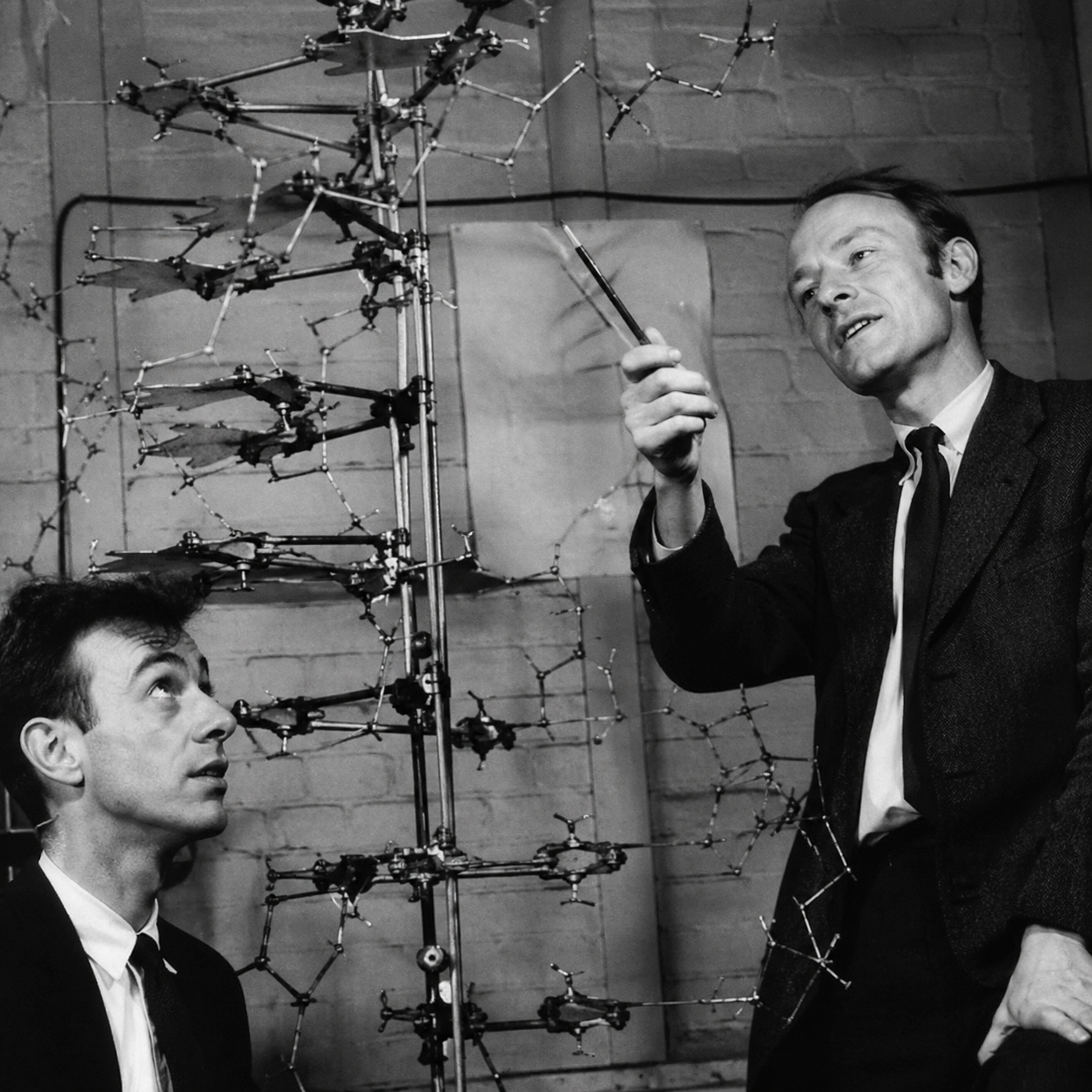
Crick began as a physicist before pivoting to biology, convinced life's secrets were solvable through chemistry and physics alone. His 1953 DNA double helix discovery with Watson proved heredity was molecular machinery, not vital essence. He later spent decades at the Salk Institute pursuing neuroscience, convinced that consciousness itself reduces to neuron firing patterns — that the soul, too, has a physical address.
The mid-20th century was reductionism's triumphant era in science. The 1953 DNA structure, the genetic code's decipherment in the 1960s, and protein synthesis mechanisms all validated breaking life into molecules. Physics had already split the atom. By the 1980s–90s, however, complexity theory and systems biology began challenging whether reduction alone could capture emergent phenomena like ecosystems and consciousness — the very tension Crick spent his final decades wrestling with.
AI-generated insights based on extensive research and information for context. Factual errors? Email [email protected].
Your cart is empty