Enrico Fermi — "I would rather be ignorant and learn, than be learned and not know."
I would rather be ignorant and learn, than be learned and not know.
I would rather be ignorant and learn, than be learned and not know.
Click any product to generate a realistic preview. Up to 3 at a time.
* Initial load can take up to 90 seconds — revising the preview in another color is nearly instant.
"The problem with statistics is that you can prove anything with them."
"The pursuit of knowledge is an endless journey."
"The more you know, the more you realize you don't know."
"The best way to understand something is to try to explain it to someone else."
"There is no such thing as a trivial experiment."
Found in 1 providers: grok
1 source checked
Admitting ignorance is more valuable than faking expertise. A learner who knows what they don't know is in a stronger position than someone who mistakes familiarity with understanding. True knowledge requires recognizing its own gaps. Intellectual humility — owning what you don't understand — is the starting point for genuine discovery, while confident ignorance masquerading as expertise closes the door to learning entirely.
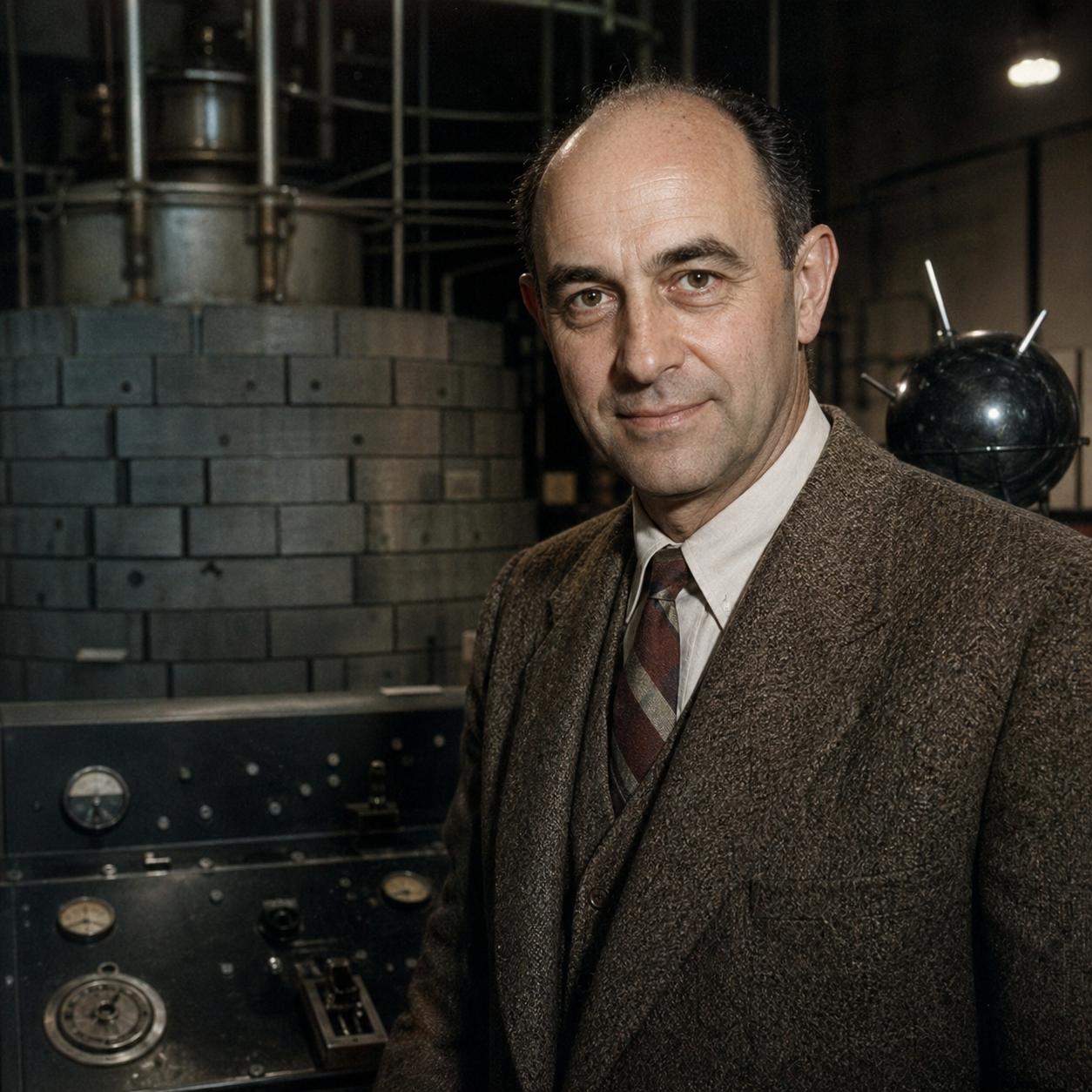
Fermi embodied this through his legendary estimation method — rapid, first-principles calculations from bare assumptions rather than memorized data. He pioneered nuclear reactor design by systematically testing what nobody had tried before. Colleagues recalled he regularly admitted uncertainty and asked basic clarifying questions others were embarrassed to raise. His Chicago Pile-1 success in 1942 came from empirical honesty and willingness to say 'I don't know yet,' not overconfident theory.
Fermi worked during the 20th century's scientific revolution, when quantum mechanics and relativity dismantled centuries of confident Newtonian certainty. The 1930s–1950s saw physicists repeatedly discover that established knowledge was incomplete or wrong. The Manhattan Project compressed years of unknowns into months, punishing overconfidence and rewarding scientists willing to question assumptions. In an era when nuclear energy and weapons reshaped civilization, knowing what you didn't know was literally a matter of survival.
AI-generated insights based on extensive research and information for context. Factual errors? Email [email protected].
Your cart is empty