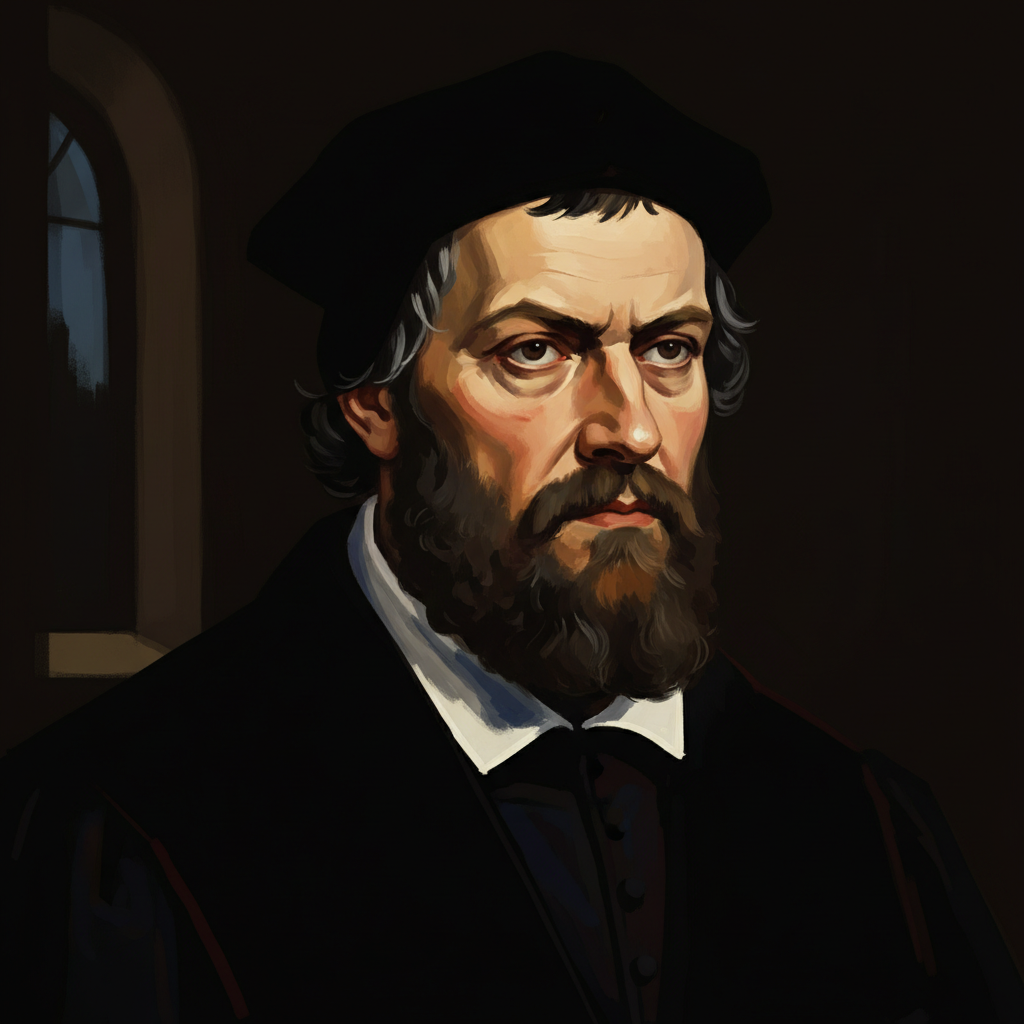
Martin Luther — "If I am to be executed, I would rather be executed by the Pope than by my own pe…"
If I am to be executed, I would rather be executed by the Pope than by my own people.
If I am to be executed, I would rather be executed by the Pope than by my own people.
Click any product to generate a realistic preview. Up to 3 at a time.
* Initial load can take up to 90 seconds — revising the preview in another color is nearly instant.
"Reason is the greatest enemy that faith has; it never comes to the aid of spiritual things, but more frequently than not struggles against the divine Word, treating with contempt all that emanates fro…"
"Tomorrow I have to lecture on the drunkenness of Noah [Gen. 9:20-27], so I should drink enough this evening to be able to talk about that wickedness as one who knows by experience."
"He who lets himself be led by reason will never escape sin."
"The soul can do without anything except the Word of God, without which there is no help for it at all."
"If God has no sense of humor, I don't want to go to Heaven."
German theologian whose 95 Theses (1517) launched the Protestant Reformation and broke the Catholic Church's monopoly on Western Christianity. Closely associated with Philipp Melanchthon (Lutheran systematizer) and John Calvin (later Reformer who built on Luther's break). For an intellectual contrast, see Pope Leo X, Renaissance pope (1513-1521) — Leo X's indulgence sales triggered Luther's break and Leo excommunicated him in 1521 — Luther's entire Reformation is structured as a direct answer to the indulgence-funded Vatican Leo represented.
Found in 1 providers: grok
1 source checked
Luther is saying he would rather die at the hands of a distant, declared enemy than be killed by the very community he belongs to and has tried to serve. Betrayal from insiders cuts deeper than opposition from outsiders. Being destroyed by your own people carries shame, heartbreak, and a sense of wasted sacrifice that an enemy's blade simply doesn't inflict on the same emotional level.
Luther lived under constant threat after the 1521 Edict of Worms declared him an outlaw, yet his sharpest anguish came from fellow reformers and German followers who radicalized beyond him, like Muntzer and the Peasants' Revolt leaders. Excommunicated by Rome, he still found papal hostility cleaner than watching his own Reformation movement fracture, turn violent, or reject his guidance on scripture, sacraments, and social order.
The early modern period saw Christendom splintering: the 1517 Ninety-Five Theses ignited religious civil war across German states, the 1525 Peasants' War killed around 100,000 people invoking Luther's name, and princes weaponized faith for political gain. Heretics faced burning; reformers faced assassination from all sides. Loyalty was fluid, mobs were deadly, and a theologian could be martyred by Catholics, radicals, or disillusioned former allies with equal ease.
AI-generated insights based on extensive research and information for context. Factual errors? Email [email protected].
Your cart is empty