Laozi — "If you are depressed you are living in the past. If you are anxious you are livi…"
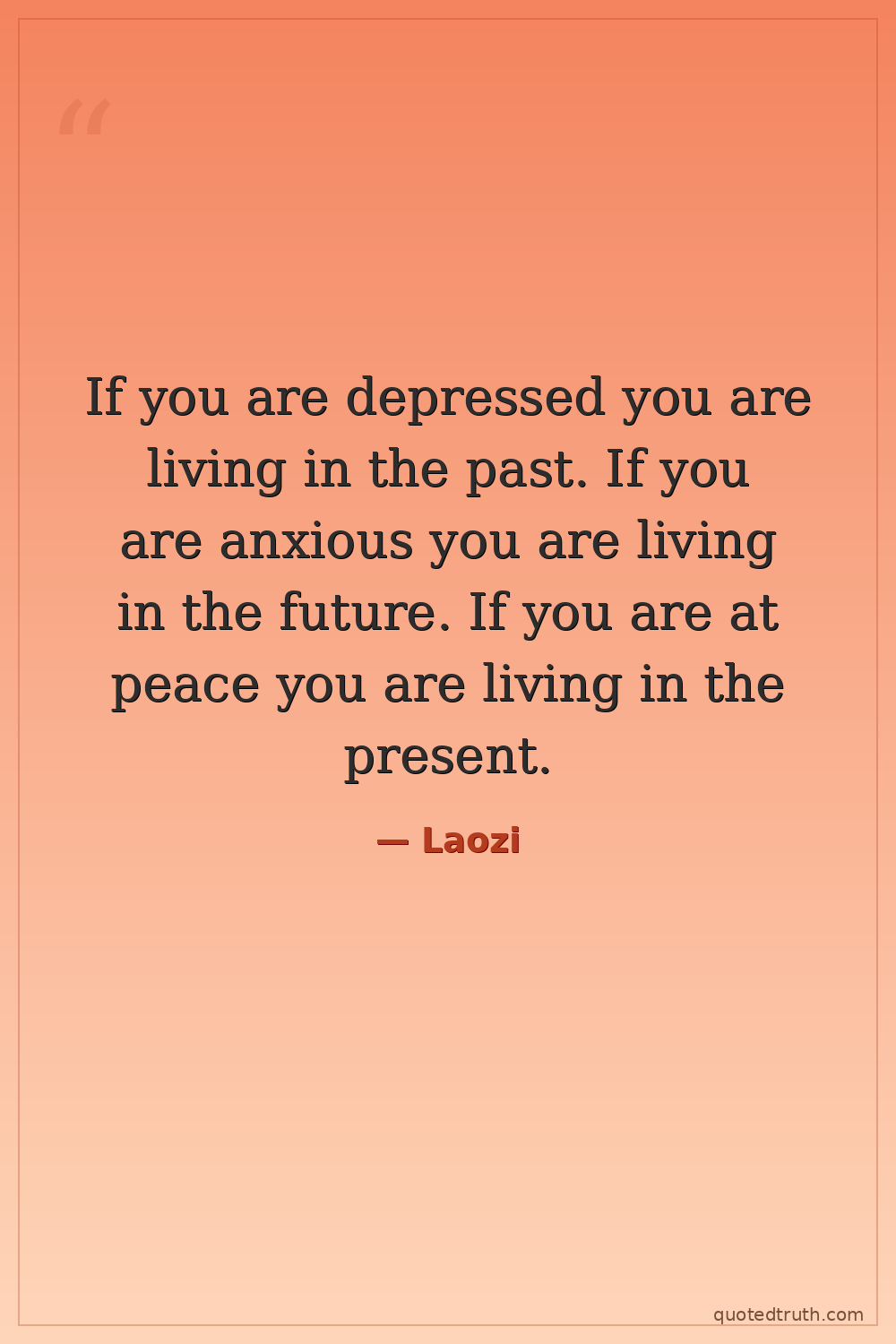
If you are depressed you are living in the past. If you are anxious you are living in the future. If you are at peace you are living in the present.
If you are depressed you are living in the past. If you are anxious you are living in the future. If you are at peace you are living in the present.
Click any product to generate a realistic preview. Up to 3 at a time.
* Initial load can take up to 90 seconds — revising the preview in another color is nearly instant.
"He who acts destroys; he who grasps loses."
"To know that you do not know is the best. To think you know when you do not is a disease."
"When the best student hears about the Way, he practices it diligently. When the average student hears about the Way, he is half-hearted. When the worst student hears about the Way, he laughs out loud.…"
"Pursue without interfering."
"Deal with it before it happens. Set things in order before there is confusion."
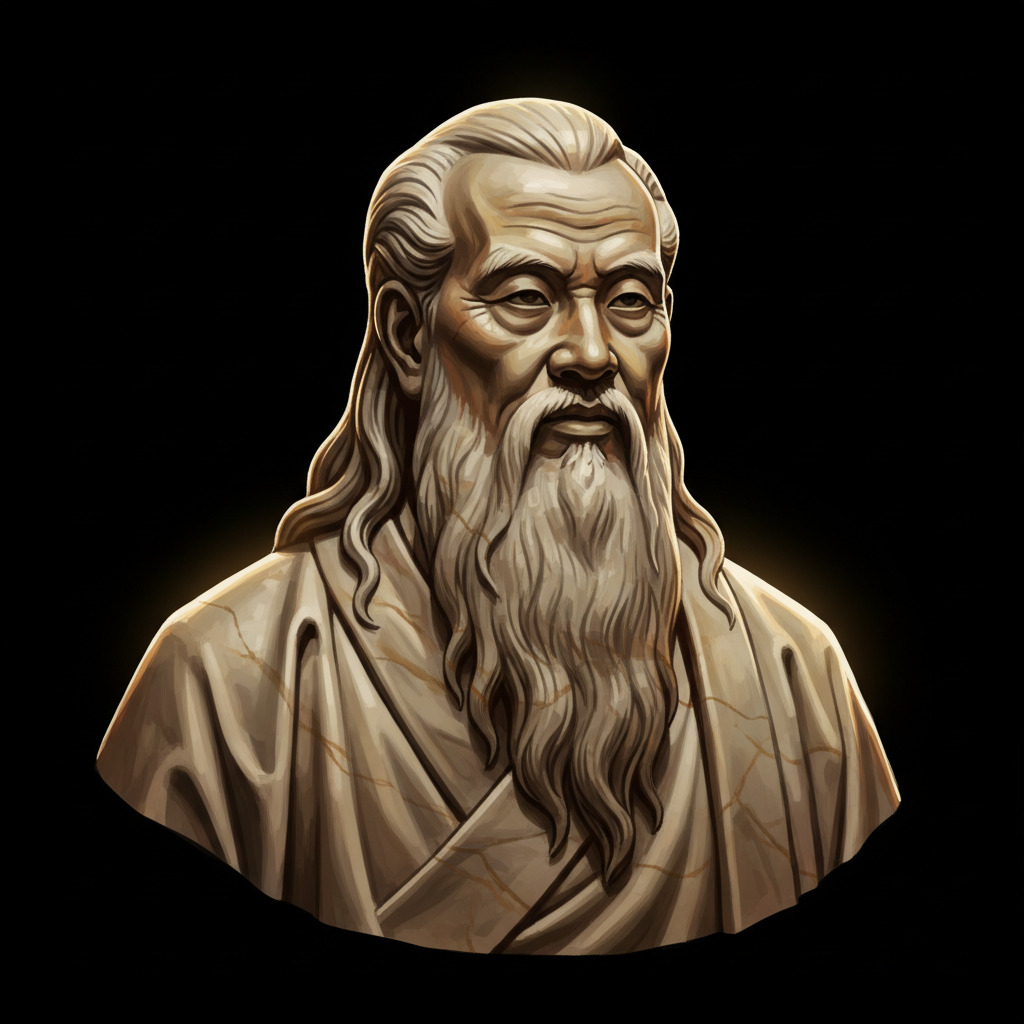
Reputed founder of Taoism and author of the Tao Te Ching, whose wu wei (effortless action) shaped East Asian philosophy. Closely associated with Zhuangzi (later Taoist who extended Laozi's framework). For an intellectual contrast, see Confucius, near-contemporary Chinese sage of social ritual and duty — Confucius systematized social order through ritual and hierarchy; Laozi argued that all such systems were the disease, not the cure — the two founding poles of Chinese moral philosophy.
Found in 2 providers: gemini,grok
2 sources checked
Your emotional state reveals where your mind is focused in time. Depression comes from dwelling on what has already happened and cannot be changed. Anxiety comes from projecting into events that have not yet occurred and may never arrive. Genuine peace only exists when attention rests fully on the current moment, experiencing life as it actually unfolds rather than as memory or forecast.
Laozi founded Taoism, a philosophy centered on wu wei (effortless action) and harmony with the Tao, the natural flow of existence. Legend holds he served as an archivist in the Zhou court before withdrawing westward, disillusioned with political chaos. His teachings in the Tao Te Ching repeatedly urge releasing striving, ambition, and mental resistance to accept the present as it is.
Laozi lived during the late Zhou dynasty, around the 6th century BCE, an era of collapsing feudal order leading toward the Warring States period. Constant warfare, political betrayal, and social upheaval made anxiety and despair widespread among ordinary people and scholars alike. Taoism and Confucianism emerged as competing responses, with Laozi offering inner stillness and acceptance as an alternative to Confucian social engineering during this turbulent age.
AI-generated insights based on extensive research and information for context. Factual errors? Email [email protected].
Your cart is empty