Laozi — "The sage does not act and therefore does not fail, does not seize and therefore …"
The sage does not act and therefore does not fail, does not seize and therefore does not lose.
The sage does not act and therefore does not fail, does not seize and therefore does not lose.
Click any product to generate a realistic preview. Up to 3 at a time.
* Initial load can take up to 90 seconds — revising the preview in another color is nearly instant.
"He who controls others may be powerful, but he who has mastered himself is mightier still."
"The great square has no corners. The great vessel takes a long time to complete. The great sound is faint. The great image has no form."
"Abandon sageliness and discard wisdom, and the people will benefit a hundredfold. Abandon benevolence and discard righteousness, and the people will return to filial piety and paternal love. Abandon s…"
"The greatest victory is that which requires no battle."
"When the great sage is born, the world is at peace."
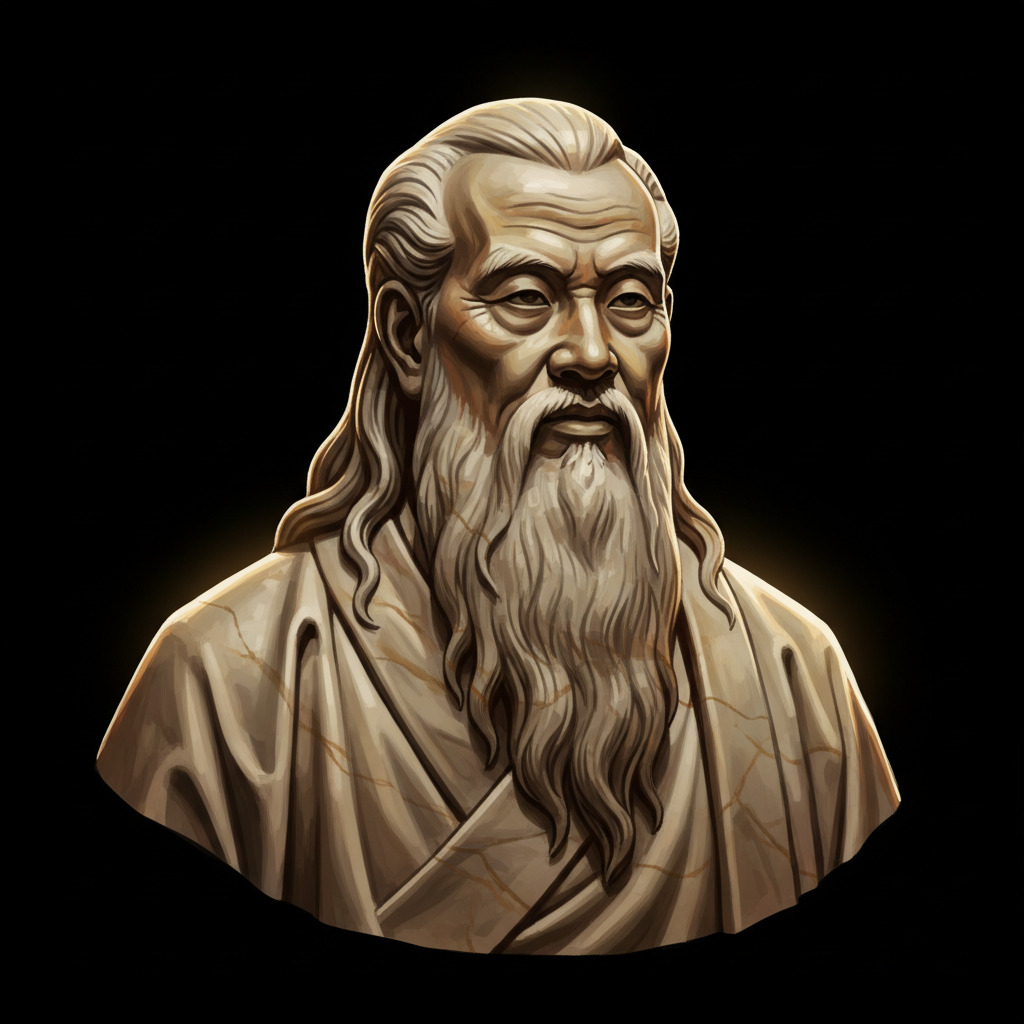
Reputed founder of Taoism and author of the Tao Te Ching, whose wu wei (effortless action) shaped East Asian philosophy. Closely associated with Zhuangzi (later Taoist who extended Laozi's framework). For an intellectual contrast, see Confucius, near-contemporary Chinese sage of social ritual and duty — Confucius systematized social order through ritual and hierarchy; Laozi argued that all such systems were the disease, not the cure — the two founding poles of Chinese moral philosophy.
Found in 1 providers: gemini
1 source checked
Real effectiveness comes from not forcing outcomes. When you stop pushing against how things naturally unfold, you stop creating the friction that causes failure. When you don't grasp at things to own or control, there is nothing for you to lose. Trying hard to dominate a situation often sabotages it, while stepping back and letting events move on their own lets the right result arrive without struggle, waste, or reversal.
Laozi reportedly served as a keeper of royal archives in the Zhou court, observing rulers rise and fall through ambition and overreach. Disillusioned, he is said to have left civilization on a water buffalo, refusing titles and fame. This line captures his core teaching of wu wei, effortless action, and his personal choice to withdraw rather than seize power, embodying the belief that the wise person achieves most by grasping least.
Laozi lived during the late Zhou dynasty, around the 6th century BCE, as centralized authority crumbled into the warring factions that preceded the Warring States period. Rulers schemed, armies clashed, and advisors sold aggressive strategies for conquest and control. Against this backdrop of relentless striving and violent ambition, a philosophy urging non-action, humility, and yielding to natural order was radically countercultural, offering exhausted nobles and commoners an alternative to the grasping that fueled their collapsing world.
AI-generated insights based on extensive research and information for context. Factual errors? Email [email protected].
Your cart is empty