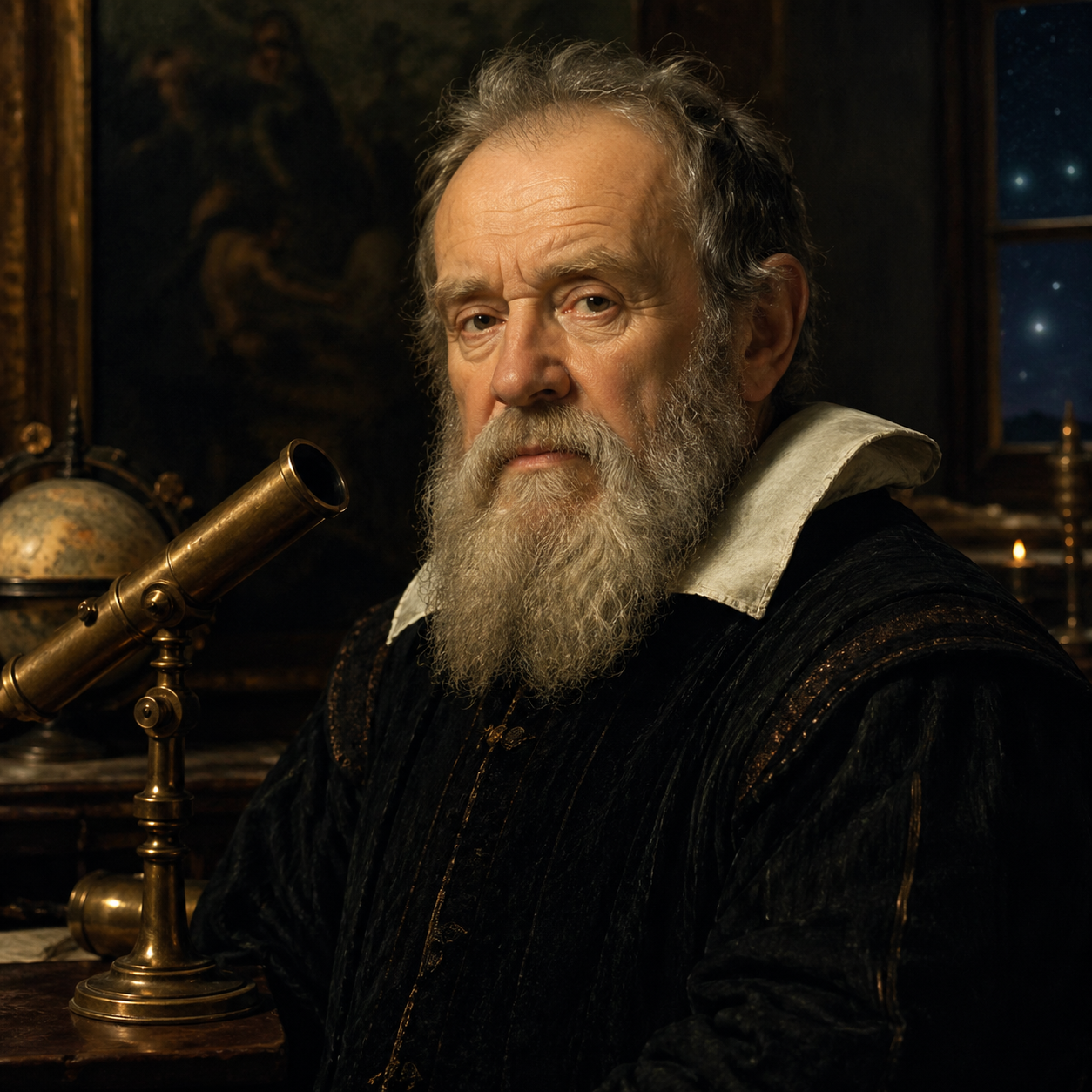
Galileo Galilei — "It is a great pity that there are so few who are interested in the true causes o…"
It is a great pity that there are so few who are interested in the true causes of things.
It is a great pity that there are so few who are interested in the true causes of things.
Click any product to generate a realistic preview. Up to 3 at a time.
* Initial load can take up to 90 seconds — revising the preview in another color is nearly instant.
"The senses, though they are sometimes deceived, are not always so."
"I give infinite thanks to God, who has been pleased to make me the first observer of admirable things unrevealed to bygone ages."
"It is a beautiful and admirable thing to search out the causes of natural phenomena."
"I do not think it is necessary to believe that the same God who gave us our senses, our reason, and our intellect, also intended us to forego their use."
"Mathematics is the language in which God has written the universe."
Found in 1 providers: grok
1 source checked
Most people are satisfied with surface-level explanations and rarely push to understand why things actually work the way they do. True intellectual curiosity—the drive to find underlying mechanisms rather than accept tradition or appearance—is rare and valuable. Understanding root causes, not just effects, is what separates genuine knowledge from comfortable ignorance.
Galileo spent his career fighting exactly this problem. He discovered Jupiter's moons, confirmed heliocentrism through telescope observations, and developed laws of motion—yet faced the Inquisition because most people, including powerful Church authorities, preferred inherited Aristotelian cosmology over empirical investigation. His frustration at intellectual incuriosity was deeply personal and professionally dangerous.
The early modern period saw the Scientific Revolution colliding violently with entrenched scholasticism. Aristotle's physics had gone unquestioned for nearly 2,000 years. The Church wielded authority over what counted as truth. Most educated Europeans deferred to ancient texts rather than experimentation. Galileo's insistence on observational evidence over received wisdom was genuinely radical and socially costly in this environment.
AI-generated insights based on extensive research and information for context. Factual errors? Email [email protected].
Your cart is empty