John Wesley — "It is not possible for a man to be a Christian without being a saint."
It is not possible for a man to be a Christian without being a saint.
It is not possible for a man to be a Christian without being a saint.
Click any product to generate a realistic preview. Up to 3 at a time.
* Initial load can take up to 90 seconds — revising the preview in another color is nearly instant.
"I have often thought that the reason why so few are saved, is, because so few are willing to be saved."
"To candid, reasonable men, I am not afraid to lay open what has been the course of my life."
"I conceive slavery to be such a thing as is odious to the God of love."
"My hair is much whiter than it was a year ago; but my eyes are not much dimmer, nor my natural strength much abated."
"I do not love to dispute about religion. I had rather feel it."
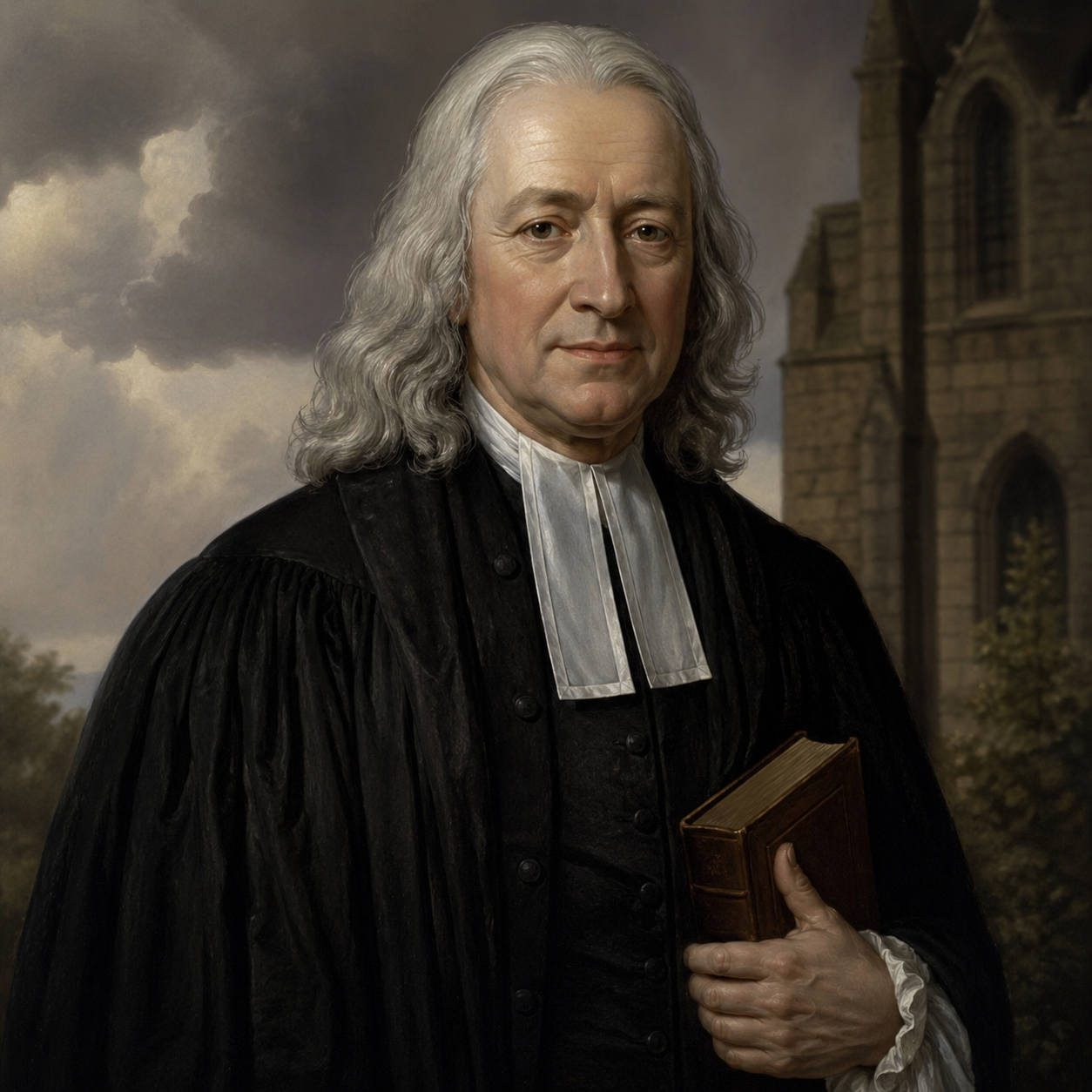
English Anglican cleric and founder of Methodism, whose open-air preaching and class-meeting structure created the largest 18th-century evangelical revival. Closely associated with Charles Wesley (his hymn-writing brother) and George Whitefield (early co-revivalist, later doctrinal opponent). For an intellectual contrast, see George Whitefield, Calvinist evangelical revivalist — Whitefield's predestinarian Calvinism vs Wesley's free-grace Arminian theology split the early Methodist movement permanently in the 1739-41 break. The founding evangelical Calvinist-Arminian schism — the two parallel evangelical traditions American Christianity descends from.
Found in 1 providers: grok
1 source checked
Being a Christian is not merely a label or Sunday ritual — it demands genuine moral transformation and holy living. If your life shows no evidence of changed character, compassion, and devotion, the title means nothing. Real faith produces real holiness; the two cannot be separated. Claiming Christianity without saintly conduct is a contradiction in terms, not just an imperfection.
Wesley built Methodism on exactly this conviction. He founded the Holy Club at Oxford, practiced rigorous daily discipline, preached thousands of sermons on sanctification, and developed the doctrine of 'entire sanctification' — the belief that believers could be perfected in love in this life. His circuit-riding ministry and class meetings existed precisely to hold members accountable to lived holiness.
In 18th-century England, nominal Christianity was rampant — church membership carried social respectability while moral life remained unchanged. The Industrial Revolution crammed the poor into cities with little pastoral care. Wesley's Methodist revival was a direct counter: he preached in fields, organized the working class into accountability groups, and insisted faith must visibly transform conduct, challenging both comfortable Anglicanism and cheap grace theology.
AI-generated insights based on extensive research and information for context. Factual errors? Email [email protected].
Your cart is empty