Alexander Fleming — "It is the common lot of discoverers to be misunderstood."
It is the common lot of discoverers to be misunderstood.
It is the common lot of discoverers to be misunderstood.
Click any product to generate a realistic preview. Up to 3 at a time.
* Initial load can take up to 90 seconds — revising the preview in another color is nearly instant.
"It is not enough to discover a thing; one must also know how to use it."
"I play with microbes. There are, of course, many rules to this play...but when you have acquired knowledge and experience it is very pleasant to break the rules and to be able to find something nobody…"
"The impact of penicillin on modern medicine is immeasurable."
"The greatest joy of a scientist is to see his work used for the benefit of mankind."
"I was not a great scientist, but I was a careful observer."
Found in 1 providers: grok
1 source checked
People who make genuine discoveries are routinely met with skepticism and incomprehension by their peers. True innovators see what others can't yet grasp, so misunderstanding becomes an almost inevitable consequence of being ahead of one's time. The quote accepts this as a near-universal pattern, not a personal grievance: if you discover something genuinely new, expect confusion or dismissal first. Recognition, if it comes at all, usually arrives late.
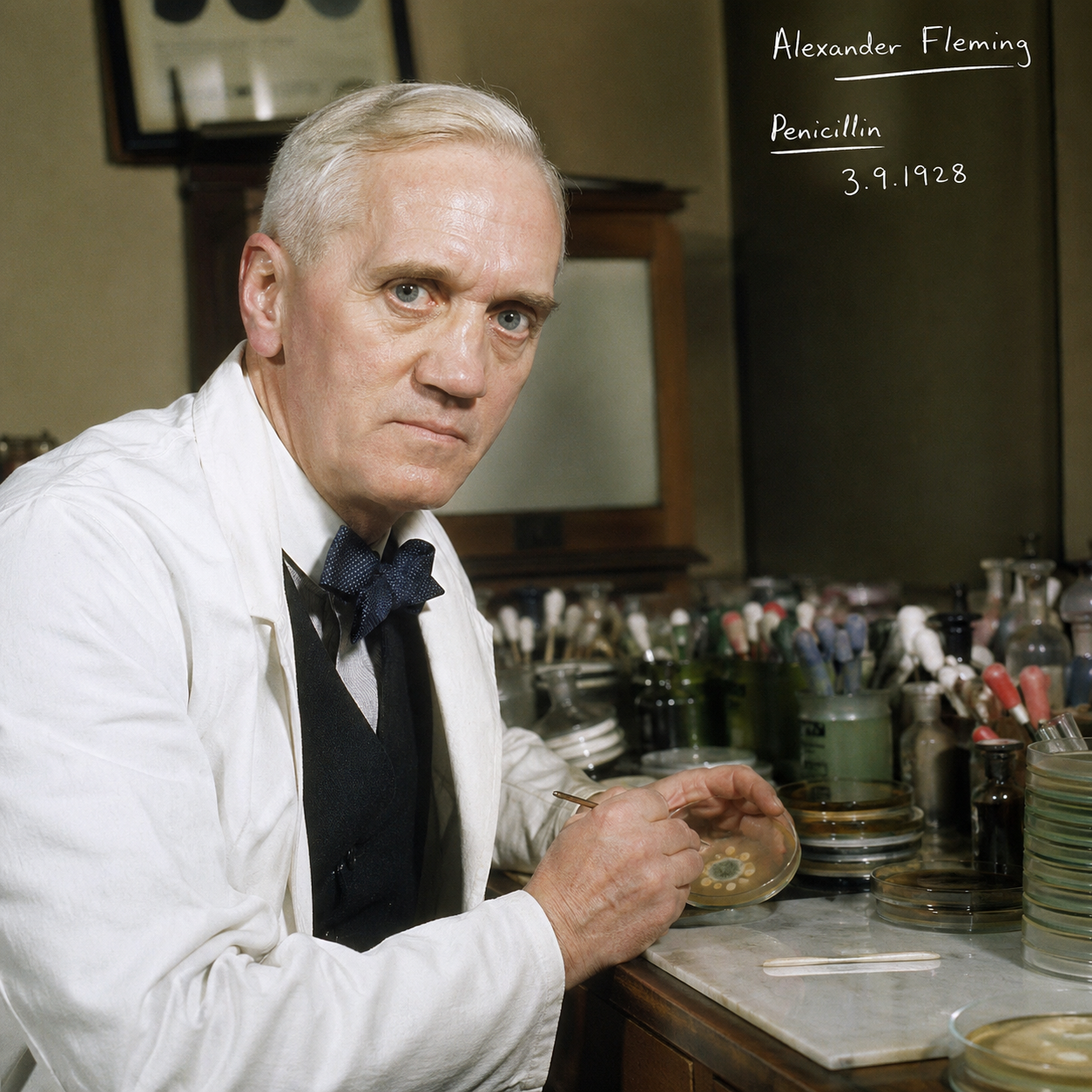
Fleming discovered penicillin in 1928 when he noticed mold killing bacteria in a contaminated petri dish. The medical establishment largely ignored his finding for over a decade — it took Florey and Chain to develop it into a usable drug by 1940. Fleming experienced firsthand the indifference of peers to a revolutionary observation, receiving the Nobel Prize only in 1945, seventeen years after his overlooked breakthrough.
Early 20th-century medicine had rigid institutional hierarchies deeply skeptical of unconventional findings. Before antibiotics, bacterial infections were routinely fatal — Fleming's era saw millions die from wounds, pneumonia, and sepsis that penicillin would later cure. The interwar scientific community prioritized established methods over contamination accidents. Fleming's ignored 1928 paper sat dormant during a global tuberculosis and infection crisis, illustrating how transformative knowledge languishes when gatekeepers control recognition.
AI-generated insights based on extensive research and information for context. Factual errors? Email [email protected].
Your cart is empty