Alexander Fleming — "It was not easy to convince people of the importance of penicillin in the early …"
It was not easy to convince people of the importance of penicillin in the early days.
It was not easy to convince people of the importance of penicillin in the early days.
Click any product to generate a realistic preview. Up to 3 at a time.
* Initial load can take up to 90 seconds — revising the preview in another color is nearly instant.
"The next time you are tempted to throw away a contaminated culture, remember the penicillin."
"My own work was really quite simple. I just observed what was happening."
"I have been asked by many people how I came to discover penicillin. The answer is that I did not discover it. I just happened to notice it."
"The laboratory worker who is not prepared to meet with occasional failures will never achieve success."
"It is the lone worker who makes the first advance in a subject; the details may be worked out by a team, but the prime idea is due to enterprise, thought, and perception of an individual."
Found in 1 providers: grok
1 source checked
Even when you discover something genuinely important, the world doesn't immediately recognize its value. Fleming is acknowledging the gap between discovery and acceptance — that revolutionary ideas face resistance, indifference, or skepticism before they're embraced. Convincing others requires persistence beyond the initial breakthrough. The quote captures the frustration of knowing something works while watching others dismiss or overlook it, a reality for anyone trying to introduce genuinely new ideas.
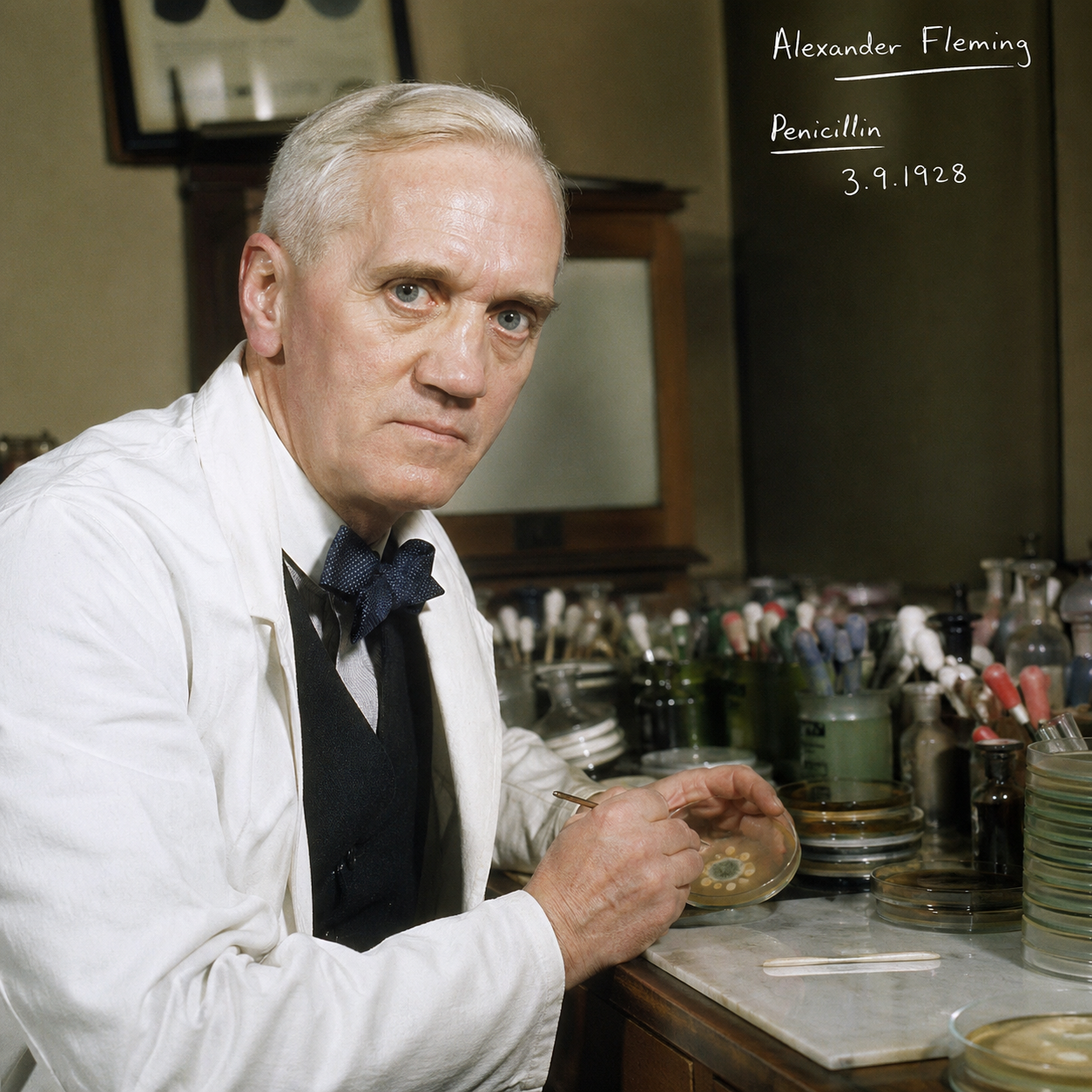
Fleming discovered penicillin's antibacterial properties in 1928 after noticing mold contaminating a petri dish, but spent years unable to convince colleagues or find chemists willing to purify it into usable form. He published his findings but the medical community largely ignored them for over a decade. It took Howard Florey and Ernst Chain in 1940 to finally develop it into medicine — a fact Fleming openly acknowledged throughout his life.
In the late 1920s and 1930s, the medical world was only beginning to understand bacterial infections as treatable. Sulfonamide drugs emerged in the mid-1930s and dominated early antibiotic thinking. The scientific establishment demanded rigorous chemical proof before accepting new treatments, and Fleming lacked the biochemistry expertise to purify penicillin himself. WWII ultimately forced rapid development — mass casualties from infected wounds created urgent demand that finally convinced skeptics of penicillin's life-saving power.
AI-generated insights based on extensive research and information for context. Factual errors? Email [email protected].
Your cart is empty