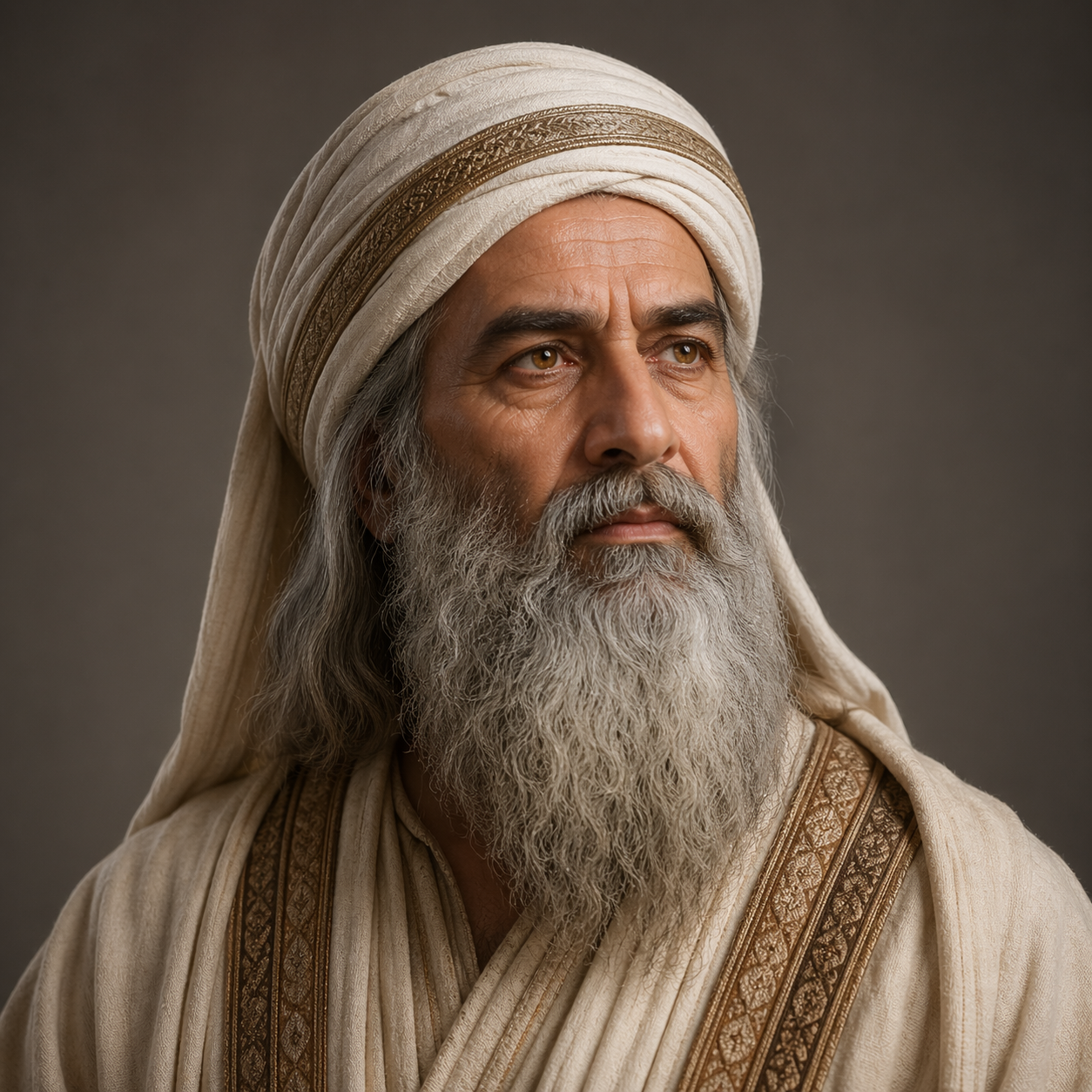
Zoroaster — "May good thoughts, good words, good deeds lead to Paradise."
May good thoughts, good words, good deeds lead to Paradise.
May good thoughts, good words, good deeds lead to Paradise.
Click any product to generate a realistic preview. Up to 3 at a time.
* Initial load can take up to 90 seconds — revising the preview in another color is nearly instant.
"He who comes to know me through my thought, and through my word and deed, he shall become a sharer in the good reward."
"The soul of the righteous shall be joyful in the best existence, but the soul of the wicked shall be miserable in the worst existence."
"The Ox-soul lamented to you: 'For whom did you shape me? Who created me? Fury and violence oppress me, and cruelty and bondage.'"
"Through righteous living, we can hasten the coming of the Frashokereti (renovation of the world)."
"The deceitful shall be destroyed, but the righteous shall attain the best existence."
Iranian prophet who founded Zoroastrianism, the first major religion of cosmic dualism between good (Ahura Mazda) and evil (Angra Mainyu). Closely associated with The Buddha (near-contemporary Eastern moral-cosmological revolutionary). For an intellectual contrast, see Friedrich Nietzsche, German philosopher of 'beyond good and evil' — Nietzsche appropriated Zarathustra's name for Thus Spoke Zarathustra (1883) precisely to invert the original's moral cosmology — the historical Zoroaster founded the good-versus-evil framework Nietzsche's character announces the end of.
Avesta (later Zoroastrian texts, embodying Gathic principles)
Date: c. 6th century BCE (principles)
WisdomFound in 1 providers: grok
1 source checked
This saying lays out a simple moral formula for a good life and a good afterlife. Think kindly, speak honestly, and act with integrity, and you earn a reward beyond death. The three categories cover the full range of moral activity, from private intention to public conduct. Together they form a complete ethical checklist: aligning mind, mouth, and hands toward goodness is what carries a person into paradise.
Zoroaster built his entire religion around this triad, known in Avestan as Humata, Hukhta, Hvarshta. As a reforming priest who rejected the ritual-heavy polytheism around him, he taught that personal ethics, not animal sacrifice, determined one's fate. He also introduced the idea of a judged afterlife where the righteous cross to paradise. This quote compresses his lifelong teaching: salvation is earned through daily moral choices, not inherited status or priestly ceremony.
Zoroaster lived in ancient Persia, likely between 1500 and 1000 BCE, during a pastoral Indo-Iranian society dominated by warrior raids, cattle theft, and polytheistic blood sacrifice. Tribal priests controlled religion through elaborate rituals. By centering morality on individual thought, word, and deed, Zoroaster shifted responsibility from priest to person. His framework later shaped Persian empires, influenced Judaism, Christianity, and Islam on heaven, hell, and judgment, and offered one of history's earliest clear ethical monotheisms.
AI-generated insights based on extensive research and information for context. Factual errors? Email [email protected].
Your cart is empty