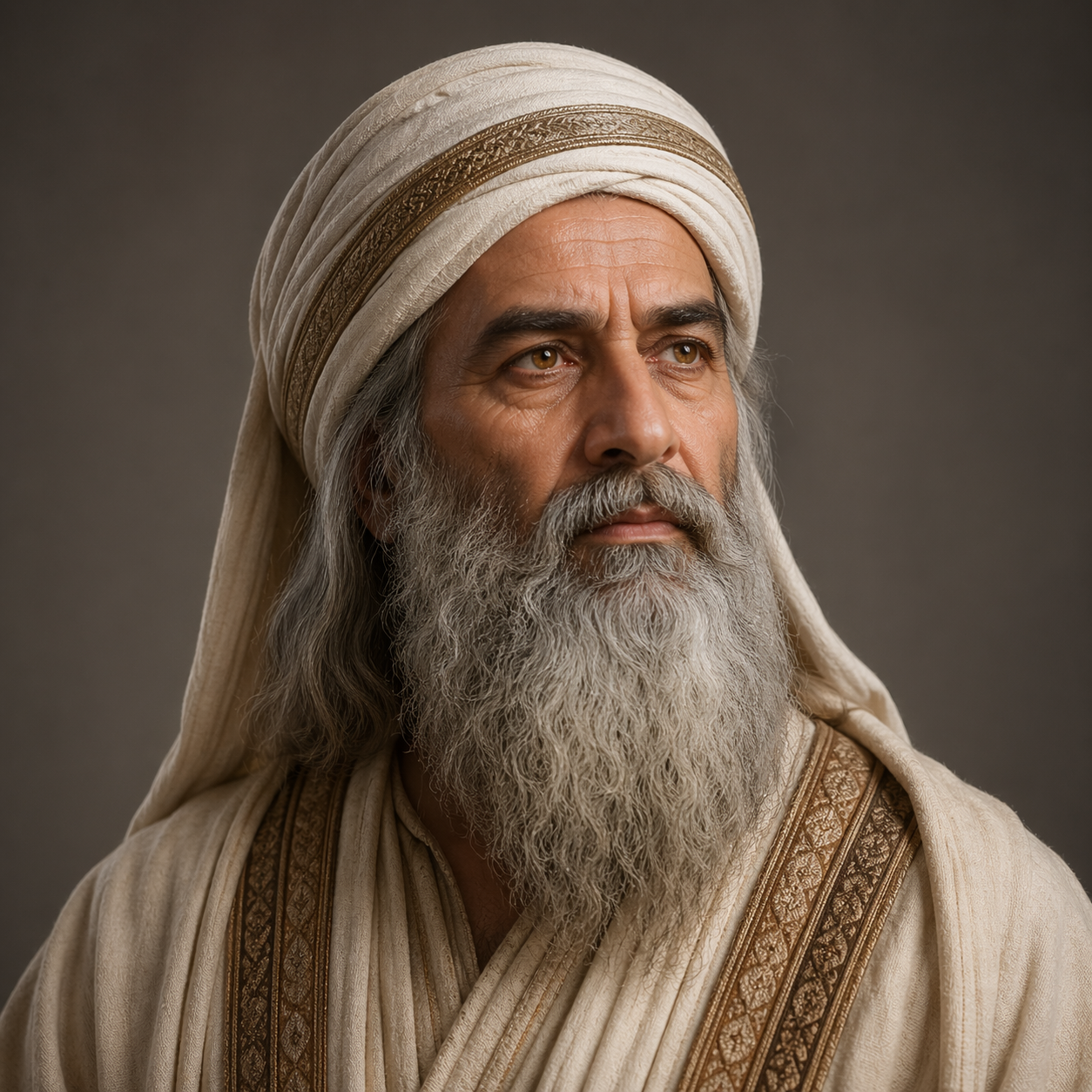
Zoroaster — "May we be among those who make the world progress."
May we be among those who make the world progress.
May we be among those who make the world progress.
Click any product to generate a realistic preview. Up to 3 at a time.
* Initial load can take up to 90 seconds — revising the preview in another color is nearly instant.
"May the good spirit prevail over the evil spirit in all hearts."
"Aša Vahišta (Best Righteousness) is the best of all things, and happiness is to him who is righteous for the sake of Righteousness."
"He who is righteous, him I shall praise, but him who is wicked, him I shall denounce."
"Everything that is created was first a Thought."
"There are two fundamental spirits, twins which in waking hours are heard, but in thought are not seen. They are the better and the bad. Of these two, the wise have chosen rightly, not so the foolish."
Iranian prophet who founded Zoroastrianism, the first major religion of cosmic dualism between good (Ahura Mazda) and evil (Angra Mainyu). Closely associated with The Buddha (near-contemporary Eastern moral-cosmological revolutionary). For an intellectual contrast, see Friedrich Nietzsche, German philosopher of 'beyond good and evil' — Nietzsche appropriated Zarathustra's name for Thus Spoke Zarathustra (1883) precisely to invert the original's moral cosmology — the historical Zoroaster founded the good-versus-evil framework Nietzsche's character announces the end of.
Found in 1 providers: grok
1 source checked
This is a wish to belong to the group of people who actively improve the world rather than just drift through it. It frames life as a shared project: each person's choices either move things forward or hold them back. The speaker is asking to be counted among the builders, menders, and reformers, taking responsibility for leaving conditions better than they found them for everyone who comes next.
Zoroaster built his entire religion around this idea. He taught that humans are partners with Ahura Mazda in a cosmic struggle against chaos and deceit, and that every good thought, good word, and good deed pushes the world toward final renewal, called Frashokereti. As a reforming priest who broke with the older polytheistic cults, he lived the role of world-improver, urging followers to choose asha, or truth and right order, over the lie.
Zoroaster preached in Bronze or early Iron Age Iran, roughly between 1500 and 1000 BCE, among pastoral tribes dealing with cattle raids, warrior cults, and blood sacrifice. Most regional religions treated humans as servants who fed the gods through ritual. His message that ordinary people actively shape cosmic destiny through ethical labor was radical, and it later shaped Persian imperial ideology and influenced Jewish, Christian, and Islamic ideas of moral progress and final judgment.
AI-generated insights based on extensive research and information for context. Factual errors? Email [email protected].
Your cart is empty