Zoroaster — "May the evil-doer perish, and may the good be rewarded according to their deeds."
May the evil-doer perish, and may the good be rewarded according to their deeds.
May the evil-doer perish, and may the good be rewarded according to their deeds.
Click any product to generate a realistic preview. Up to 3 at a time.
* Initial load can take up to 90 seconds — revising the preview in another color is nearly instant.
"Lovingly, O Ahura, I pray to You who are the most excellent, and in harmony with utmost Righteousness."
"The Lie-demon shall be bound, and the Good Mind shall be unbound."
"The wise man, O Mazda, is he who continually keeps in mind Thy precepts and strives to establish Thy Kingdom on earth."
"The wise choose the truth, the foolish choose the lie."
"Whosoever, O Mazda, by his thoughts, words, and deeds makes a sacrifice to Thee, he shall be granted the best existence."
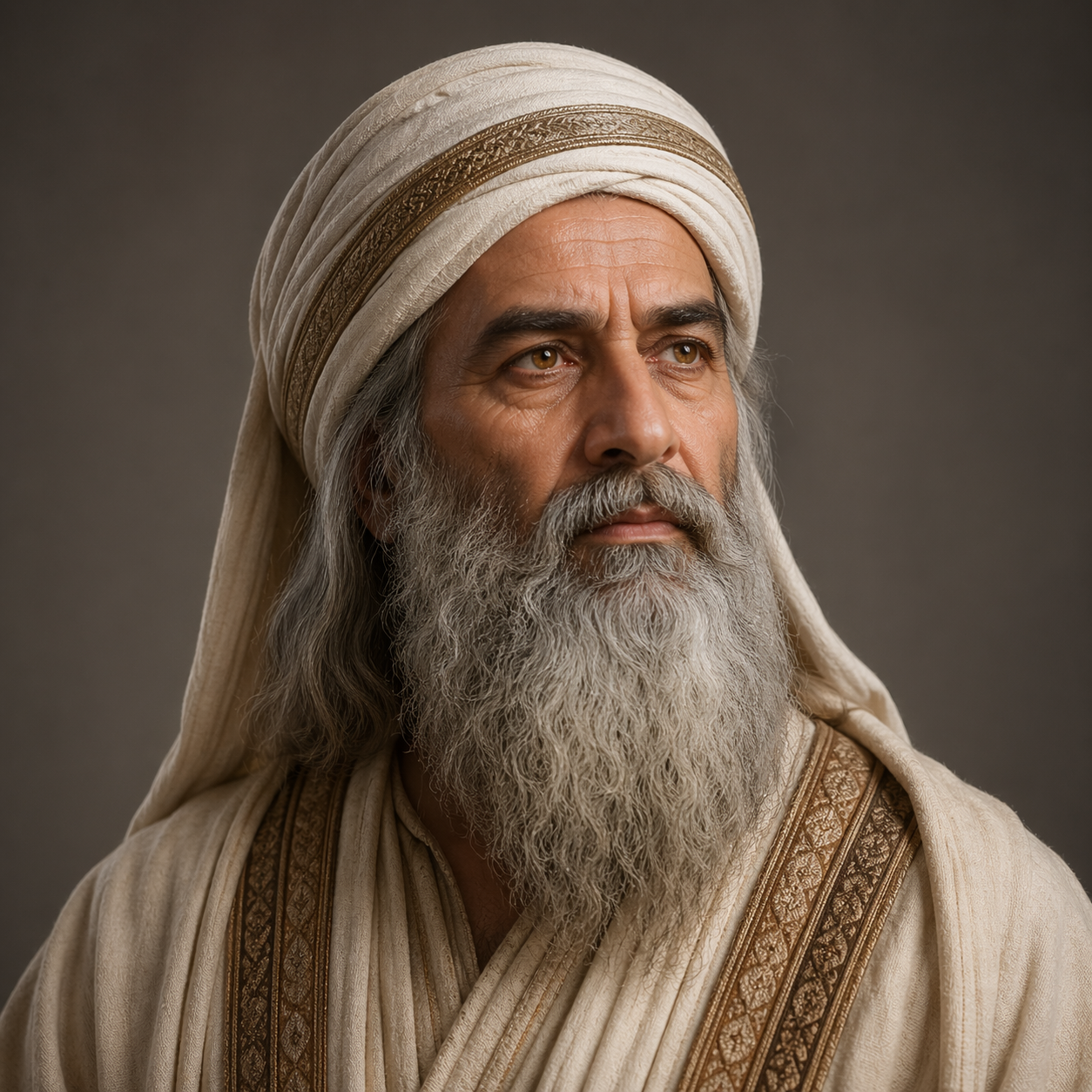
Iranian prophet who founded Zoroastrianism, the first major religion of cosmic dualism between good (Ahura Mazda) and evil (Angra Mainyu). Closely associated with The Buddha (near-contemporary Eastern moral-cosmological revolutionary). For an intellectual contrast, see Friedrich Nietzsche, German philosopher of 'beyond good and evil' — Nietzsche appropriated Zarathustra's name for Thus Spoke Zarathustra (1883) precisely to invert the original's moral cosmology — the historical Zoroaster founded the good-versus-evil framework Nietzsche's character announces the end of.
Found in 1 providers: gemini
1 source checked
This statement expresses a core moral wish: bad people should face consequences for their harmful actions, while good people should receive what they have earned through their virtuous behavior. It captures the basic intuition that the universe should be morally fair, with outcomes matching the ethical quality of one's choices. Justice means each person ultimately gets back what corresponds to how they lived and treated others.
Zoroaster founded a religion built around the cosmic battle between truth (asha) and lie (druj), teaching that every person freely chooses sides through their thoughts, words, and deeds. He preached individual moral accountability and a final judgment where souls cross the Chinvat Bridge to reward or punishment. This saying distills his central conviction that ethical behavior carries built-in consequences, woven into the structure of reality itself.
Zoroaster lived in ancient Iran, likely between 1500 and 1000 BCE, when surrounding cultures worshipped many gods through ritual sacrifice and viewed fate as arbitrary or controlled by capricious deities. By insisting on a single wise creator and personal moral responsibility tied to afterlife outcomes, he broke sharply from tribal polytheism. His teachings later shaped Persian empires and influenced Jewish, Christian, and Islamic ideas about heaven, hell, and divine judgment.
AI-generated insights based on extensive research and information for context. Factual errors? Email [email protected].
Your cart is empty