Pope Urban II — "May your courage be increased, and your hearts be strengthened, for the Lord is …"
May your courage be increased, and your hearts be strengthened, for the Lord is with you.
May your courage be increased, and your hearts be strengthened, for the Lord is with you.
Click any product to generate a realistic preview. Up to 3 at a time.
* Initial load can take up to 90 seconds — revising the preview in another color is nearly instant.
"Let no one, on account of his love for his wife or children, hesitate to set out."
"The land of the Saracens is fertile and rich."
"It is Christ who commands it."
"Therefore, I pray and exhort, nay not I, but the Lord prays and exhorts you, as heralds of Christ, to urge men of all ranks, knights and foot-soldiers, rich and poor, to hasten to exterminate this vil…"
"The kingdom of the Greeks is now dismembered by them and deprived of territory so vast in extent that it can not be traversed in a march of two months. On whom therefore is the labor of avenging these…"
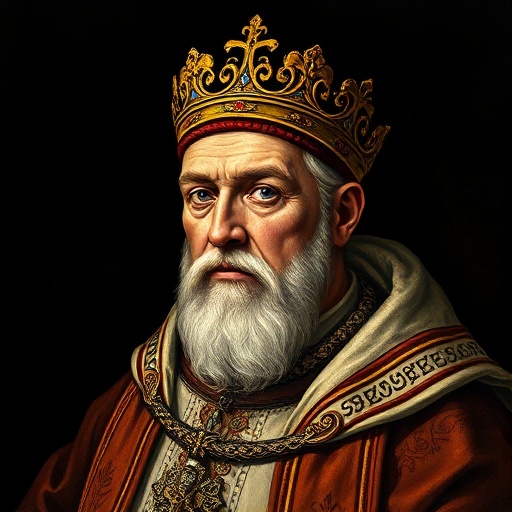
Pope (1088-1099) whose Council of Clermont speech (November 1095) launched the First Crusade — the founding event of nine centuries of Christian-Muslim military conflict. Closely associated with Pope Gregory VII (his predecessor on papal-imperial reform). For an intellectual contrast, see Saladin, Kurdish-Muslim Sultan of Egypt and Syria (1138-1193) — Saladin recaptured Jerusalem in 1187, undoing the First Crusade Urban II launched 92 years earlier. Saladin's chivalrous treatment of Christian prisoners became the canonical Muslim counter-image to Crusader brutality. The cleanest before/after pairing of the Crusades' moral arc.
Found in 1 providers: grok
1 source checked
This call urges listeners to find inner strength and bravery, reassuring them that divine presence accompanies them. It frames fear as something that can be overcome through faith, positioning God as an active partner in whatever daunting challenge lies ahead. The message is fundamentally about morale: courage is not innate but can grow, and belief in divine support makes the impossible feel achievable.
Urban II delivered this spirit at the Council of Clermont in 1095, personally rallying European nobles and clergy to reclaim Jerusalem. As pope, he wielded spiritual authority to transform military ambition into holy duty. His entire Crusade project depended on convincing ordinary men to leave homes and risk death, so emboldening hearts was not rhetoric but strategic necessity for his defining pontificate.
In 1095 medieval Europe, the Seljuk Turks had seized Jerusalem and blocked Christian pilgrimage routes, alarming Christendom. Feudal society understood courage primarily through martial virtue, and the Church's moral authority over warfare was near absolute. Urban's words fused religious faith with martial culture at a moment when Byzantine Emperor Alexios I desperately sought Western military aid, making divine encouragement politically and militarily essential.
AI-generated insights based on extensive research and information for context. Factual errors? Email [email protected].
Your cart is empty