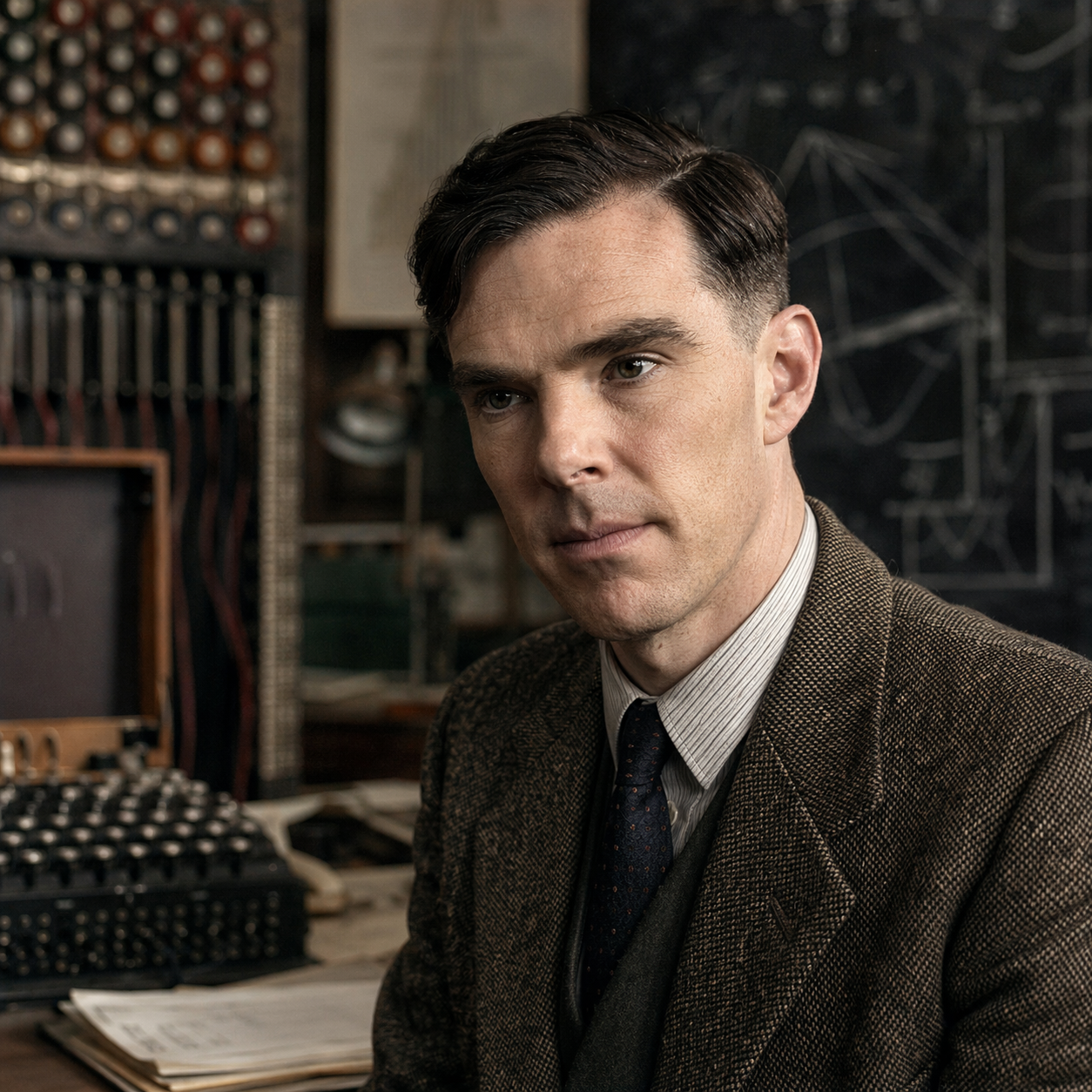
Alan Turing — "My interest in the brain is not so much in its structure, but in its function."
My interest in the brain is not so much in its structure, but in its function.
My interest in the brain is not so much in its structure, but in its function.
Click any product to generate a realistic preview. Up to 3 at a time.
* Initial load can take up to 90 seconds — revising the preview in another color is nearly instant.
"I have had a dream indicating rather clearly that I am on the way to being hetero, though I don't accept it with much enthusiasm either awake or in the dreams."
"I see no reason why a machine should not be able to have emotions."
"It seems probable that once the machine thinking method had started, it would not take long to outstrip our feeble powers and would take control."
"A computer would deserve to be called intelligent if it could deceive a human into believing that it was human."
"The computer is a tool for understanding the universe."
Found in 1 providers: grok
1 source checked
The speaker cares less about anatomy and more about what something actually does — how it processes, decides, and behaves. Structure tells you what something is made of; function tells you what it can accomplish. This distinction matters deeply when studying complex systems: understanding mechanism and capability matters more than cataloguing physical components.
Turing founded theoretical computer science and asked whether machines could think — not how neurons look, but what computation achieves. His 1950 paper proposed the Turing Test, bypassing neuroscience entirely to focus on behavioral output. He modeled the brain mathematically in his work on morphogenesis and neural nets, always prioritizing functional abstraction over biological detail.
In the mid-20th century, neuroscience was largely anatomical — mapping brain regions through lesion studies and dissection. Turing wrote amid early computing's rise, when the question of whether silicon could replicate thought was radical. The shift from structure to function mirrored computing itself: hardware matters less than the algorithm it runs.
AI-generated insights based on extensive research and information for context. Factual errors? Email [email protected].
Your cart is empty