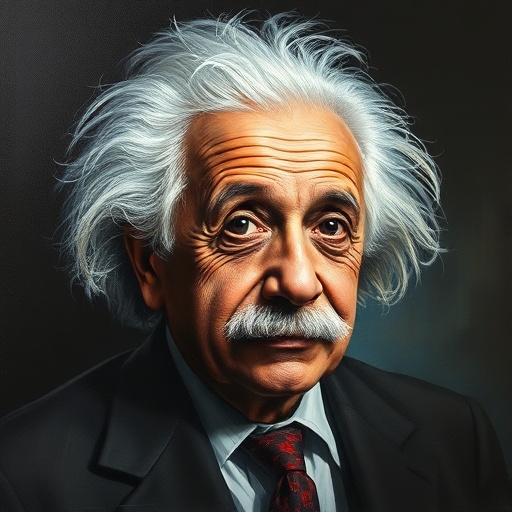
Albert Einstein — "Nationalism is an infantile disease. It is the measles of mankind."
Nationalism is an infantile disease. It is the measles of mankind.
Nationalism is an infantile disease. It is the measles of mankind.
Click any product to generate a realistic preview. Up to 3 at a time.
* Initial load can take up to 90 seconds — revising the preview in another color is nearly instant.
"It is not enough to teach a man a specialty. Through it he may become a kind of useful machine but not a harmoniously developed personality."
"I have reached an age when if someone tells me to wear socks, I don't have to."
"Peace cannot be kept by force; it can only be achieved by understanding."
"The most incomprehensible thing about the world is that it is comprehensible."
"The Chinese don't sit on benches while eating but squat like Europeans do when they relieve themselves out in the leafy woods."
Reported statement, often cited in discussions of his political views.
Date: Undetermined
WisdomFound in 2 providers: grok,deepseek
2 sources checked
Nationalism—the belief that loyalty to one's nation supersedes universal human bonds—is childish and dangerous, like a contagious disease that spreads irrationally and harms everyone it touches. Einstein argues humanity should outgrow tribal allegiances, recognizing that dividing the world into competing nations stunts moral and intellectual development, much as measles stunts a child's body.
Einstein, a German-born Jew, fled Nazi Germany in 1933 after Hitler rose to power—a direct consequence of virulent German nationalism. Stateless by choice, he held Swiss and later American citizenship, deliberately rejecting national identity as a core value. His pacifism and internationalism were central to his worldview; he championed world government and saw borders as obstacles to scientific and humanitarian progress.
Einstein lived through both World Wars, witnessing nationalism's catastrophic consequences: WWI's mass slaughter driven by imperial rivalries, then fascist nationalism in Germany, Italy, and Japan igniting WWII. The interwar period saw nationalism weaponized into genocidal ideology. Einstein spoke these words as Europe descended into ultranationalism, making his condemnation not abstract philosophy but urgent, lived warning from someone who lost colleagues, family, and homeland to its poison.
AI-generated insights based on extensive research and information for context. Factual errors? Email [email protected].
Your cart is empty