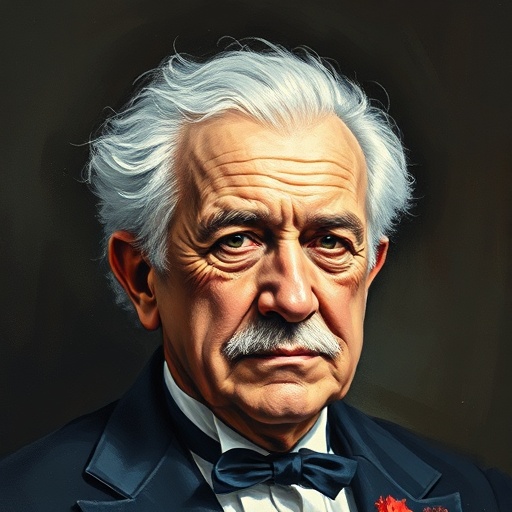
Thomas Edison — "Non-violence leads to the highest ethics, which is the goal of all evolution."
Non-violence leads to the highest ethics, which is the goal of all evolution.
Non-violence leads to the highest ethics, which is the goal of all evolution.
Click any product to generate a realistic preview. Up to 3 at a time.
* Initial load can take up to 90 seconds — revising the preview in another color is nearly instant.
"I owe my success to the fact that I never had a watch. I never knew what time it was, so I never stopped working."
"I have friends in the other world. I have had very pleasant conversations with them. I am rather unorthodox in this matter."
"I am a good listener, but I also have a great deal of patience."
"There's a way to do it better - find it."
"To invent, you need a good imagination and a pile of junk."
Found in 1 providers: deepseek
1 source checked
The quote argues that avoiding harm to others is not merely a social rule but the pinnacle of moral achievement. Ethics, not technology or power, is where humanity is ultimately headed. Evolution here means moral progress, not just biological change — the idea that human civilization is climbing toward a more humane way of being, and that refusing to do violence is its highest expression.
Edison's entire career was built on improving human life through invention. He believed progress was purposeful and directional. Despite the fierce War of Currents rivalry with Westinghouse, Edison in later years expressed pacifist and vegetarian sympathies, reportedly influenced by thinkers who valued ethical living. For a man who dedicated decades to making work safer and life easier, framing non-violence as the summit of human advancement was a natural philosophical conclusion.
Edison worked through an era of intense industrialization, labor violence, and war. Darwin's theory of evolution, published in 1859, sparked fierce debate over whether humanity's destiny was ruthless competition or moral growth. Social Darwinists justified exploitation and empire through survival of the fittest. Against this backdrop, claiming ethics as evolution's true goal was a direct counter-argument. World War I's devastation made non-violence an urgent moral question by Edison's later years.
AI-generated insights based on extensive research and information for context. Factual errors? Email [email protected].
Your cart is empty