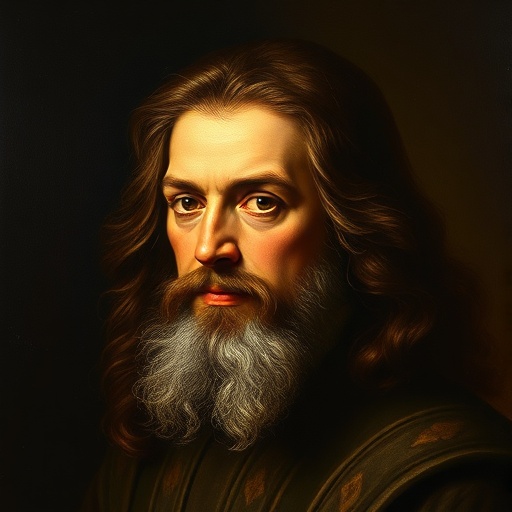
Leonardo da Vinci — "Obstacles cannot crush me. Every obstacle yields to stern resolve."
Obstacles cannot crush me. Every obstacle yields to stern resolve.
Obstacles cannot crush me. Every obstacle yields to stern resolve.
Click any product to generate a realistic preview. Up to 3 at a time.
* Initial load can take up to 90 seconds — revising the preview in another color is nearly instant.
"I love those who can smile in trouble."
"The greatest deception men suffer is from their own opinions."
"Iron rusts from disuse; stagnant water loses its purity and in cold weather becomes frozen; even so does inaction sap the vigor of the mind."
"The greatest gift is the passion for reading."
"Indeed, nature is full of infinite reasons that have never been in experience."
Found in 1 providers: grok
1 source checked
No barrier is permanent against disciplined, unyielding willpower. The quote rejects the idea that circumstances define outcomes — instead, the internal quality of your resolve determines what you can achieve. 'Stern' matters here: this isn't emotional bravado but calm, focused commitment applied consistently. Every obstacle, no matter its size, eventually yields to someone who refuses to treat it as final. Persistence is framed as a force stronger than any external resistance.
Born illegitimate in 1452, da Vinci was legally barred from university and most guilds in Renaissance Florence. He overcame this through relentless self-directed study, mastering painting, anatomy, hydraulics, and mechanical engineering without formal credentials. His notebooks show thousands of failed iterations before breakthroughs — the Vitruvian Man, flying machine designs, anatomical drawings. He crossed professional walls that credentialed specialists rarely attempted, making his life a direct embodiment of resolve defeating institutional and social obstacles.
The Italian Renaissance (late 1400s–early 1500s) was intellectually explosive but socially rigid: guild systems controlled crafts, the Church bounded inquiry, and Italy's city-states were ravaged by French invasions after 1494. Humanist philosophy was simultaneously arguing that human will and reason — not birth or fate — determined achievement. This tension between new intellectual freedom and entrenched power structures made da Vinci's defiant statement resonate as both personal philosophy and cultural declaration against a stratified world.
AI-generated insights based on extensive research and information for context. Factual errors? Email [email protected].
Your cart is empty