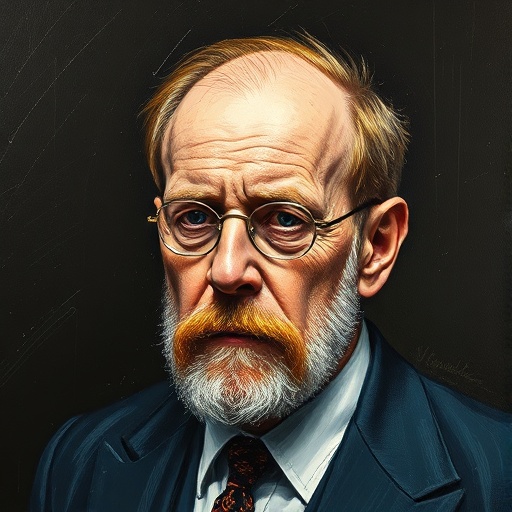
Werner Heisenberg — "Science is made by men, not by apparatus."
Science is made by men, not by apparatus.
Science is made by men, not by apparatus.
Click any product to generate a realistic preview. Up to 3 at a time.
* Initial load can take up to 90 seconds — revising the preview in another color is nearly instant.
"Every word or concept, clear as it may seem to be, has only a limited range of applicability."
"The idea of a simple, objective reality existing independently of the observer has become untenable."
"The existing scientific concepts cover always only a very limited part of reality, and the other part which has not yet been understood is infinite."
"The Copenhagen interpretation of quantum mechanics starts from the paradox that we describe our experiments in terms of classical physics, and we describe the elementary particles in terms of quantum …"
"The more precise the measurement of position, the more imprecise the measurement of momentum, and vice versa."
Emphasizing human creativity over technology in science
Date: Undated, often attributed
EducationalFound in 1 providers: grok
1 source checked
Real scientific progress comes from human thought, creativity, and judgment, not from the machines or instruments used. Tools only measure and record; they cannot ask questions, interpret results, or imagine new theories. The breakthroughs belong to people who wonder, struggle, and reason through problems. Equipment amplifies what scientists can do, but it never replaces the mind doing the work or the human responsibility behind every discovery.
Heisenberg helped build quantum mechanics and the uncertainty principle through pure thought experiments, long before any apparatus could confirm his ideas. His 1925 matrix mechanics emerged on the island of Helgoland with paper and intuition, not lab gear. He also led Germany's wartime nuclear program, forcing him to weigh human choices behind physics. For him, science was inseparable from the conscience and imagination of the researcher.
Heisenberg worked as physics shifted from chalkboard theory to massive industrial instruments: cyclotrons, reactors, and later particle accelerators. After World War II, Big Science took over, with governments funding enormous machines and huge teams. Many feared scientists were becoming cogs in apparatus-driven projects, especially after the atomic bomb. Heisenberg's reminder pushed back on that drift, insisting that moral responsibility, creative insight, and human judgment still drove real discovery, not the hardware around them.
AI-generated insights based on extensive research and information for context. Factual errors? Email [email protected].
Your cart is empty