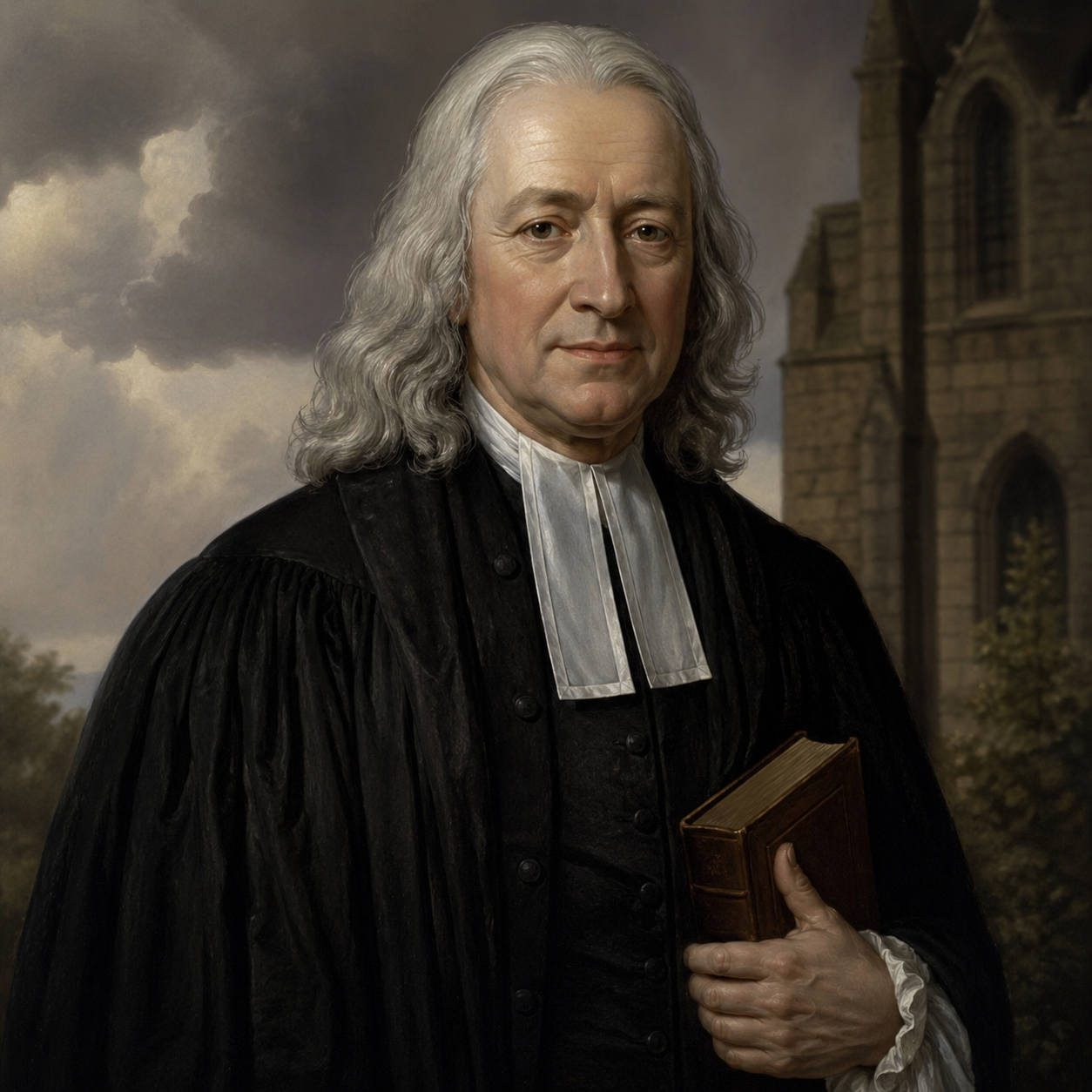
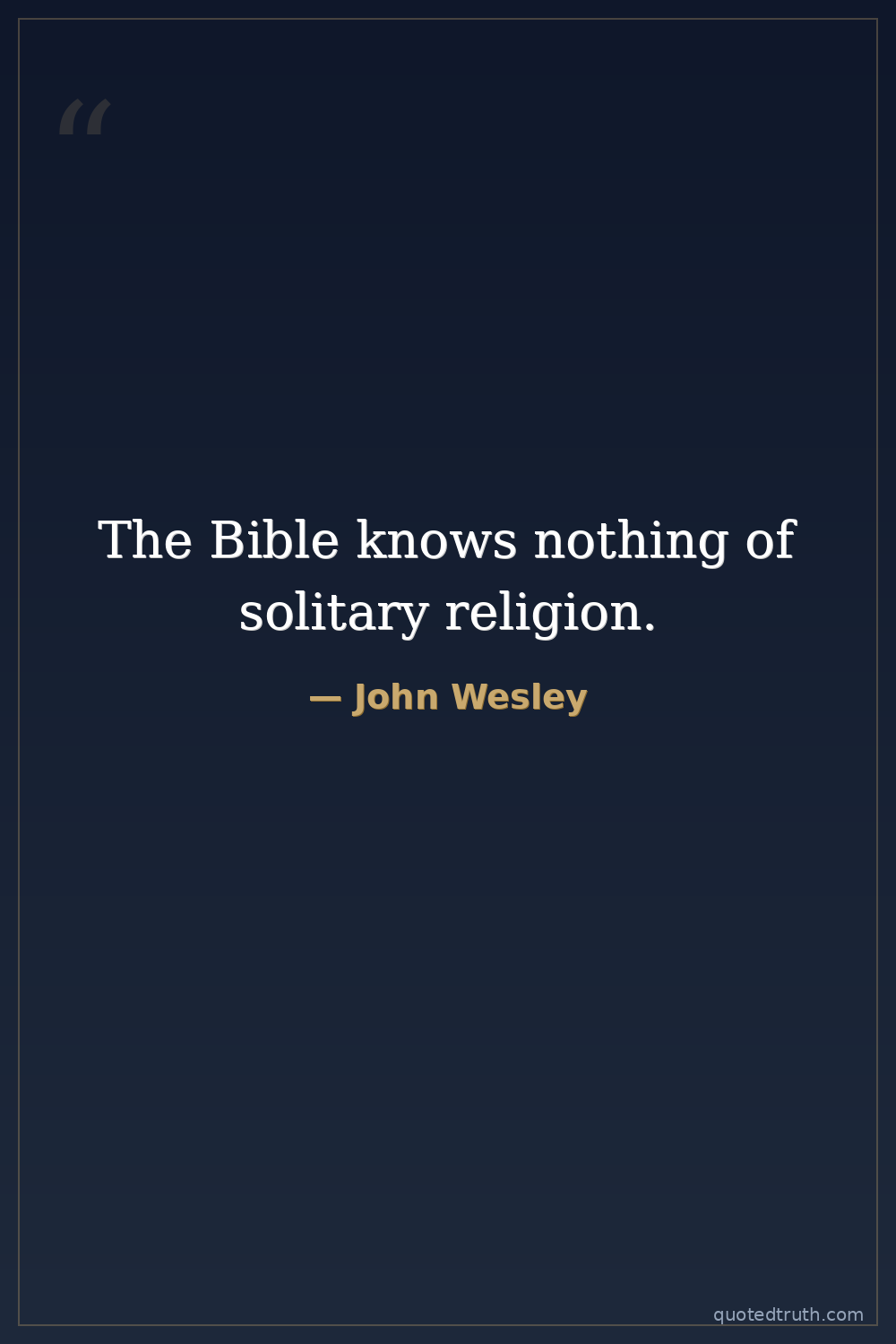
John Wesley — "The Bible knows nothing of solitary religion."
The Bible knows nothing of solitary religion.
The Bible knows nothing of solitary religion.
Click any product to generate a realistic preview. Up to 3 at a time.
* Initial load can take up to 90 seconds — revising the preview in another color is nearly instant.
"I have often thought, that if I were to choose a food to eat, it should be bread and water."
"I still find, and find it to my comfort, that I am not in the number of the rich. If I am not, I am not in the number of them that are in danger of falling into temptation and a snare, and into many f…"
"It is a poor religion that consists in negatives only."
"I am a creature of a day, passing through life as an arrow through the air. I am a spirit come from God, and returning to God; just hovering a few moments over a great gulf, till, on a sudden, I drop …"
"What a work has God wrought in our day!"
English Anglican cleric and founder of Methodism, whose open-air preaching and class-meeting structure created the largest 18th-century evangelical revival. Closely associated with Charles Wesley (his hymn-writing brother) and George Whitefield (early co-revivalist, later doctrinal opponent). For an intellectual contrast, see George Whitefield, Calvinist evangelical revivalist — Whitefield's predestinarian Calvinism vs Wesley's free-grace Arminian theology split the early Methodist movement permanently in the 1739-41 break. The founding evangelical Calvinist-Arminian schism — the two parallel evangelical traditions American Christianity descends from.
Found in 1 providers: deepseek
1 source checked
Faith is not a private, individual matter practiced in isolation. True religion requires community, shared practice, mutual accountability, and collective worship. You cannot fully live out spiritual commitments alone in your room; authentic belief demands active participation with other people, supporting one another, being challenged, and growing together in ways solitary practice cannot provide.
Wesley founded Methodism on small-group accountability — his 'class meetings' of 10-12 people meeting weekly were the engine of the movement. He organized thousands into disciplined societies, bands, and circuits. His entire ministry was relational and communal; he traveled 250,000 miles preaching and building networks, believing transformation required corporate structure, not just personal conviction.
In 18th-century Britain, Pietism and Evangelical Revivalism were simultaneously pushing personal conversion experiences while risking individualism. The established Church of England had grown formal and distant. Wesley's emphasis on community countered both cold institutionalism and the emerging Protestant tendency toward privatized faith, creating structured lay communities during rapid urbanization and social dislocation of the early Industrial Revolution.
AI-generated insights based on extensive research and information for context. Factual errors? Email [email protected].
Your cart is empty