Francis Crick — "The brain is the most complex thing in the universe."
The brain is the most complex thing in the universe.
The brain is the most complex thing in the universe.
Click any product to generate a realistic preview. Up to 3 at a time.
* Initial load can take up to 90 seconds — revising the preview in another color is nearly instant.
"I would not trust any experiment in biology unless it was confirmed by a physicist."
"The origin of life appears to be almost a miracle, so many are the conditions which would have had to be satisfied to get it going."
"The greatest joy in science is to understand something that no one else has understood before."
"If you are honest, you will find that you are often wrong. But if you are not honest, you will never find out."
"There is no ghost in the machine."
Found in 1 providers: grok
1 source checked
The brain surpasses every other known system in intricacy. With roughly 86 billion neurons forming trillions of connections that constantly rewire, it generates thought, memory, emotion, and self-awareness. No galaxy, machine, or molecular structure approaches this density of organized information processing. Crick is asserting that understanding it is the hardest problem science faces, and that its complexity is not just quantitative but qualitative, producing the very mind asking the question.
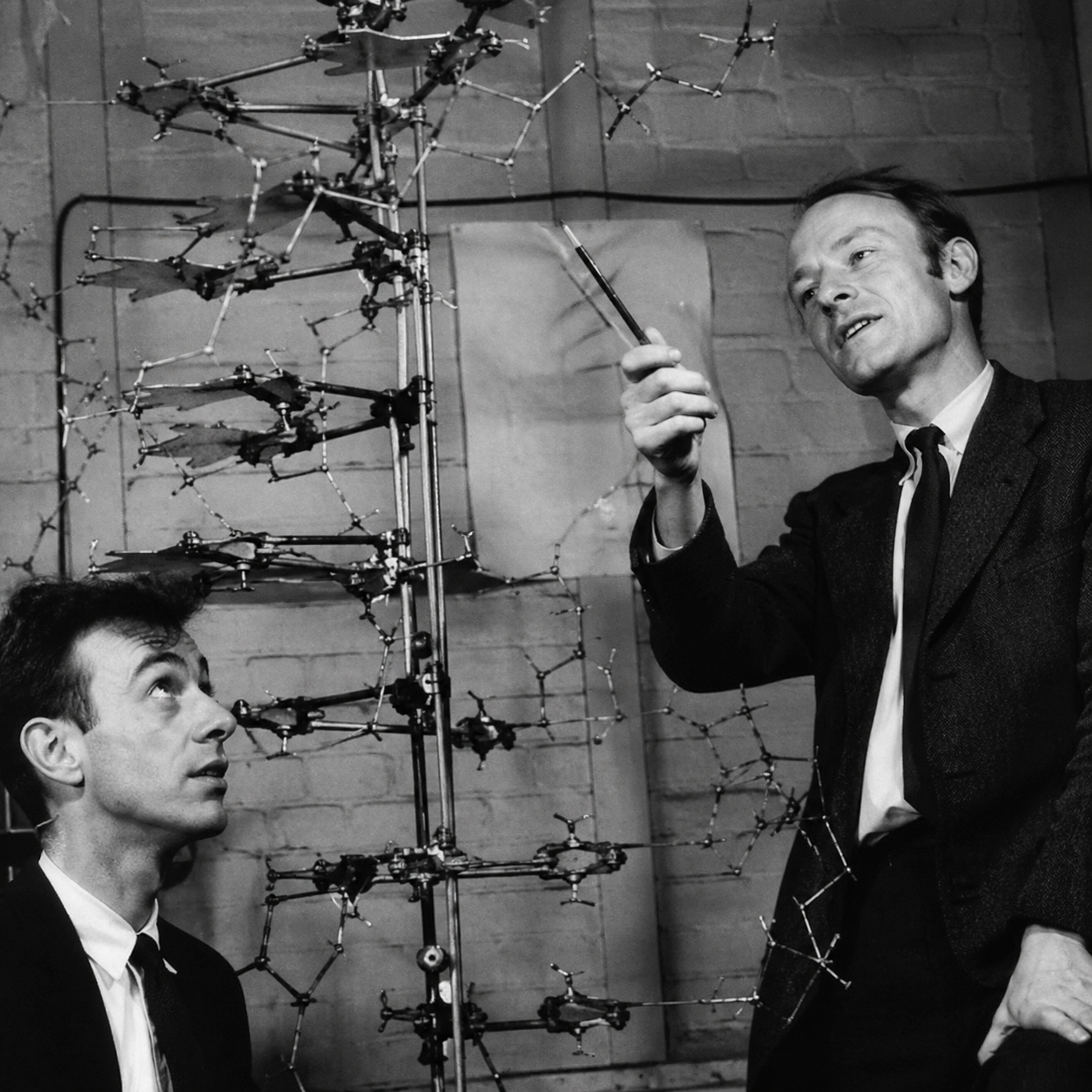
After co-discovering DNA's double helix in 1953 with Watson, Crick spent his later decades at the Salk Institute pivoting from molecular biology to consciousness research. He co-authored work on the neural correlates of consciousness with Christof Koch and called the brain his final scientific frontier. The quote captures his conviction that having cracked heredity's code, decoding awareness was a vastly harder puzzle worth devoting his remaining years to.
Crick's late career spanned the 1980s–2004, when neuroscience exploded through fMRI, PET imaging, and computational modeling. The Decade of the Brain (1990s) was declared by the U.S. Congress, the Human Genome Project was nearing completion, and consciousness shifted from philosophy to legitimate empirical science. AI's early limits underscored biological cognition's depth. Crick spoke as the genetic revolution he started matured, redirecting prestige and funding toward the brain as science's next great unknown.
AI-generated insights based on extensive research and information for context. Factual errors? Email [email protected].
Your cart is empty