Alan Turing — "The digital computer is a universal machine, capable of simulating any other mac…"
The digital computer is a universal machine, capable of simulating any other machine.
The digital computer is a universal machine, capable of simulating any other machine.
Click any product to generate a realistic preview. Up to 3 at a time.
* Initial load can take up to 90 seconds — revising the preview in another color is nearly instant.
"The only constant in life is change."
"If you cannot explain it simply, you do not understand it well enough."
"The universe is full of mysteries, and it is our task to unravel them."
"One could say that a man can 'inject' an idea into the machine, and that it will respond to a certain extent and then drop into quiescence, like a piano string struck by a hammer. Another simile would…"
"If a machine can pass the Turing Test, then it is intelligent."
Found in 1 providers: grok
1 source checked
A digital computer isn't locked to a single purpose — it can replicate the behavior of any other machine through software and programming. Whether calculating numbers, processing language, or running simulations, one machine executing the right instructions can stand in for any specialized tool. This is why your phone is simultaneously a calculator, camera, navigator, and typewriter: software makes hardware universal rather than fixed.
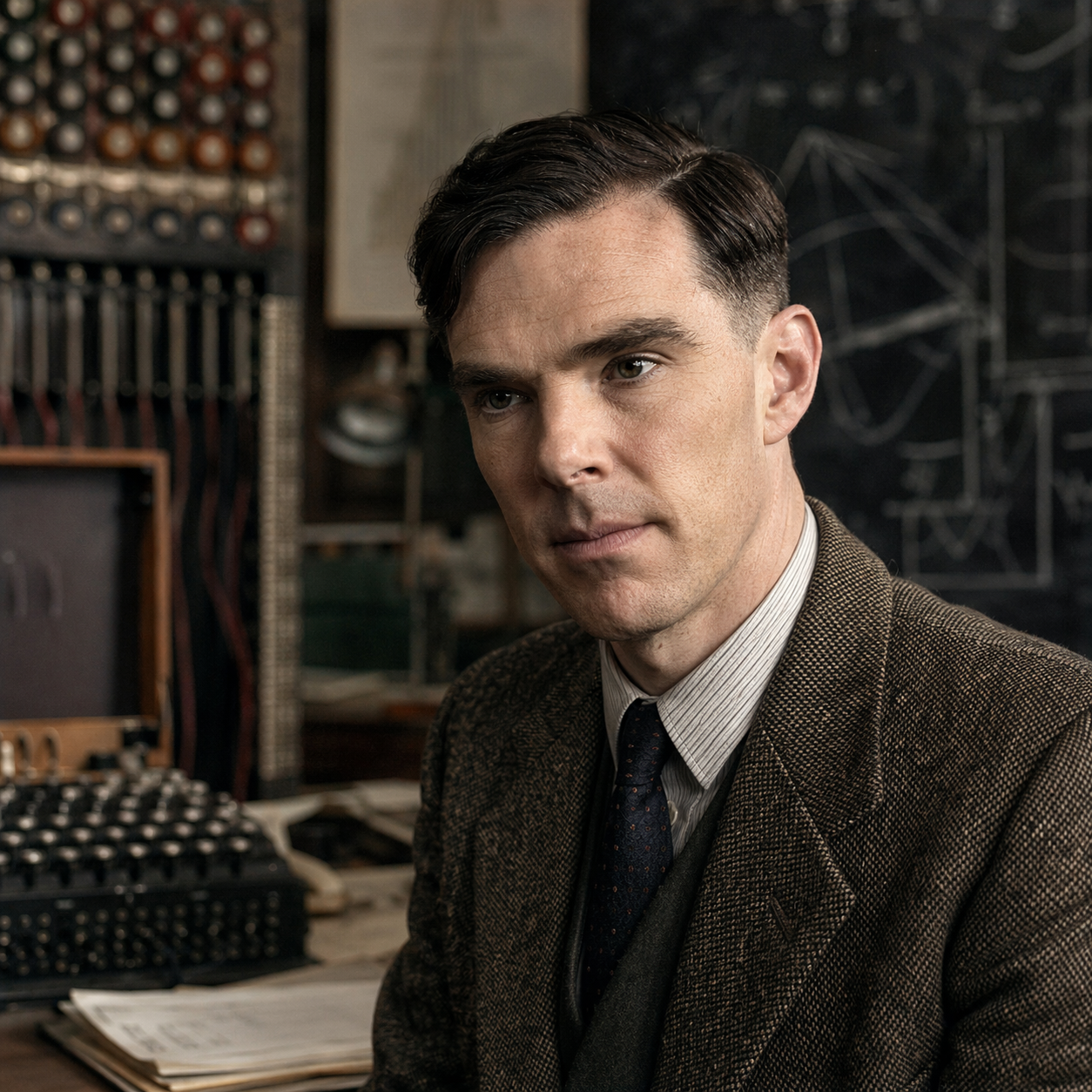
Turing formally established this concept in his 1936 paper introducing the theoretical Turing machine — a single abstract device that could compute anything computable given the right instructions. He applied it at Bletchley Park, where programmable machines cracked Nazi Enigma codes. His 1950 paper then asked whether a universal machine could simulate human thought. Universality wasn't just his greatest idea; it was the organizing principle of his entire intellectual life.
In the 1930s–1950s, computing meant room-sized machines built for single purposes — artillery calculators, census tabulators, code-breakers. Post-WWII, governments and universities raced to build general-purpose computers as Cold War demands — cryptography, nuclear modeling, logistics — strained specialized hardware. Turing's insight that software, not circuitry, defined a machine's capability made the stored-program computer possible and ended the era of single-purpose machines permanently.
AI-generated insights based on extensive research and information for context. Factual errors? Email [email protected].
Your cart is empty