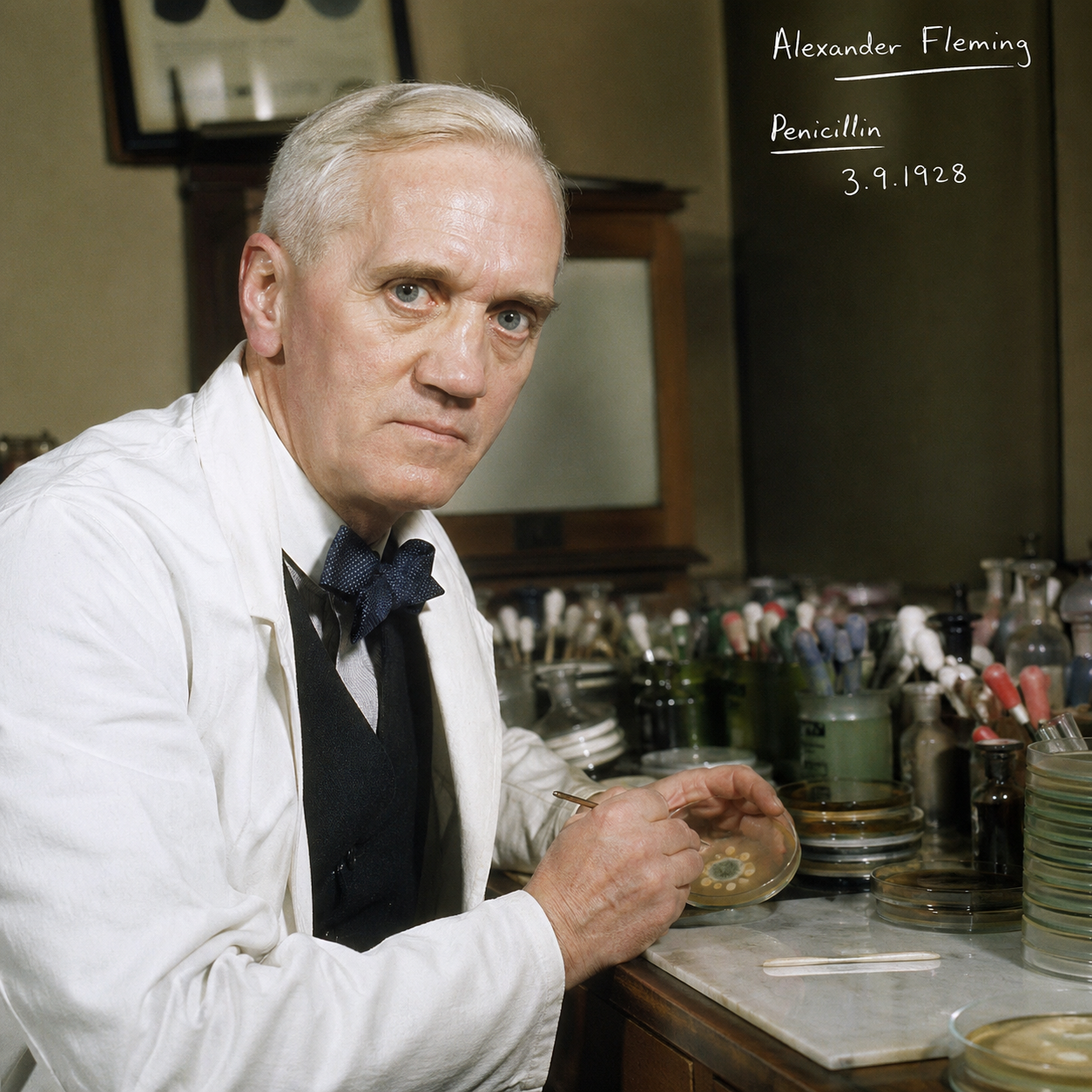
Alexander Fleming — "The discovery of penicillin was a matter of chance, but the application of it wa…"
The discovery of penicillin was a matter of chance, but the application of it was a matter of hard work.
The discovery of penicillin was a matter of chance, but the application of it was a matter of hard work.
Click any product to generate a realistic preview. Up to 3 at a time.
* Initial load can take up to 90 seconds — revising the preview in another color is nearly instant.
"My work was not a flash of genius, but a gradual unfolding of facts."
"It is the lone worker who makes the first advance in a subject; the details may be worked out by a team, but the prime idea is due to enterprise, thought, and perception of an individual."
"I had no idea that I would be involved in such a great discovery. It was purely accidental."
"I can only warn. It is up to others to heed the warning."
"I never sought fame or fortune, only to contribute to human knowledge."
Found in 1 providers: grok
1 source checked
Luck can open a door, but it takes sustained effort and determination to walk through it and make something meaningful happen. Stumbling onto an opportunity means nothing without the discipline and labor to develop it into something real. Chance creates the spark; work builds the fire. Most breakthroughs in life combine an unexpected moment with years of dedicated follow-through that transforms raw possibility into lasting achievement.
Fleming famously noticed mold contaminating a petri dish in 1928 — a classic accidental observation. But transforming that contaminated culture into a world-changing antibiotic required decades of painstaking laboratory work by Fleming and later Howard Florey and Ernst Chain. Fleming embodied rigorous scientific discipline; he had studied bacteria for years before chance favored his prepared mind, exactly what Pasteur's principle describes.
Fleming worked during the early-to-mid 20th century when infectious bacterial diseases like pneumonia, sepsis, and tuberculosis killed millions. Pre-antibiotic medicine was largely helpless against infection. World War II created urgent pressure to mass-produce penicillin for wounded soldiers. The scientific community was racing to harness laboratory discoveries into clinical treatments, making the gap between accidental observation and practical application critically important to millions of lives.
AI-generated insights based on extensive research and information for context. Factual errors? Email [email protected].
Your cart is empty