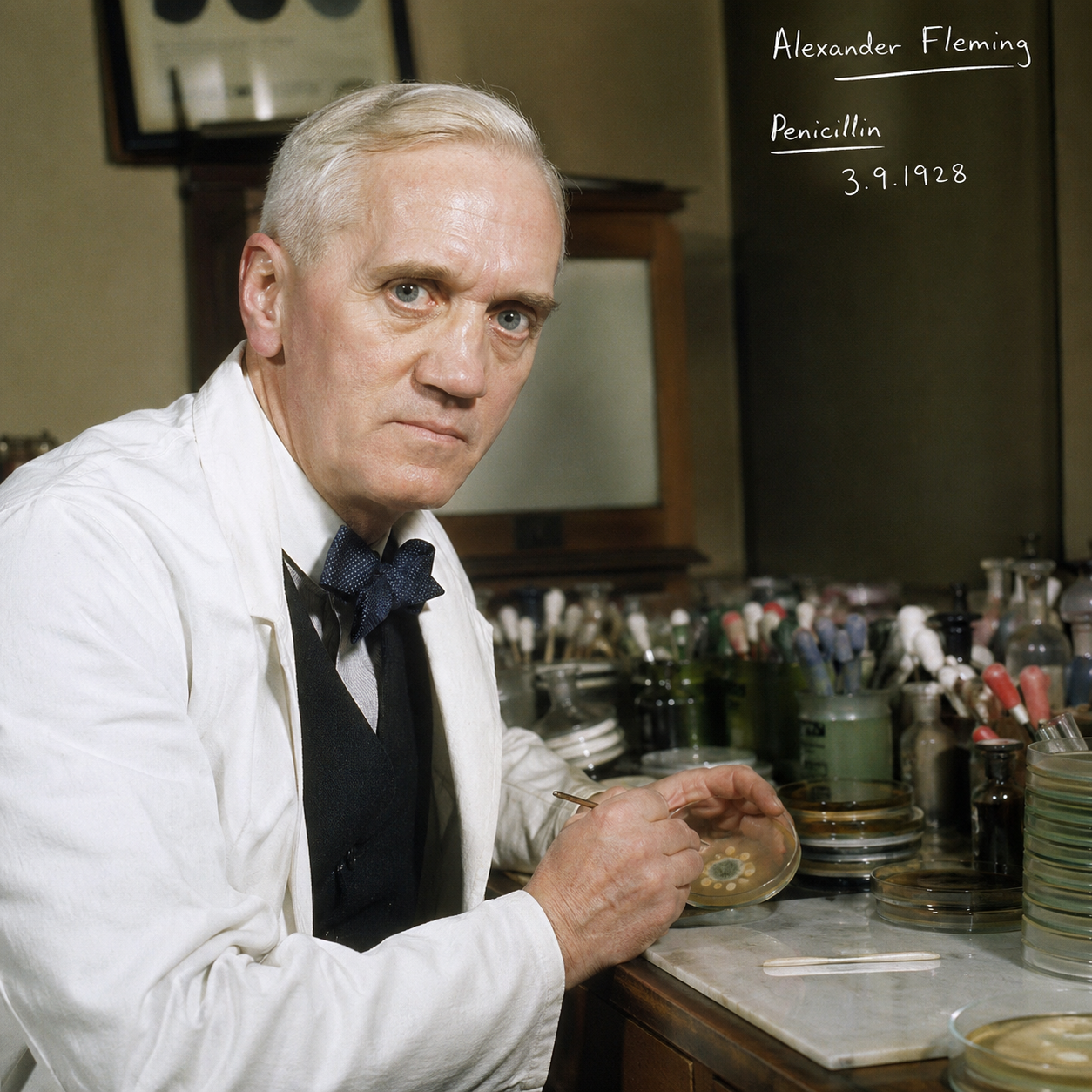
Alexander Fleming — "I am not a very good speaker, but I hope my work speaks for itself."
I am not a very good speaker, but I hope my work speaks for itself.
I am not a very good speaker, but I hope my work speaks for itself.
Click any product to generate a realistic preview. Up to 3 at a time.
* Initial load can take up to 90 seconds — revising the preview in another color is nearly instant.
"The bacteriologist must be a patient man."
"I have been fortunate in my life to have seen the benefits of my discovery."
"The unprepared mind cannot see the outstretched hand of opportunity."
"The future of chemotherapy lies in the intelligent use of these new antibacterial agents."
"The early days of penicillin were full of disappointments, but we never gave up."
Found in 1 providers: grok
1 source checked
Humility about personal eloquence paired with confidence in tangible results. The quote argues that rhetoric and showmanship matter less than what someone actually produces. Rather than lamenting poor speaking ability, it reframes the conversation entirely — genuine achievement is its own most persuasive argument. It captures the belief that authentic contribution to the world outlasts any gift for oratory or self-promotion. What you build, discover, or create communicates more honestly than words ever can.
Fleming was famously reserved and quiet — a Scottish bacteriologist who spent decades doing meticulous, unglamorous lab work at St. Mary's Hospital in London. His 1928 penicillin discovery was nearly overlooked; he published it, received little attention, and moved on. Colleagues remembered him as a man of few words. His 1945 Nobel Prize vindicated his patience. Florey and Chain had to champion penicillin's clinical development — Fleming simply let the molecule do the talking.
Fleming's career spanned the 1920s through 1950s, when public intellectuals and radio personalities made science increasingly theatrical. WWII transformed penicillin from a laboratory curiosity into a mass-produced miracle drug, saving hundreds of thousands of soldiers and earning global headlines. Science became genuinely heroic in public imagination. In that climate of science celebrities and dramatic announcements, Fleming's preference for quiet laboratory work over public acclaim was countercultural, reflecting older Victorian values of reserved professional modesty.
AI-generated insights based on extensive research and information for context. Factual errors? Email [email protected].
Your cart is empty