Laozi — "The great square has no corners. The great vessel takes a long time to complete.…"
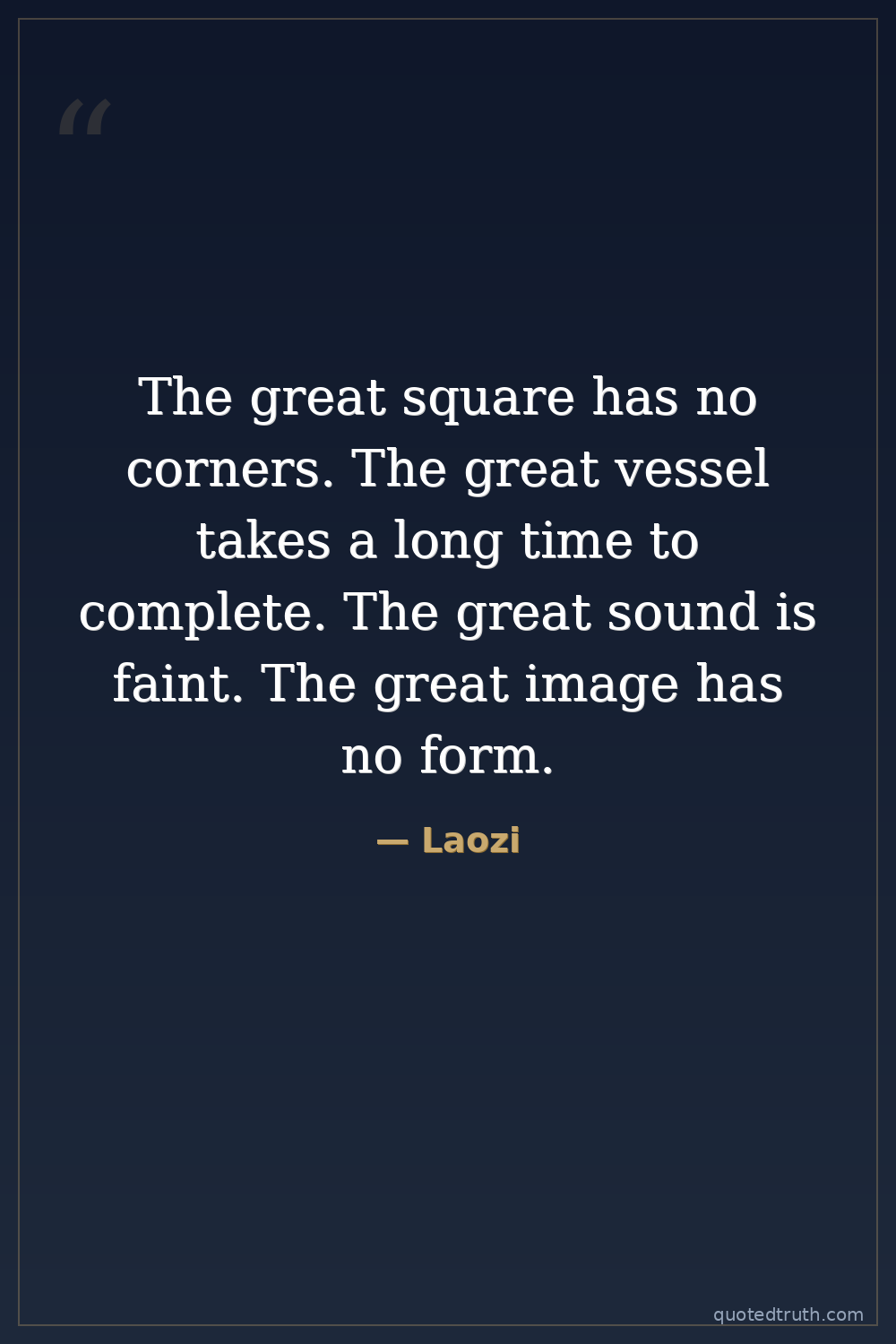
The great square has no corners. The great vessel takes a long time to complete. The great sound is faint. The great image has no form.
The great square has no corners. The great vessel takes a long time to complete. The great sound is faint. The great image has no form.
Click any product to generate a realistic preview. Up to 3 at a time.
* Initial load can take up to 90 seconds — revising the preview in another color is nearly instant.
"Abandon sageliness and discard wisdom, and the people will benefit a hundredfold."
"The more prohibitions there are, the poorer the people will be."
"The sage does not act and therefore does not fail, does not seize and therefore does not lose."
"The greatest good is like water. Water benefits all things and does not contend."
"The greatest skill is to seem unskilled; The greatest abundance is to seem empty."
Reputed founder of Taoism and author of the Tao Te Ching, whose wu wei (effortless action) shaped East Asian philosophy. Closely associated with Zhuangzi (later Taoist who extended Laozi's framework). For an intellectual contrast, see Confucius, near-contemporary Chinese sage of social ritual and duty — Confucius systematized social order through ritual and hierarchy; Laozi argued that all such systems were the disease, not the cure — the two founding poles of Chinese moral philosophy.
Found in 1 providers: gemini
1 source checked
Truly great things defy ordinary expectations and measurements. A perfect square is so vast its corners disappear; a masterwork takes so long it seems unfinished; the deepest sound is barely audible; the grandest image escapes visible shape. Greatness transcends the obvious markers we use to recognize it. What is most real and powerful often appears incomplete, quiet, or formless to shallow observation, while flashy, finished-looking things are usually lesser.
Laozi was a reclusive sage and alleged keeper of the Zhou royal archives who valued wu wei, effortless action, and hidden depth over outward display. He reportedly left society quietly, dictating the Tao Te Ching at a border pass before vanishing. This paradoxical style, praising the formless and unfinished, mirrors his life choice to withdraw from court ambition and his conviction that the true Tao cannot be named, measured, or fully expressed.
Laozi lived during the turbulent late Zhou dynasty, around the 6th century BCE, as feudal states drifted toward the Warring States chaos. Rival schools like Confucianism pushed elaborate rituals, rigid hierarchies, and visible virtue as cures for disorder. Laozi's embrace of the incomplete and invisible was a direct counterweight, offering rulers and scholars an alternative philosophy rooted in nature, humility, and restraint rather than conspicuous achievement and aggressive statecraft.
AI-generated insights based on extensive research and information for context. Factual errors? Email [email protected].
Your cart is empty