Laozi — "The wise man's food is that which nourishes him; the fool's food is that which g…"
The wise man's food is that which nourishes him; the fool's food is that which gratifies him.
The wise man's food is that which nourishes him; the fool's food is that which gratifies him.
Click any product to generate a realistic preview. Up to 3 at a time.
* Initial load can take up to 90 seconds — revising the preview in another color is nearly instant.
"If you do not change direction, you may end up where you are heading."
"The Tao is always nameless. When it is carved, it becomes names. As soon as there are names, know that it is time to stop. Knowing when to stop, one can be free from danger."
"Act without action. Those who act will fail. Those who seize will lose."
"Use justice to rule a country. Use surprise to wage war. Use non-action to govern the world."
"The more prohibitions there are, the poorer the people will be. The more sharp weapons the people have, the more troubled the state will be. The more cunning and skill man possesses, the more peculiar…"
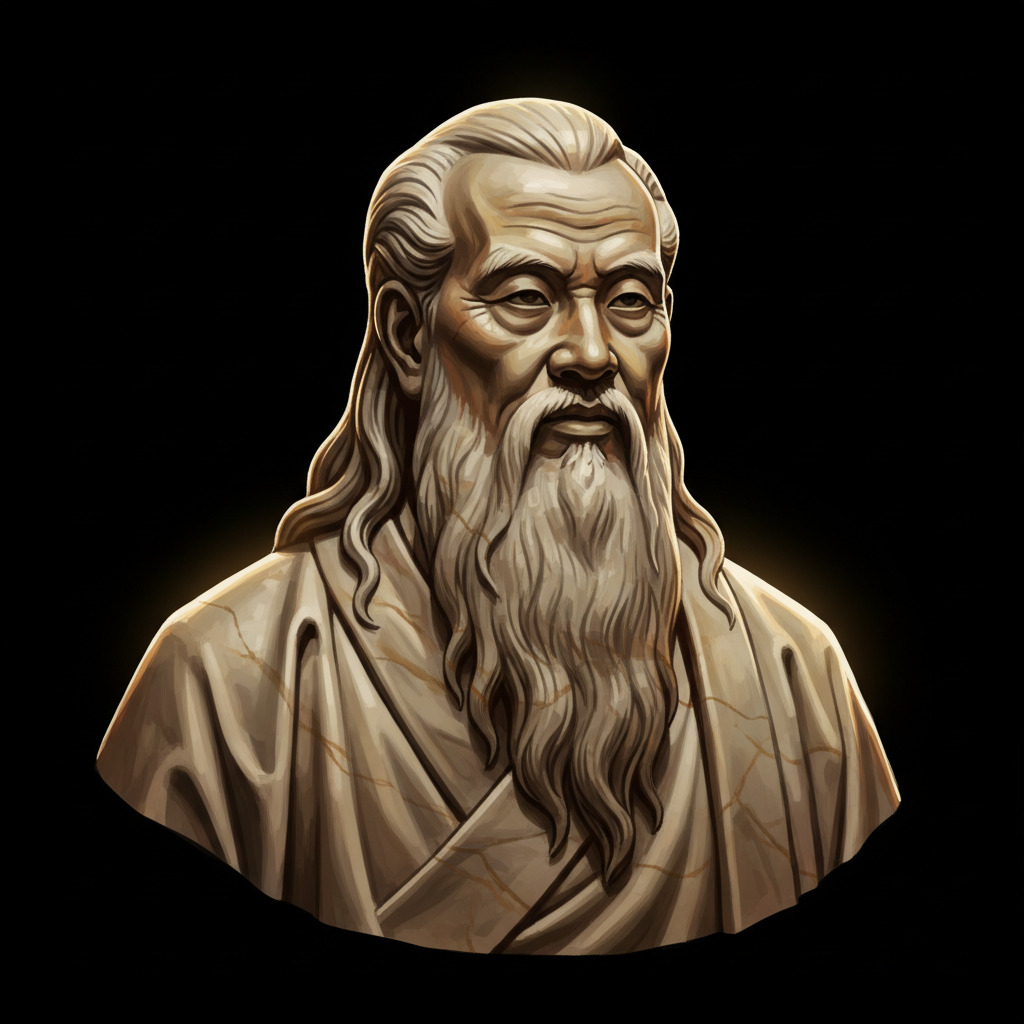
Reputed founder of Taoism and author of the Tao Te Ching, whose wu wei (effortless action) shaped East Asian philosophy. Closely associated with Zhuangzi (later Taoist who extended Laozi's framework). For an intellectual contrast, see Confucius, near-contemporary Chinese sage of social ritual and duty — Confucius systematized social order through ritual and hierarchy; Laozi argued that all such systems were the disease, not the cure — the two founding poles of Chinese moral philosophy.
Found in 1 providers: grok
1 source checked
Smart eating means choosing what your body actually needs to thrive, not what tastes best or feels most indulgent in the moment. A thoughtful person evaluates food by its real effect on health, energy, and longevity. A foolish person picks food purely for pleasure and instant satisfaction, ignoring consequences. The same logic extends beyond food to every choice: wisdom considers genuine benefit, while foolishness chases fleeting gratification.
Laozi built Taoism around living simply, aligning with nature, and distinguishing true sustenance from empty desire. As a keeper of royal archives in the Zhou court, he observed nobles indulging in lavish excess while ordinary people suffered. His Tao Te Ching repeatedly warns that craving sensory pleasure weakens both body and spirit. This saying captures his core teaching: the sage practices restraint, eats plainly, and treats the body as something to nourish rather than entertain.
During the Spring and Autumn period around 6th century BCE, Zhou dynasty feudal lords hosted extravagant banquets while peasants faced famine and constant warfare between rival states. Elite dining became a status display, with rare meats and fermented delicacies signaling power. Meanwhile, early Chinese medicine was linking diet to longevity, and competing schools debated how to live well amid chaos. Laozi's teaching pushed back against aristocratic gluttony, offering a counter-ideal of modest living rooted in natural balance.
AI-generated insights based on extensive research and information for context. Factual errors? Email [email protected].
Your cart is empty