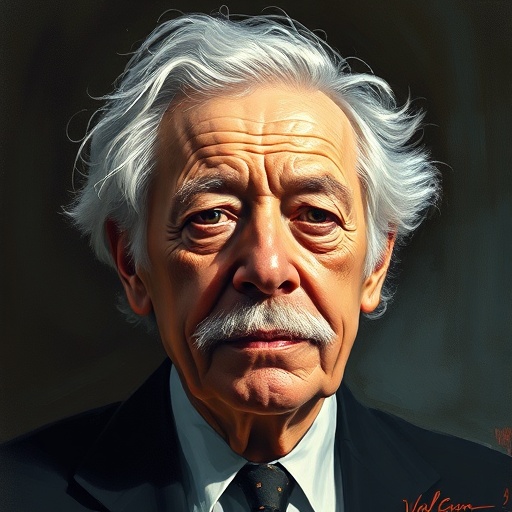
Linus Pauling — "The greatest discovery of all time is that a person can change his future by mer…"
The greatest discovery of all time is that a person can change his future by merely changing his attitude.
The greatest discovery of all time is that a person can change his future by merely changing his attitude.
Click any product to generate a realistic preview. Up to 3 at a time.
* Initial load can take up to 90 seconds — revising the preview in another color is nearly instant.
"The world needs more scientists who are willing to speak out on important issues."
"The only thing that stands between a man and what he wants from life is often merely the will to try it and the faith to believe that it is possible."
"I had begun to think about the theory of the chemical bond very seriously in 1926, '27, after quantum mechanics was discovered and then in 1928 I published a paper, a preliminary paper, and said that …"
"I believe that every human being has the potential to be a creative genius."
"I am not interested in fame or fortune. I am interested in truth."
Found in 1 providers: grok
1 source checked
A person's internal mindset is the most powerful variable shaping their future — not luck, circumstance, or resources. By consciously reorienting how you perceive problems and possibilities, you unlock different actions and outcomes. Attitude isn't passive; it's a decision that filters what you notice, attempt, and persist through. Changing it is therefore the highest-leverage move available to anyone seeking a different life trajectory.
Pauling lived this principle twice. He dismantled inherited assumptions about chemical bonding, reframing molecular structure so completely that he won the 1954 Nobel Prize in Chemistry. Then he changed his own future again — pivoting from celebrated scientist to nuclear disarmament activist at great professional risk, earning the 1962 Nobel Peace Prize. Where most scientists stayed narrowly within their field, Pauling's willingness to adopt a new attitude toward moral responsibility transformed his entire identity.
Pauling worked through the Great Depression, World War II, and the Cold War — decades when fate felt imposed from above by economic collapse, fascism, and nuclear brinkmanship. McCarthyism punished unconventional stances, and rigid social hierarchies made individual agency seem illusory. Against that backdrop, asserting that attitude alone could redirect a life was genuinely radical, countering both fatalism and authoritarian conformity with a belief in personal agency that felt almost defiant.
AI-generated insights based on extensive research and information for context. Factual errors? Email [email protected].
Your cart is empty