Wright Brothers (Orville & Wilbur) — "The greatest obstacle to progress is not ignorance, but the illusion of knowledg…"
The greatest obstacle to progress is not ignorance, but the illusion of knowledge.
The greatest obstacle to progress is not ignorance, but the illusion of knowledge.
Click any product to generate a realistic preview. Up to 3 at a time.
* Initial load can take up to 90 seconds — revising the preview in another color is nearly instant.
"For some years I have been afflicted with the belief that flight is possible to man. My disease has progressed to an incurable stage."
"The course of the experiment was not always smooth. The machine would start all right, but the propelling power was not sufficient to overcome the resistance of the air."
"We could not but feel that the time was at hand for man to make a practical flight."
"I know of only one bird — the parrot — that talks; and it can't fly very high."
"The only birds that speak are parrots, and they don’t fly very high."
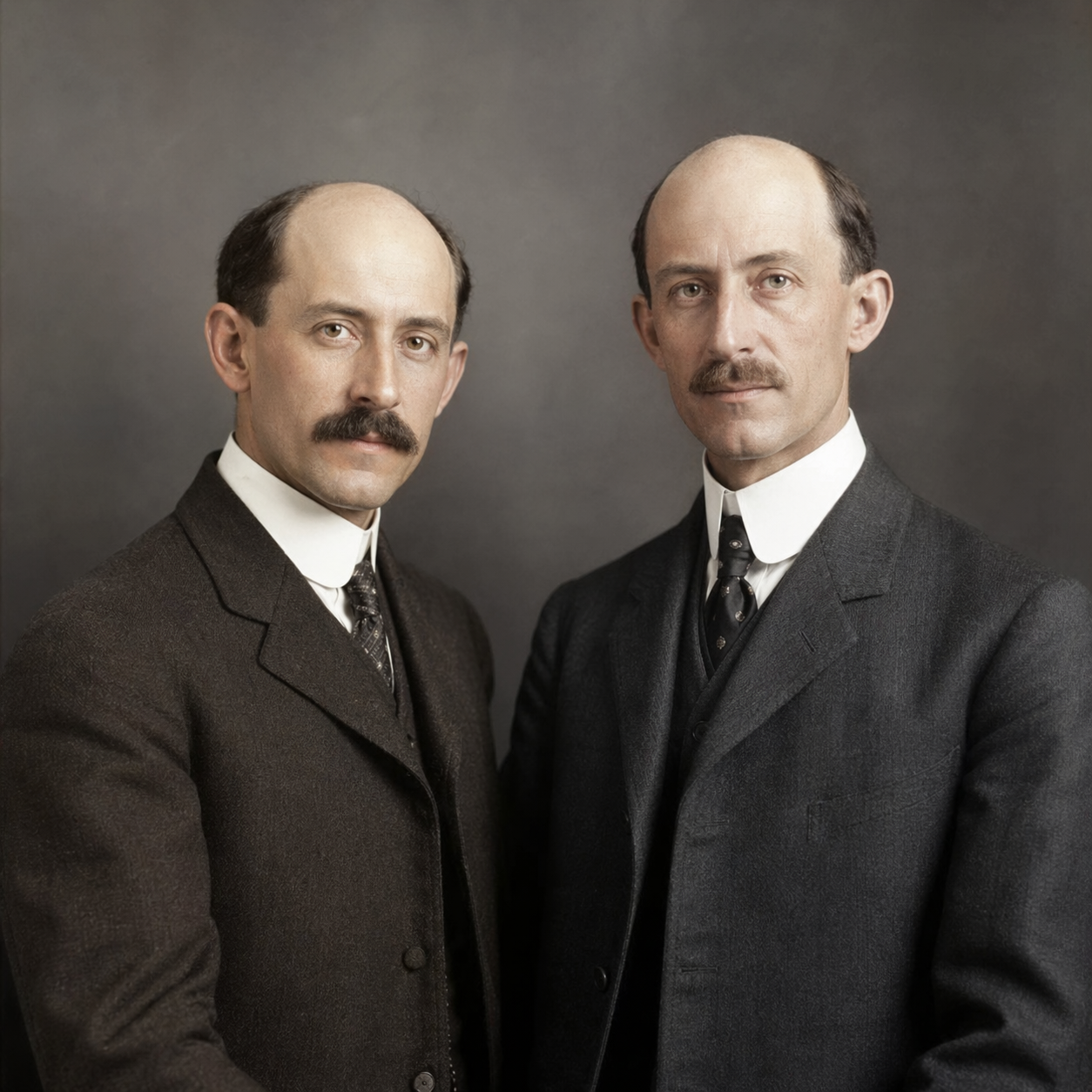
American aviation pioneers who achieved the first sustained powered controlled airplane flight at Kitty Hawk, NC, on December 17, 1903. Closely associated with Octave Chanute (their gliding mentor and aeronautical correspondent). For an intellectual contrast, see Samuel Pierpont Langley, Smithsonian Institution Secretary and government-funded aviation researcher — Langley's Aerodrome crashed twice into the Potomac in October-December 1903 with $50,000 of War Department funding; the Wright Brothers' bicycle-shop empiricism beat Langley's institutional Big Science by 9 days. The most-cited example in engineering history of empirical-tinkerer beating institution-funded credentialism.
Attributed to Orville Wright, but the exact phrasing is not easily verified.
Date: Disputed
Food & DrinkFound in 1 providers: grok
1 source checked
Progress stalls more often because people falsely believe they already understand something than because they admit they don't know. Confident but mistaken assumptions close off inquiry, while genuine ignorance at least leaves room for questions and experimentation. Real advancement requires humility about the limits of current understanding and a willingness to test beliefs against reality rather than treating accepted wisdom as settled fact.
The Wrights succeeded where trained experts failed precisely because they distrusted inherited aeronautical data. After discovering Lilienthal's lift tables were wrong, they built their own wind tunnel in 1901 and rebuilt flight theory from scratch. Self-taught bicycle mechanics without engineering degrees, they questioned assumptions the scientific establishment treated as fixed, which is exactly how two brothers from Dayton beat Samuel Langley's government-funded team to powered flight in 1903.
At the turn of the twentieth century, prestigious scientists and institutions confidently declared heavier-than-air flight impossible or decades away. Lord Kelvin dismissed it outright, and Langley's Smithsonian-backed Aerodrome crashed spectacularly nine days before Kitty Hawk. The era worshipped credentialed expertise during rapid industrial progress, yet breakthroughs in flight, radio, and relativity repeatedly came from outsiders challenging textbook certainties, making the gap between assumed and actual knowledge a defining tension of the age.
AI-generated insights based on extensive research and information for context. Factual errors? Email [email protected].
Your cart is empty