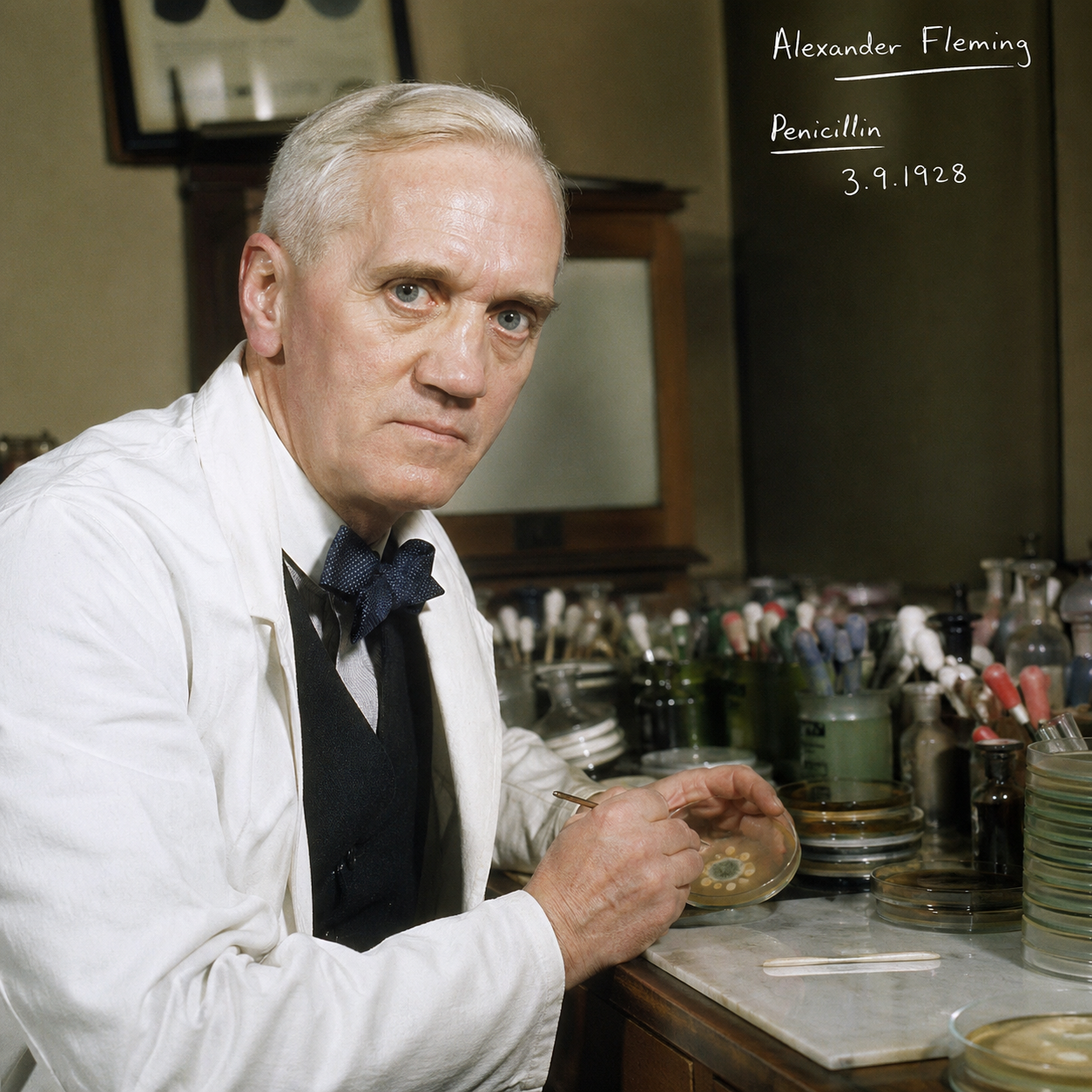
Alexander Fleming — "The greatest tragedy is the misuse of a good thing."
The greatest tragedy is the misuse of a good thing.
The greatest tragedy is the misuse of a good thing.
Click any product to generate a realistic preview. Up to 3 at a time.
* Initial load can take up to 90 seconds — revising the preview in another color is nearly instant.
"It is a happy accident that the mold grew on my plate, but it was not an accident that I recognized it."
"The mere fact that a substance has bactericidal powers does not mean that it can be used for the treatment of septic infections."
"I have been fortunate in my life to have seen the benefits of my discovery."
"The story of penicillin is a lesson in serendipity and perseverance."
"The discovery of penicillin was a series of lucky accidents."
Found in 1 providers: grok
1 source checked
When something genuinely valuable — a tool, a discovery, or a resource — is squandered, corrupted, or turned to harmful ends, that constitutes the deepest kind of loss. True tragedy isn't lacking good things, but having them and failing to use them wisely. The real waste isn't scarcity but misapplication: when something with the power to help instead becomes a vehicle for harm through carelessness, greed, or ignorance.
Fleming discovered penicillin in 1928 and spent his career watching it transform medicine — but also warning against its misuse. In his 1945 Nobel Prize lecture, he explicitly cautioned that underdosing patients could breed antibiotic-resistant bacteria. This quote crystallizes his core anxiety: that the same discovery capable of saving millions could, through ignorance or carelessness, become an engine of harm by rendering antibiotics ineffective.
Fleming lived through both World Wars, witnessing penicillin's mass production save soldiers from infected wounds during WWII. Postwar, the 1940s–50s saw explosive pharmaceutical optimism — antibiotics were prescribed freely, sometimes recklessly. This era of 'wonder drug' euphoria bred overconfidence: patients demanded antibiotics for viral infections, doctors complied, and resistance began building. Fleming's warning proved prophetic; antibiotic-resistant bacteria now kill hundreds of thousands annually, vindicating his fear of misapplied medicine.
AI-generated insights based on extensive research and information for context. Factual errors? Email [email protected].
Your cart is empty