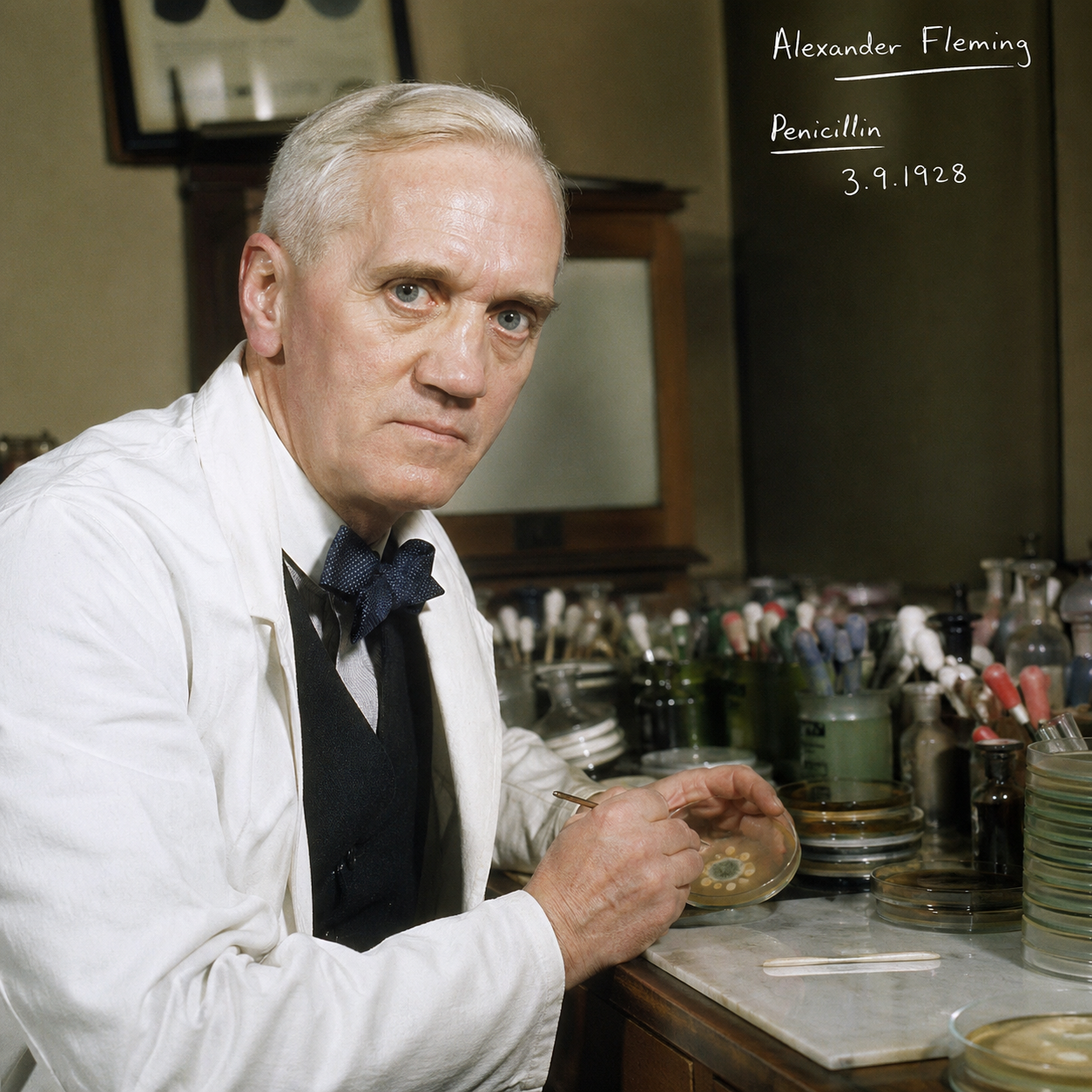
Alexander Fleming — "I am not a hero. I just happened to be in the right place at the right time."
I am not a hero. I just happened to be in the right place at the right time.
I am not a hero. I just happened to be in the right place at the right time.
Click any product to generate a realistic preview. Up to 3 at a time.
* Initial load can take up to 90 seconds — revising the preview in another color is nearly instant.
"The future of chemotherapy lies in the intelligent use of these new antibacterial agents."
"I found penicillin and have given it free for the benefit of humanity. Why should it become a profit-making monopoly of manufacturers in another country?"
"It is a matter of great satisfaction to see penicillin saving so many lives."
"Penicillin sat on my bench for ten years while I was called a quack."
"The time may come when penicillin can be bought by anyone in the shops. Then there is the danger that the ignorant man may easily underdose himself and by exposing his microbes to non-lethal quantitie…"
Found in 1 providers: grok
1 source checked
Success often comes not from extraordinary talent or deliberate planning, but from circumstance and opportunity. The speaker deflects personal credit, suggesting that being present and observant during a pivotal moment matters more than heroism. Luck, timing, and readiness intersect. Greatness sometimes emerges from accidents noticed by prepared minds rather than from calculated heroic acts.
Fleming famously discovered penicillin in 1928 when a contaminated petri dish revealed mold killing bacteria — an accident he recognized rather than engineered. His modest Scottish character resisted self-aggrandizement despite saving hundreds of millions of lives. He consistently credited chance over genius, embodying the scientist who observes carefully rather than the hero who conquers deliberately.
Fleming worked during the interwar period and World War II, when penicillin became a battlefield miracle reducing deaths from infected wounds dramatically. An era of heroic narratives celebrated individual genius, yet Fleming's humility contrasted with propaganda-era hero-worship. Scientific discovery was increasingly collaborative and serendipitous, challenging the lone-genius mythology prominent in early 20th-century public consciousness.
AI-generated insights based on extensive research and information for context. Factual errors? Email [email protected].
Your cart is empty