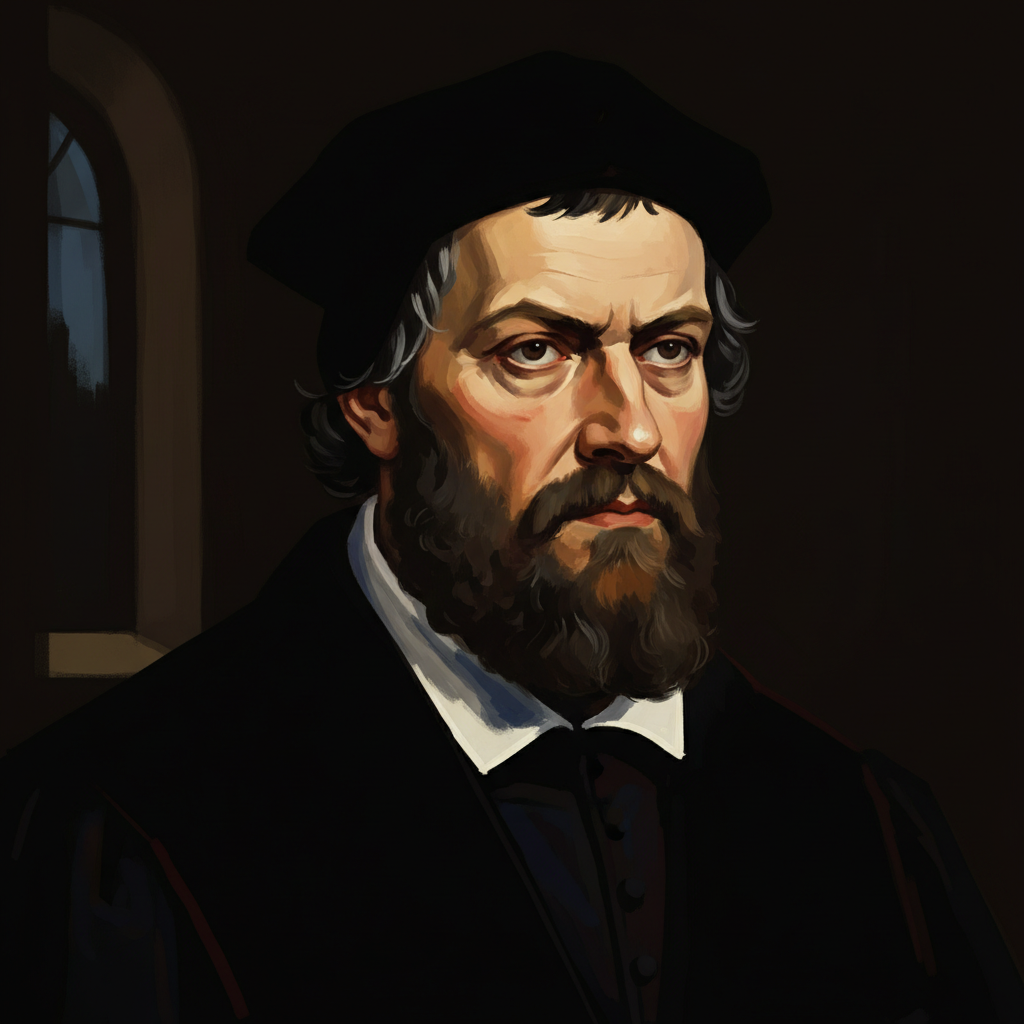
Martin Luther — "The hair is the finest ornament women have."
The hair is the finest ornament women have.
The hair is the finest ornament women have.
Click any product to generate a realistic preview. Up to 3 at a time.
* Initial load can take up to 90 seconds — revising the preview in another color is nearly instant.
"The peasants deserve death for three reasons: they have broken their oath of allegiance, they have committed murder, and they have robbed monasteries."
"God created the world out of nothing, and so long as we are nothing, he can make something out of us."
"It was I, Martin Luther, who slew all the peasants in the insurrection, for I commanded them to be slaughtered. All their blood is upon my shoulders. But I cast it on our Lord God who commanded me to …"
"You owe nothing to God except faith and confession. In all other things He lets you do whatever you like. You may do as you please, without any danger of conscience whatsoever."
"The inner man cannot be forced to do out of his own free will, what he should do, except the grace of God change the heart and make it willing."
German theologian whose 95 Theses (1517) launched the Protestant Reformation and broke the Catholic Church's monopoly on Western Christianity. Closely associated with Philipp Melanchthon (Lutheran systematizer) and John Calvin (later Reformer who built on Luther's break). For an intellectual contrast, see Pope Leo X, Renaissance pope (1513-1521) — Leo X's indulgence sales triggered Luther's break and Leo excommunicated him in 1521 — Luther's entire Reformation is structured as a direct answer to the indulgence-funded Vatican Leo represented.
Found in 1 providers: grok
1 source checked
Luther is saying that a woman's hair is her most beautiful natural feature, surpassing jewelry, clothing, or other decorations she might wear. In modern terms, he is praising hair as a defining element of feminine beauty, something inherent rather than purchased or applied. The remark treats hair as an asset that needs no enhancement, framing natural attributes as more attractive than artificial adornment or expensive accessories women might use to present themselves.
Luther, an Augustinian monk who broke celibacy by marrying former nun Katharina von Bora in 1525, often spoke candidly about marriage, women, and domestic life in his Table Talk. Unlike medieval clergy who avoided such topics, he embraced household matters and praised his wife openly. This earthy comment reflects his pastoral, plainspoken style and his Reformation-era rejection of monastic detachment, treating ordinary beauty and married life as legitimate subjects for theological reflection.
In early sixteenth-century Germany, women's hair carried strong cultural and religious weight. Married women typically covered their hair with coifs or veils in public, while unbound hair signaled virginity or impropriety. Sumptuary laws restricted ornate jewelry and clothing by class. Luther's Reformation was reshaping attitudes toward marriage, the body, and clerical celibacy, encouraging appreciation of natural, God-given gifts over Catholic ascetic ideals or the elaborate material adornments associated with wealth and aristocratic display.
AI-generated insights based on extensive research and information for context. Factual errors? Email [email protected].
Your cart is empty