Alan Turing — "The idea of a 'thinking machine' is not something that should be taken lightly."
The idea of a 'thinking machine' is not something that should be taken lightly.
The idea of a 'thinking machine' is not something that should be taken lightly.
Click any product to generate a realistic preview. Up to 3 at a time.
* Initial load can take up to 90 seconds — revising the preview in another color is nearly instant.
"The problems of biology can be reduced to physics and chemistry."
"The machine has a definite state at any moment, which is determined by the instructions it has received and by the results of its previous operations."
"The computer is a medium for thought."
"The idea of a 'thinking machine' has been considered by many, but the time for such a possibility is still far off."
"Machines take me by surprise very often."
Attributed, general implication from his writings, but exact quote is elusive.
Date: Approx. 1950
ShockingFound in 1 providers: grok
1 source checked
Machines capable of genuine thought carry consequences far beyond engineering — ethical, philosophical, and social. The quote urges serious intellectual engagement with machine cognition rather than dismissing it as fantasy or accepting it uncritically. Whether a machine can truly think forces us to reexamine consciousness, personhood, and what separates humans from sophisticated tools — questions with profound implications for law, morality, and the direction of civilization.
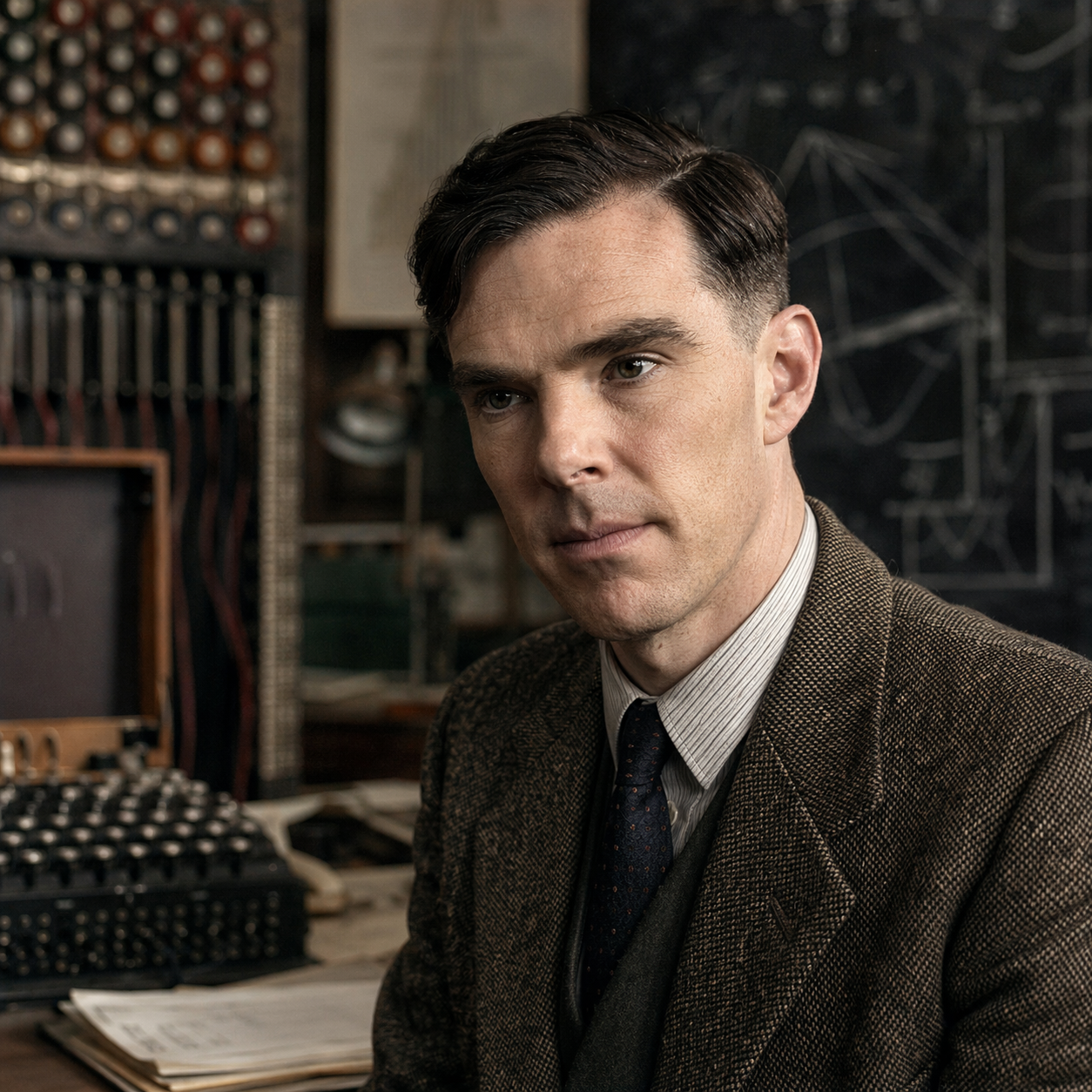
Turing spent his career making this idea concrete. His 1936 theoretical universal machine defined the limits of computation; his Bletchley Park work broke Enigma using mechanical logic; his 1950 paper 'Computing Machinery and Intelligence' proposed the Imitation Game to formally test machine thought. He understood better than anyone that dismissing or sensationalizing machine intelligence was dangerous — he had already built machines that altered history.
In the late 1940s and early 1950s, the first practical computers — Colossus, ENIAC, the Manchester Baby — were operational and their power astonished the public. The Cold War made automation a military asset and an existential worry simultaneously. Thinkers like Turing, Norbert Wiener, and John von Neumann were urgently trying to define what machines could and could not do before policy, fear, or hype outran the science.
AI-generated insights based on extensive research and information for context. Factual errors? Email [email protected].
Your cart is empty