Alan Turing — "The machine cannot do anything new."
The machine cannot do anything new.
The machine cannot do anything new.
Click any product to generate a realistic preview. Up to 3 at a time.
* Initial load can take up to 90 seconds — revising the preview in another color is nearly instant.
"We are trying to create a machine that can solve problems."
"It is not possible to produce a machine which will be intelligent in the same way that a human being is intelligent."
"Up to a point, it is better to just let the snags [bugs] be there than to spend such time in design that there are none."
"The whole problem can be reduced to the question: Can machines think?"
"The question of whether machines can think is a philosophical one, not a scientific one."
Misinterpretation of his work, often used by critics. Turing argued the opposite.
Date: N/A
GeneralFound in 1 providers: grok
1 source checked
The quote asserts that computers are fundamentally deterministic tools — they can only execute instructions humans give them, incapable of genuine creativity, originality, or surprise. Machines recombine existing inputs according to fixed rules; they cannot invent, imagine, or discover. This captures a persistent philosophical tension: is computation merely sophisticated rule-following, or can it produce something genuinely new that transcends its own programming?
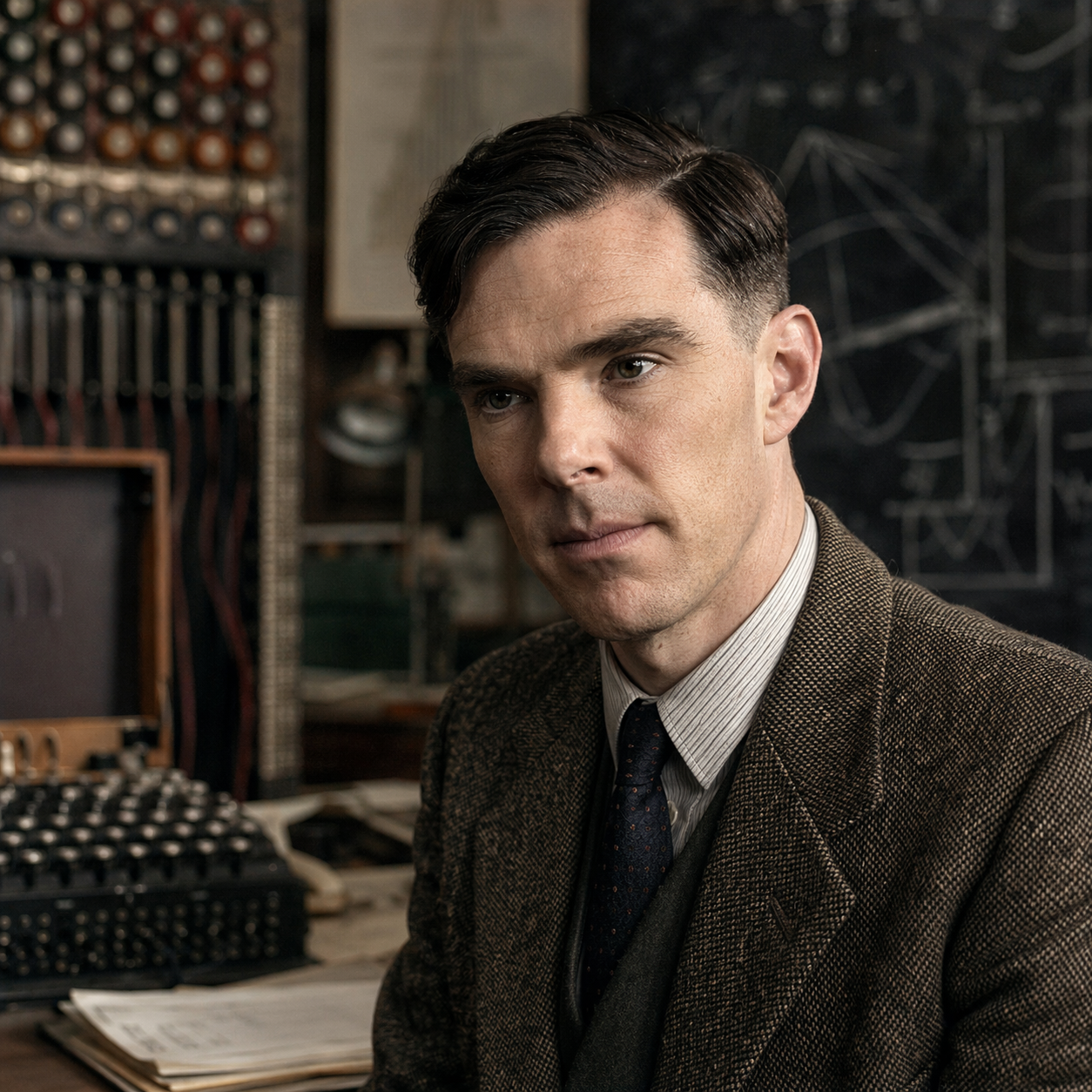
Turing directly engaged this claim — it mirrors Lady Lovelace's Objection, which he systematically rebutted in his landmark 1950 paper "Computing Machinery and Intelligence." He argued machines could genuinely surprise their operators. At Bletchley Park he built systems that cracked Enigma through emergent pattern-finding. His career embodied the tension: acutely aware of mechanical determinism yet convinced that emergent behavior could constitute genuine novelty and even intelligence.
In the late 1940s and early 1950s, computing was brand new and synonymous with deterministic calculation. Post-WWII stored-program machines amazed yet unsettled thinkers — could mere circuitry think? Cold War anxiety about automation and human uniqueness made this question urgent. Turing's 1950 Turing Test paper entered a culture actively wrestling with whether humans retained an exclusive claim on creativity, consciousness, and original thought.
AI-generated insights based on extensive research and information for context. Factual errors? Email [email protected].
Your cart is empty