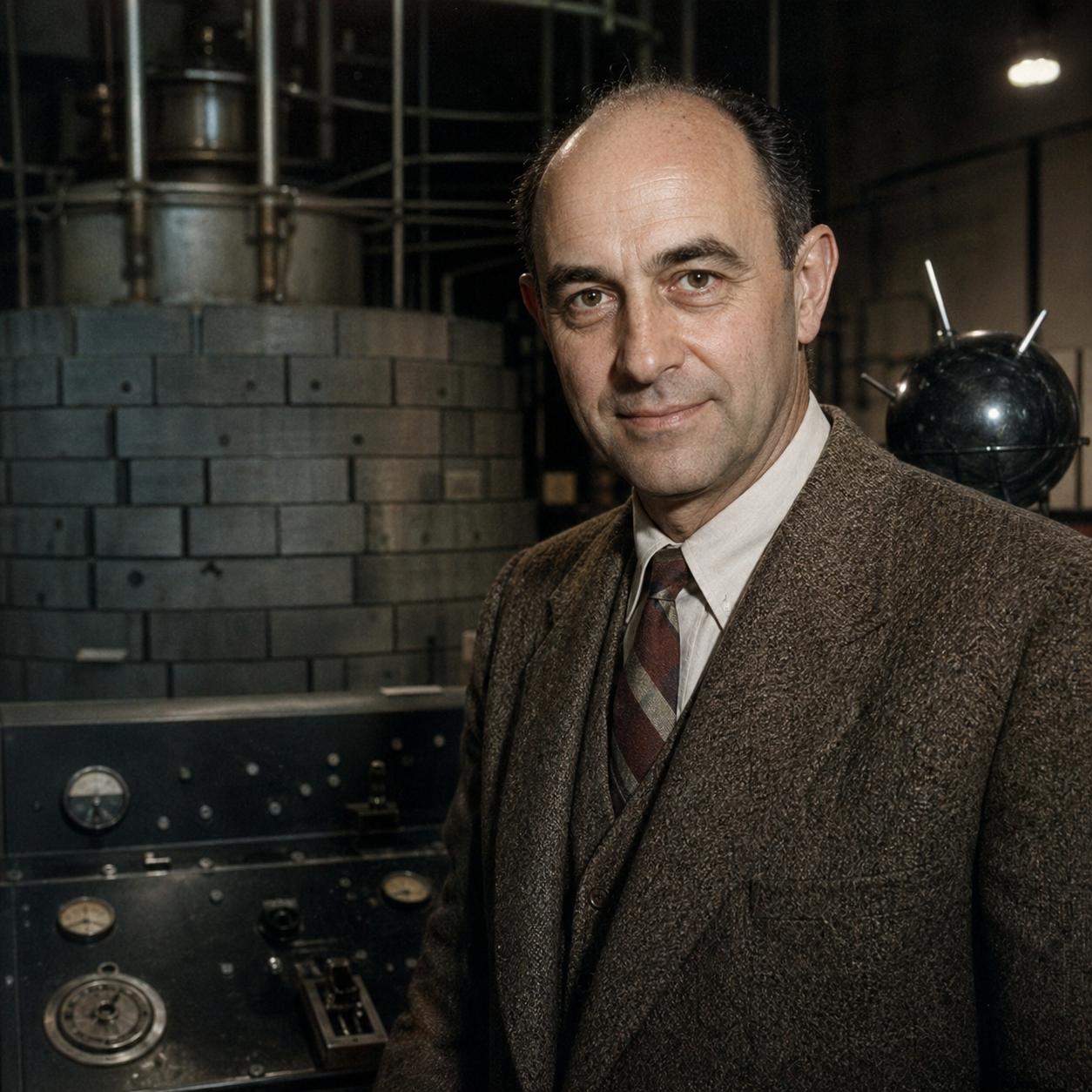
Enrico Fermi — "The main point is to be honest with yourself, and to admit when you are wrong."
The main point is to be honest with yourself, and to admit when you are wrong.
The main point is to be honest with yourself, and to admit when you are wrong.
Click any product to generate a realistic preview. Up to 3 at a time.
* Initial load can take up to 90 seconds — revising the preview in another color is nearly instant.
"Ignorance is never better than knowledge."
"The mind is not a vessel to be filled, but a fire to be kindled."
"The atomic bomb is a terrible weapon, but it is also a source of great power."
"The atomic bomb is a terrible weapon, but it is also a powerful tool for peace."
"Before I came here I was not only a little confused about the subject, but also had some doubts about my confusion."
Found in 1 providers: grok
1 source checked
Intellectual honesty demands recognizing when your beliefs or conclusions are wrong and openly correcting them. This cuts against ego and self-deception: clinging to false positions wastes energy and corrupts judgment. The core virtue here isn't brilliance—it's the courage to update your view when reality contradicts it. Progress, both personal and scientific, depends entirely on this willingness to see yourself clearly and admit error without defensiveness.
Fermi built the world's first nuclear reactor (Chicago Pile-1, 1942) through relentless empirical testing—a process demanding constant course-correction. Famous for Fermi estimation, he trained himself to quantify uncertainty honestly and identify what he didn't know. Having fled Mussolini's Italy and worked on the Manhattan Project, he understood the stakes of scientific error. His legendary precision in physics was inseparable from his willingness to challenge his own assumptions.
Fermi's era (1901–1954) spanned two world wars, fascism's rise, and the atomic age. Scientists working on fission faced wartime pressure where admitting uncertainty could derail critical projects. Post-Hiroshima, many physicists publicly wrestled with whether their work had been morally wrong. McCarthyism then demanded ideological conformity across institutions. In that climate, Fermi's insistence on honest self-reckoning was simultaneously a scientific method and a quiet political statement.
AI-generated insights based on extensive research and information for context. Factual errors? Email [email protected].
Your cart is empty