Carl Linnaeus — "The most beautiful thing in the world is a flower, but it is not so beautiful as…"
The most beautiful thing in the world is a flower, but it is not so beautiful as a woman.
The most beautiful thing in the world is a flower, but it is not so beautiful as a woman.
Click any product to generate a realistic preview. Up to 3 at a time.
* Initial load can take up to 90 seconds — revising the preview in another color is nearly instant.
"The Asiatic is haughty, greedy, and governed by opinions."
"I have been called the Prince of Botanists."
"The first step in wisdom is to know the things themselves; this notion consists in having a true idea of the objects; objects are distinguished and known by classifying them methodically and giving th…"
"The Creator's hand is visible in every part of creation."
"The African is lazy, crafty, negligent, and governed by caprice."
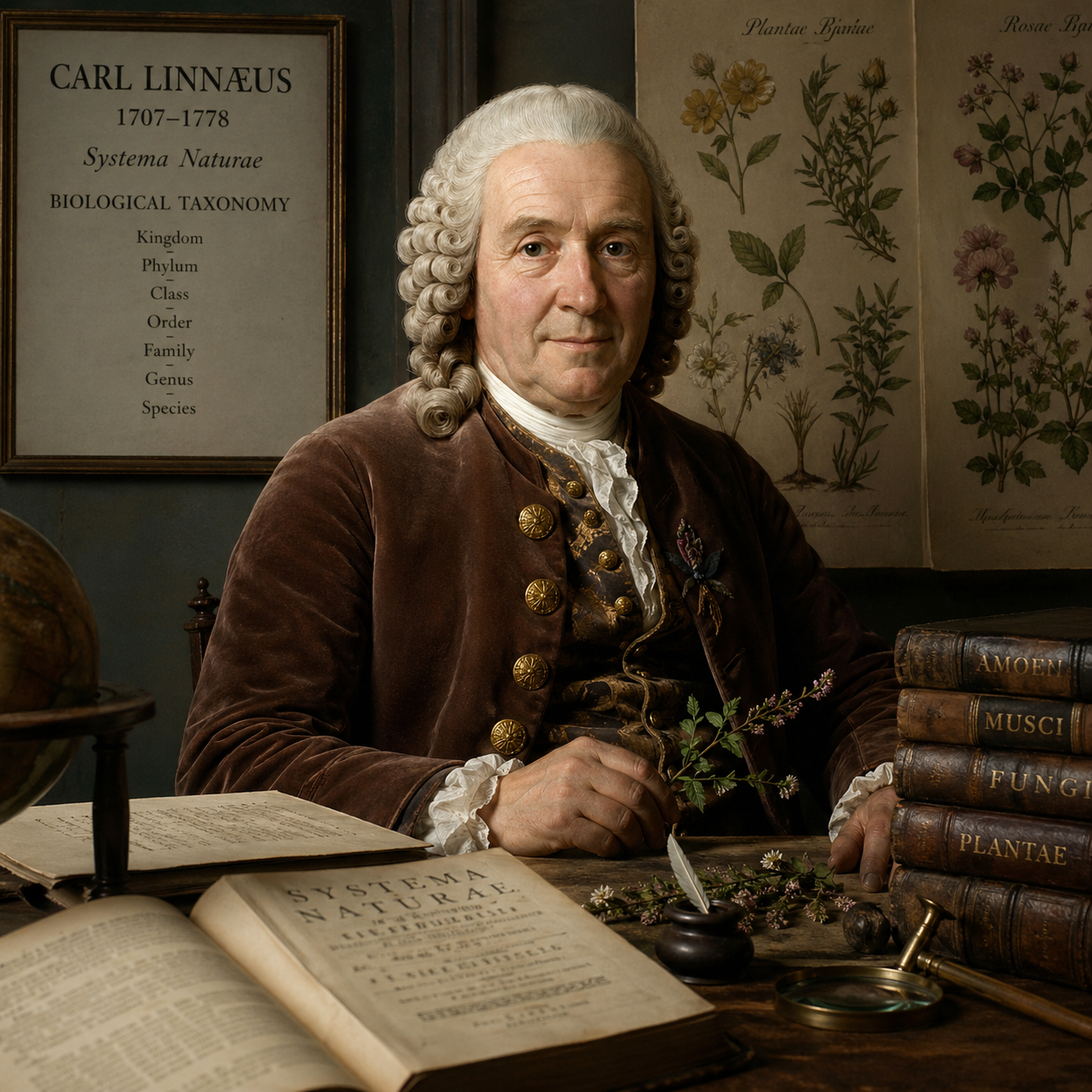
Swedish botanist and the father of modern taxonomy whose Systema Naturae (1735) introduced binomial nomenclature for naming all species. Closely associated with Joseph Banks (British naturalist who carried Linnaean classification on Cook's voyages). For an intellectual contrast, see Comte de Buffon, French naturalist and Histoire Naturelle author (1749-1788) — Buffon explicitly attacked Linnaean fixed-categories taxonomy as artificial and rejected the binomial system; his gradualist, environment-shaped natural history was the explicit alternative. Anticipates the fixed-species-vs-evolution debate Darwin would later resolve.
A personal, somewhat chauvinistic, aesthetic judgment.
Date: Uncertain (attributed)
Nature & WorldFound in 1 providers: gemini
1 source checked
Among all of nature's creations, flowers represent the pinnacle of beauty — yet even they fall short of a woman's beauty. The quote ranks beauty hierarchically, placing human feminine beauty above the natural world's finest offering. It is both a compliment to women and a testament to the speaker's deep appreciation for flowers, which makes the comparison feel meaningful rather than empty flattery.
Linnaeus devoted his life to cataloging the plant kingdom, describing over 7,700 plant species and establishing the binomial naming system still used today. Flowers were his central professional obsession. That this man — who spent decades marveling at floral diversity across continents — chose flowers as nature's highest beauty, then placed women above even that benchmark, reveals both his romantic sensibility and the depth of his botanical reverence. He married Sara Moræa in 1739 and remained devoted to her.
The 18th-century Enlightenment celebrated rational classification of nature alongside emerging Romantic ideals of beauty. Botanical exploration was booming as European empires cataloged colonial flora. Natural theology held that nature's beauty reflected divine craftsmanship. Simultaneously, literary culture — from Rousseau to court poetry — romanticized feminine beauty as transcendent. Ranking a woman above flowers in this era was not mere gallantry; it participated in a broader philosophical debate about where human beings stood within the divine natural order.
AI-generated insights based on extensive research and information for context. Factual errors? Email [email protected].
Your cart is empty