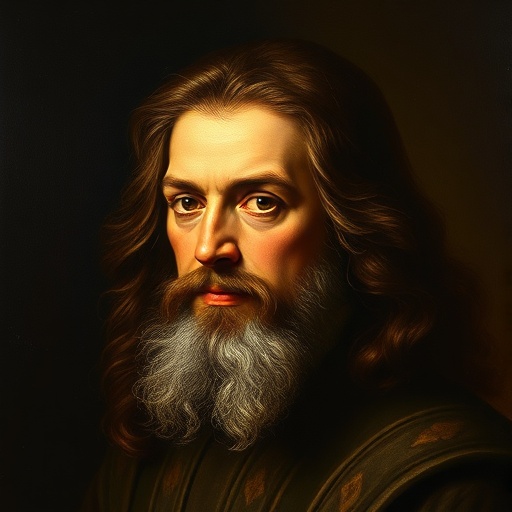
Leonardo da Vinci — "The natural desire of good men is knowledge."
The natural desire of good men is knowledge.
The natural desire of good men is knowledge.
Click any product to generate a realistic preview. Up to 3 at a time.
* Initial load can take up to 90 seconds — revising the preview in another color is nearly instant.
"The senses are of the earth, reason is of the soul."
"Among the great things which are to be found among us, the Being of Nothingness is the greatest."
"The wise man will want to be rich only in order to be able to help himself and his friends."
"The painter who draws merely by practice and by eye, without any reason, is like a mirror which copies everything placed in front of it without understanding."
"The true artist is a man who believes in himself and is not afraid to stand alone."
Found in 1 providers: grok
1 source checked
People who are genuinely good are naturally drawn to understanding the world around them. Knowledge isn't a luxury or a burden—it's what virtuous people gravitate toward instinctively. The quote positions intellectual curiosity as a moral quality, not just an intellectual one. Being 'good' means wanting to know: how things work, why they happen, what is true. Ignorance, by contrast, is implicitly linked to a lesser character.
Leonardo filled over 13,000 pages of notebooks with observations spanning anatomy, geology, hydrology, optics, and mechanics—driven entirely by curiosity rather than formal training. He dissected more than 30 human corpses to understand musculature and organs, designed flying machines by studying birds, and mapped river currents. As a largely self-educated illegitimate son denied university access, Leonardo embodied his own principle: his moral seriousness expressed itself through relentless, lifelong pursuit of understanding.
Leonardo lived during the Italian Renaissance (1452–1519), when humanism was redefining what it meant to be educated. Classical Greek and Roman texts were being rediscovered, and scholars argued that human reason could illuminate nature. The printing press, introduced in Europe around 1440, was democratizing knowledge at unprecedented speed. Yet most learning still required Church or aristocratic patronage. Framing knowledge-desire as inherently moral made intellectual curiosity a civic and spiritual virtue, not mere elite privilege.
AI-generated insights based on extensive research and information for context. Factual errors? Email [email protected].
Your cart is empty