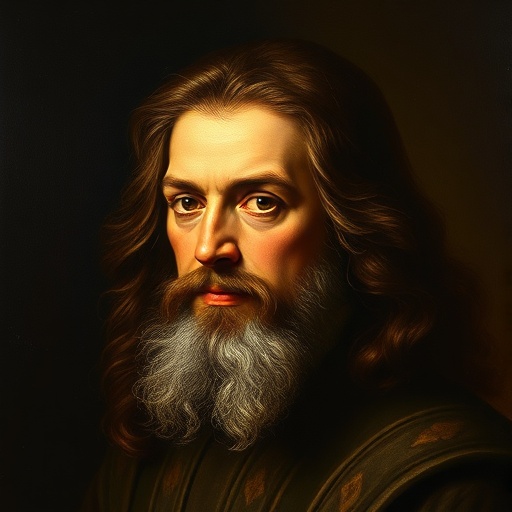
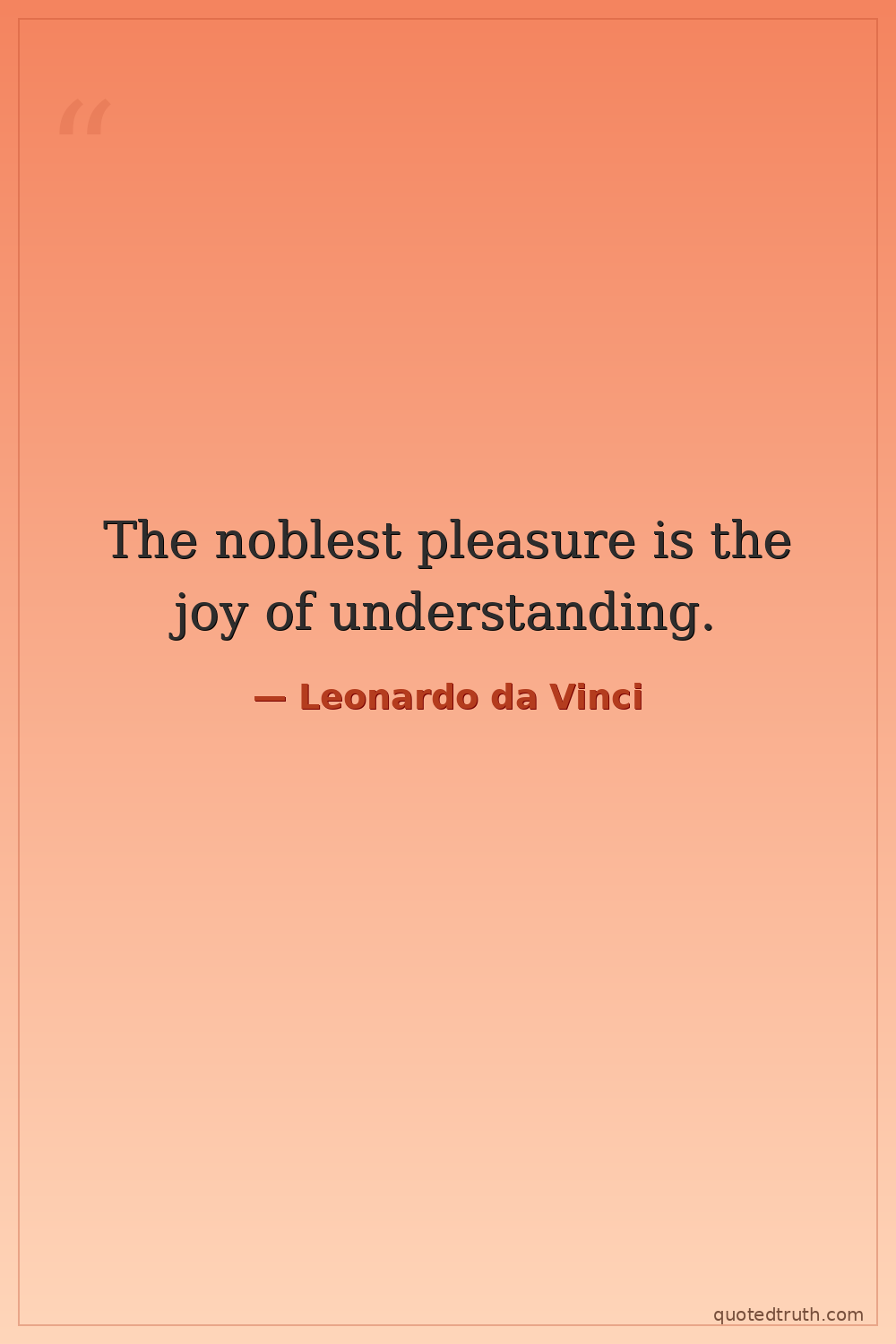
Leonardo da Vinci — "The noblest pleasure is the joy of understanding."
The noblest pleasure is the joy of understanding.
The noblest pleasure is the joy of understanding.
Click any product to generate a realistic preview. Up to 3 at a time.
* Initial load can take up to 90 seconds — revising the preview in another color is nearly instant.
"Blind ignorance misleads us and makes us content with this empty life."
"The works of nature are such that they do not exist without cause."
"No human investigation can be called true science if it doesn't pass through mathematical demonstrations."
"Small rooms or dwellings discipline the mind, large ones enfeeble it."
"Water is the driving force of all nature."
Found in 1 providers: grok
1 source checked
Understanding something — how a mechanism works, why a pattern exists, what underlies a phenomenon — produces a pleasure more refined and lasting than any sensory reward. Da Vinci ranks intellectual comprehension above wealth, fame, or physical pleasure. True satisfaction comes not from acquiring things but from genuinely grasping them. This is an argument that the life of the curious, questioning mind is the richest life available to a human being.
Da Vinci filled over 13,000 notebook pages obsessively documenting anatomy, water flow, geology, optics, and flight — driven purely by the need to understand, not publish or profit. He dissected more than 30 human corpses to grasp muscular mechanics. He abandoned paintings mid-work, seemingly more captivated by solving visual problems than completing commissions. For da Vinci, understanding was not a means to an end — it was the end itself.
The Italian Renaissance was dismantling medieval assumptions that knowledge flowed only from scripture and Church authority. Humanism placed human reason and empirical observation at the center of intellectual life. Gutenberg's printing press was spreading ideas rapidly. Copernicus, Vesalius, and others were beginning to challenge received wisdom through direct study. In this climate, declaring that understanding itself — not piety, not wealth — was the highest pleasure was a quietly radical humanist statement.
AI-generated insights based on extensive research and information for context. Factual errors? Email [email protected].
Your cart is empty