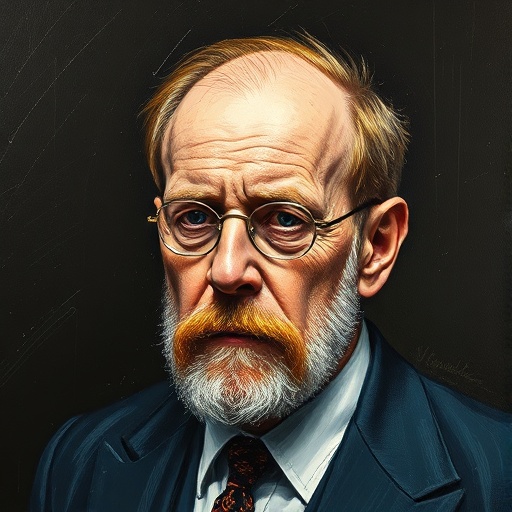
Werner Heisenberg — "The path to the new physics was paved by the discovery of the quantum of action."
The path to the new physics was paved by the discovery of the quantum of action.
The path to the new physics was paved by the discovery of the quantum of action.
Click any product to generate a realistic preview. Up to 3 at a time.
* Initial load can take up to 90 seconds — revising the preview in another color is nearly instant.
"Quantum theory does not really describe the behavior of 'things'; it describes the behavior of 'what we can know' about things."
"An expert is someone who knows some of the worst mistakes that can be made in his subject and how to avoid them."
"Our proposition that the physicists on both sides should not advance the production of atomic bombs, was thus indirectly, if one wants to exaggerate the point, a proposition in favor of Hitler."
"The existing scientific concepts cover always only a very limited part of reality, and the other part which has not yet been understood is infinite."
"We wouldn't have had the moral courage to recommend to the government in the spring of 1942 that they should employ 120,000 men just for building the thing up."
Found in 1 providers: grok
1 source checked
Modern physics took a decisive turn once scientists realized energy is not continuous but comes in discrete packets called quanta. Max Planck's 1900 discovery of this minimum unit of action opened a door that classical physics could not. Everything built on the old assumption of smooth, continuous processes had to be reconsidered. Without that single foundational insight, the later frameworks describing atoms, light, and matter would have had no starting point.
Heisenberg built his entire career on the quantum foundation Planck laid. His 1925 matrix mechanics and 1927 uncertainty principle directly extended the quantum revolution into a full theory of atomic behavior. He won the 1932 Nobel Prize for creating quantum mechanics itself. Acknowledging Planck's discovery of the action quantum reflects Heisenberg's deep awareness that his own breakthroughs stood on a specific historical turning point he neither invented nor could have bypassed.
Heisenberg worked during physics' most turbulent stretch, roughly 1920 to 1945. Planck's 1900 quantum hypothesis, Einstein's 1905 photon paper, and Bohr's 1913 atom model had shattered classical certainty. Young theorists in Göttingen, Copenhagen, and Munich were racing to build a coherent atomic theory. World War I, Weimar Germany, and later Nazi rule shaped the institutions around them. This sentence captures the self-aware moment when physicists recognized quantum discreteness as the hinge of modern science.
AI-generated insights based on extensive research and information for context. Factual errors? Email [email protected].
Your cart is empty