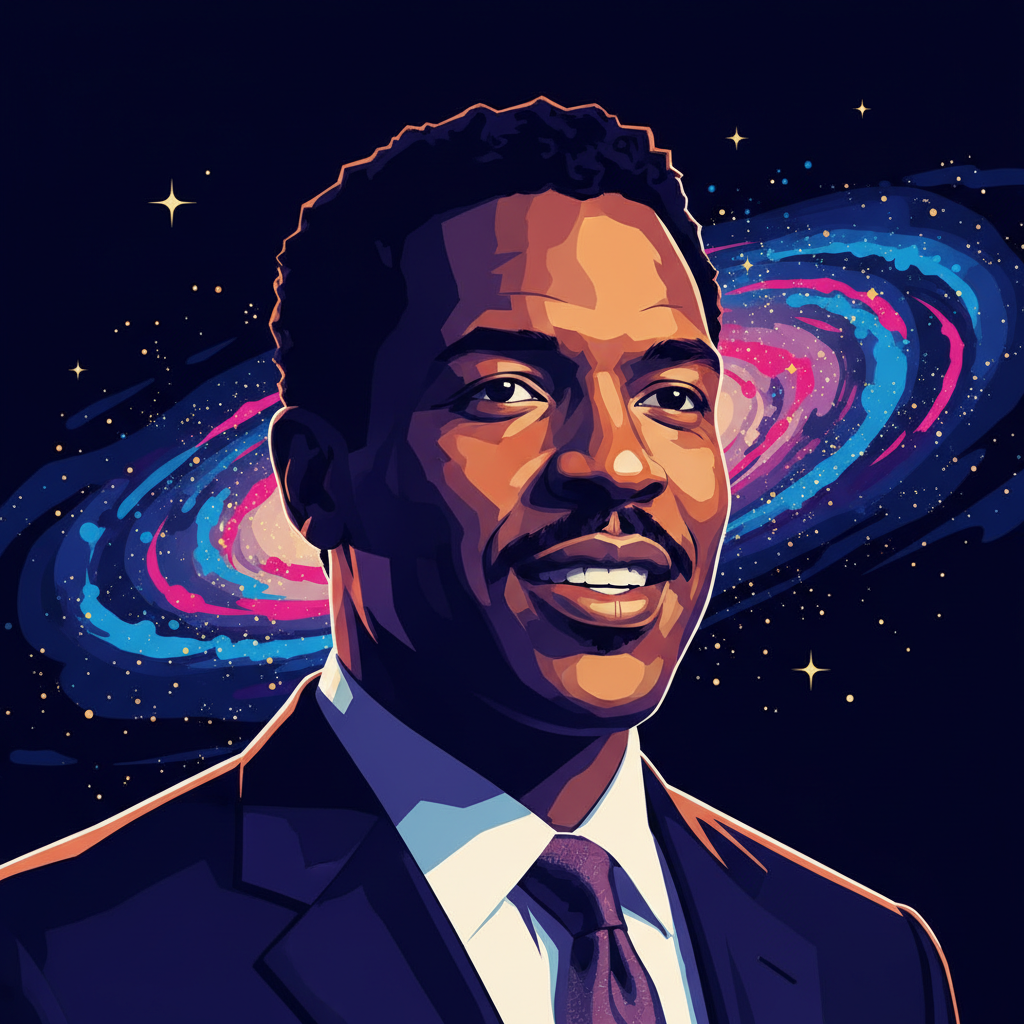
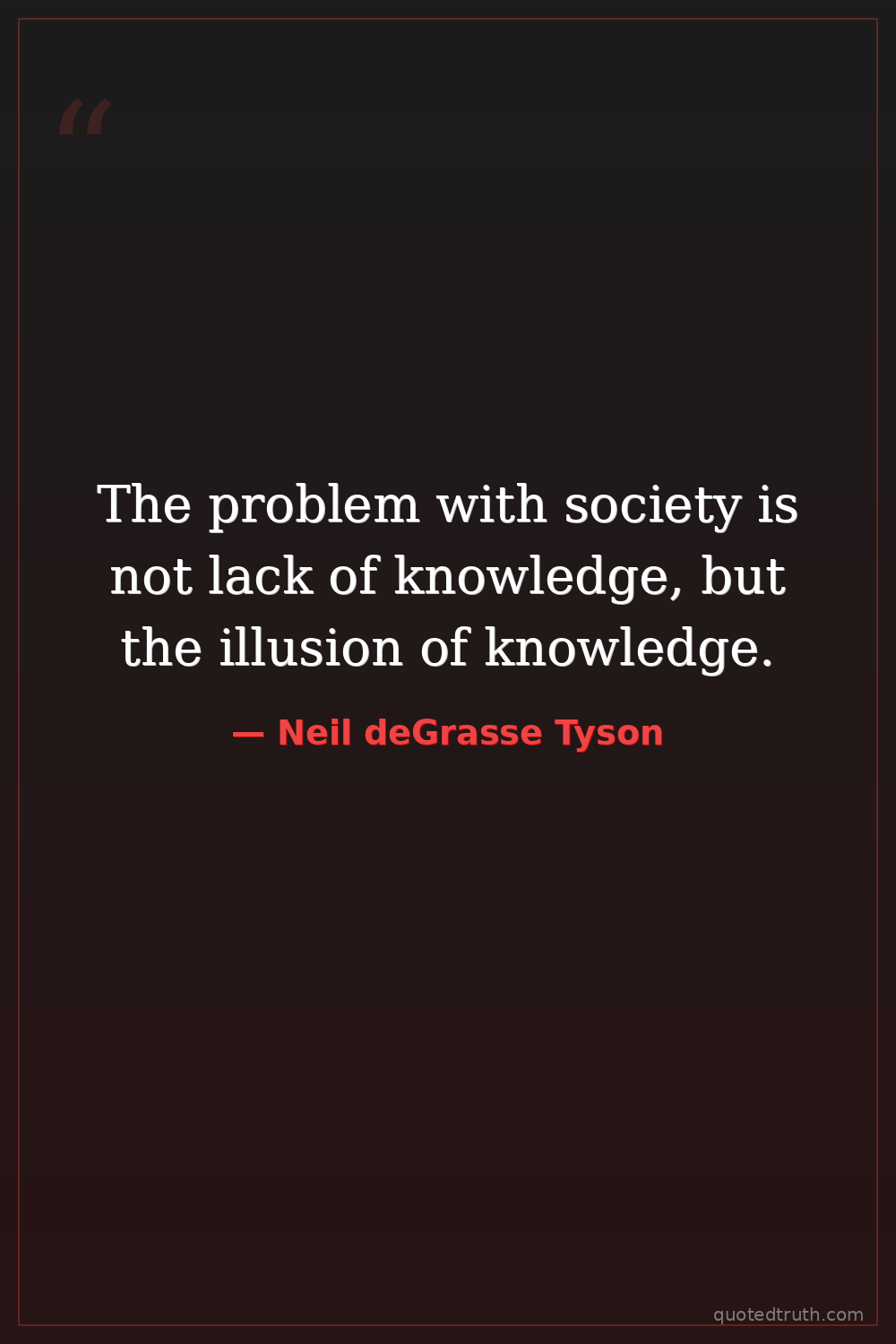
Neil deGrasse Tyson — "The problem with society is not lack of knowledge, but the illusion of knowledge…"
The problem with society is not lack of knowledge, but the illusion of knowledge.
The problem with society is not lack of knowledge, but the illusion of knowledge.
Click any product to generate a realistic preview. Up to 3 at a time.
* Initial load can take up to 90 seconds — revising the preview in another color is nearly instant.
"We are biologically wired to be curious."
"I'm a big proponent of space exploration, not just for scientific discovery, but for the inspiration it provides."
"The universe is a grand and glorious place, and it's all ours to explore."
"If I had a superpower, it would be to make everyone scientifically literate. Imagine the world we'd live in."
"The more I learn about the universe, the less convinced I am that there’s some sort of benevolent intelligence behind it."
American astrophysicist, Hayden Planetarium director, and Cosmos: A Spacetime Odyssey host who carries the Carl Sagan public-science mantle. Closely associated with Bill Nye (fellow science communicator) and Brian Greene (theoretical physicist and string-theory popularizer). For an intellectual contrast, see Ken Ham, founder of Answers in Genesis and the Creation Museum — Ham's career has been organized around defending biblical 6-day creationism — exactly the science-education position Tyson's mainstream-science communication is structured to refute.
Found in 1 providers: deepseek
1 source checked
False confidence in knowing something is more dangerous than genuine ignorance. When people believe they already understand a topic, they stop questioning, resist correction, and become immune to evidence. Misinformation doesn't spread because people lack access to facts—it spreads because they're already certain they have them. Confident wrongness is far harder to dislodge than admitted ignorance, which at least remains open to learning.
Tyson, as director of the Hayden Planetarium and longtime host of Cosmos, has built his career confronting pseudoscience, climate denial, and flat-earth belief—not among people who admit ignorance, but among those who feel informed. His debates and social media presence repeatedly target this exact dynamic: audiences armed with viral half-truths who mistake confidence for understanding, making genuine scientific literacy harder to achieve.
The contemporary era of social media, algorithmic echo chambers, and infinite confirmation-bias search results has made the illusion of knowledge epidemic. COVID-19 vaccine skepticism, climate denial, and election misinformation all spread through people who felt certain, not confused. 24-hour news, podcasts, and YouTube created a generation that consumes more information than any prior era yet remains paradoxically more susceptible to confidently held falsehoods.
AI-generated insights based on extensive research and information for context. Factual errors? Email [email protected].
Your cart is empty