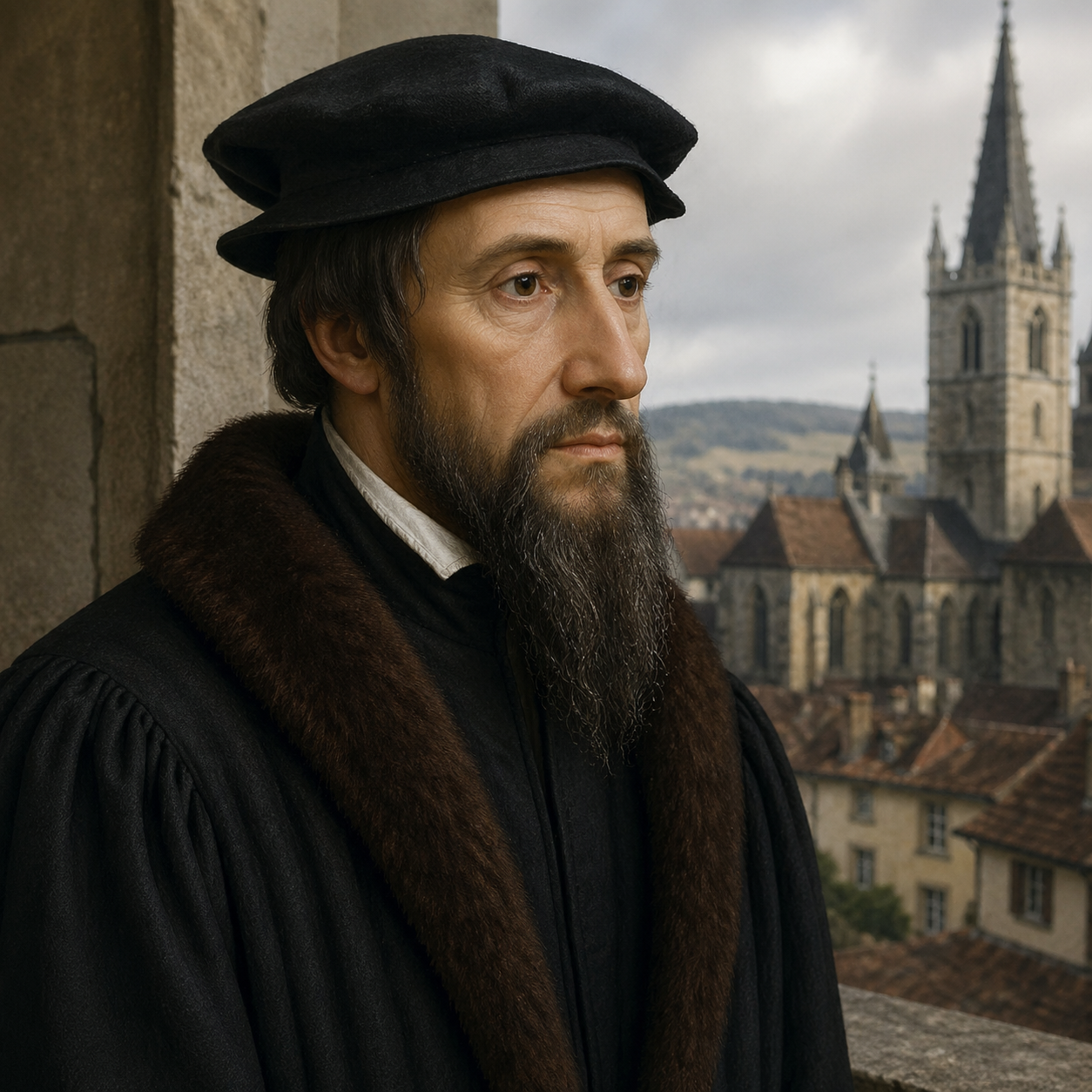
John Calvin — "The reprobate are not able to repent, because God does not give them the grace o…"
The reprobate are not able to repent, because God does not give them the grace of repentance.
The reprobate are not able to repent, because God does not give them the grace of repentance.
Click any product to generate a realistic preview. Up to 3 at a time.
* Initial load can take up to 90 seconds — revising the preview in another color is nearly instant.
"We are pilgrims and strangers on earth."
"Prayer is the chief exercise of faith."
"The human heart is an idol factory."
"Though the will of God is the highest rule of justice, and all that he wills is to be held for righteous, yet he has not deemed it sufficient for us to acquiesce in his bare will, but has added reason…"
"God's singular decree is the cause of Adam's fall, and through this fall, the damnation of his posterity."
French theologian whose Institutes of the Christian Religion (1536) systematized Protestant Reformed doctrine, including predestination. Closely associated with Martin Luther (Reformation founder, Calvin's predecessor). For an intellectual contrast, see Jacobus Arminius, Dutch Reformed theologian (1560-1609) — Arminius's rejection of strict double-predestination founded Arminianism — the theological tradition modern Methodism, most evangelicalism, and Pentecostalism descend from. The Calvinist-Arminian debate has divided Protestantism for 400 years.
Found in 1 providers: grok
1 source checked
Certain people—the reprobate, those not chosen by God for salvation—cannot genuinely repent, because repentance itself is a divine gift. Without God granting that grace, no one can turn from sin through sheer willpower or moral effort. This captures a severe theological determinism: the capacity to seek God, believe, or change course belongs entirely to God's sovereign initiative, not to human choice or desire.
Calvin built his theology in Geneva around double predestination—God elects some for salvation and condemns others before birth. His Institutes of the Christian Religion argued grace is irresistible and wholly unearned. As Geneva's chief pastor, he enforced strict church discipline, believing the visible church should reflect the elect. This quote encapsulates his core conviction: God's sovereign will, not human striving, governs every spiritual outcome absolutely.
During the 16th-century Reformation, Calvin's doctrine clashed directly with Catholic teaching that humans cooperate in salvation through sacraments, penance, and works. The Council of Trent (1545–1563) formulated explicit counter-arguments defending human free will. Erasmus had already battled Luther over the same issue. Calvin's insistence that repentance is wholly God's gift—denying any human contribution—was theologically explosive, reshaping Western Christianity and igniting lasting controversy across Reformed, Lutheran, and Catholic traditions.
AI-generated insights based on extensive research and information for context. Factual errors? Email [email protected].
Your cart is empty