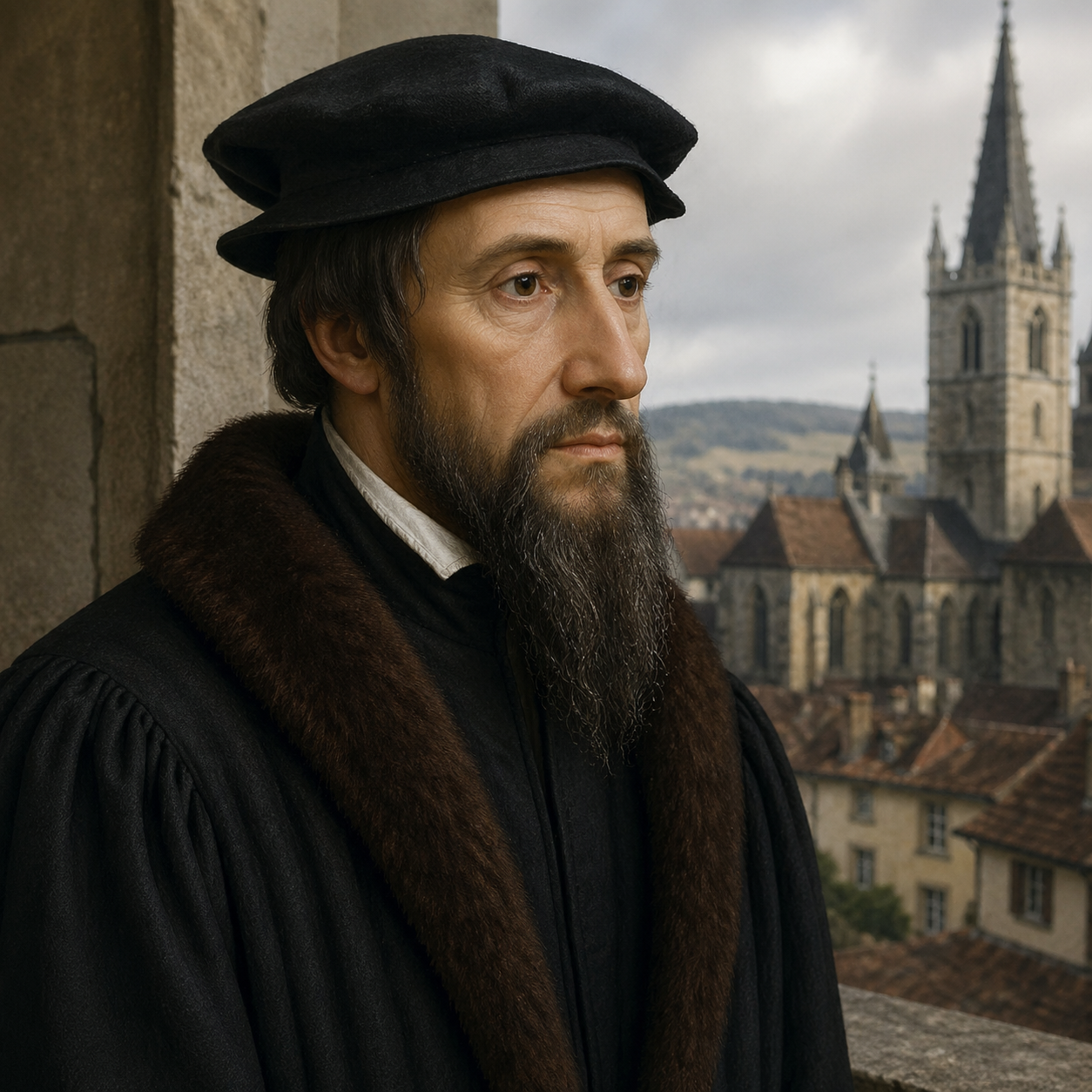
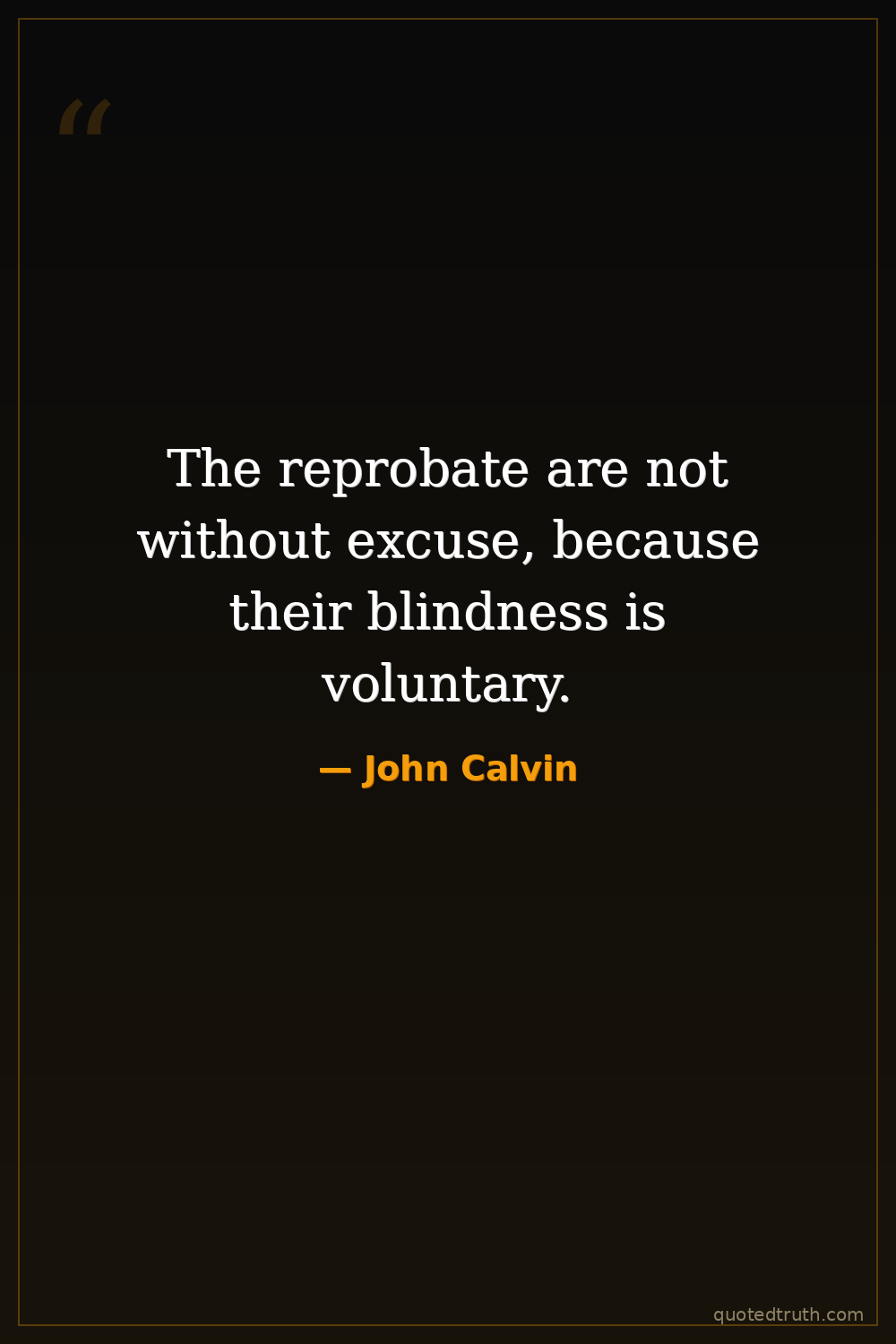
John Calvin — "The reprobate are not without excuse, because their blindness is voluntary."
The reprobate are not without excuse, because their blindness is voluntary.
The reprobate are not without excuse, because their blindness is voluntary.
Click any product to generate a realistic preview. Up to 3 at a time.
* Initial load can take up to 90 seconds — revising the preview in another color is nearly instant.
"God's singular decree is the cause of Adam's fall, and through this fall, the damnation of his posterity."
"The proper knowledge of God is when we know him to be our Father."
"There is not one blade of grass, there is no color in this world that is not intended to make us rejoice."
"By predestination we mean the eternal decree of God, by which he has determined with himself whatever he wills to happen with regard to every man."
"God always remains true to himself."
French theologian whose Institutes of the Christian Religion (1536) systematized Protestant Reformed doctrine, including predestination. Closely associated with Martin Luther (Reformation founder, Calvin's predecessor). For an intellectual contrast, see Jacobus Arminius, Dutch Reformed theologian (1560-1609) — Arminius's rejection of strict double-predestination founded Arminianism — the theological tradition modern Methodism, most evangelicalism, and Pentecostalism descend from. The Calvinist-Arminian debate has divided Protestantism for 400 years.
Found in 1 providers: grok
1 source checked
The reprobate—those Calvin believed God predestined to damnation—cannot plead innocence. Their spiritual blindness to God's truth isn't a fate imposed against their will; it flows from their own willful rejection of truth. They actively choose darkness, sin, and unbelief. Because the choice is genuinely theirs, their condemnation is just: they cannot blame God or circumstance for a blindness they themselves voluntarily embrace.
Calvin spent his life in Geneva constructing Reformed theology on double predestination—God sovereignly elects some to salvation and passes over others. His Institutes exhaustively defends this against charges of divine injustice. As a trained jurist turned theologian, Calvin insisted predestination doesn't erase human culpability. This quote captures his core balancing act: God's absolute sovereignty and genuine human guilt are not contradictions but complementary pillars of his entire theological system.
The 16th-century Reformation shattered medieval consensus on grace, free will, and damnation. Luther's fierce clash with Erasmus over free will had already divided reformers. Calvin wrote amid religious wars, heresy executions, and competing salvation doctrines. Predestination was politically explosive—critics charged it made God a tyrant arbitrarily damning innocents. Proving the condemned remain morally responsible for their own choices was essential to defending Reformed theology's coherence and God's justice before hostile courts and councils.
AI-generated insights based on extensive research and information for context. Factual errors? Email [email protected].
Your cart is empty