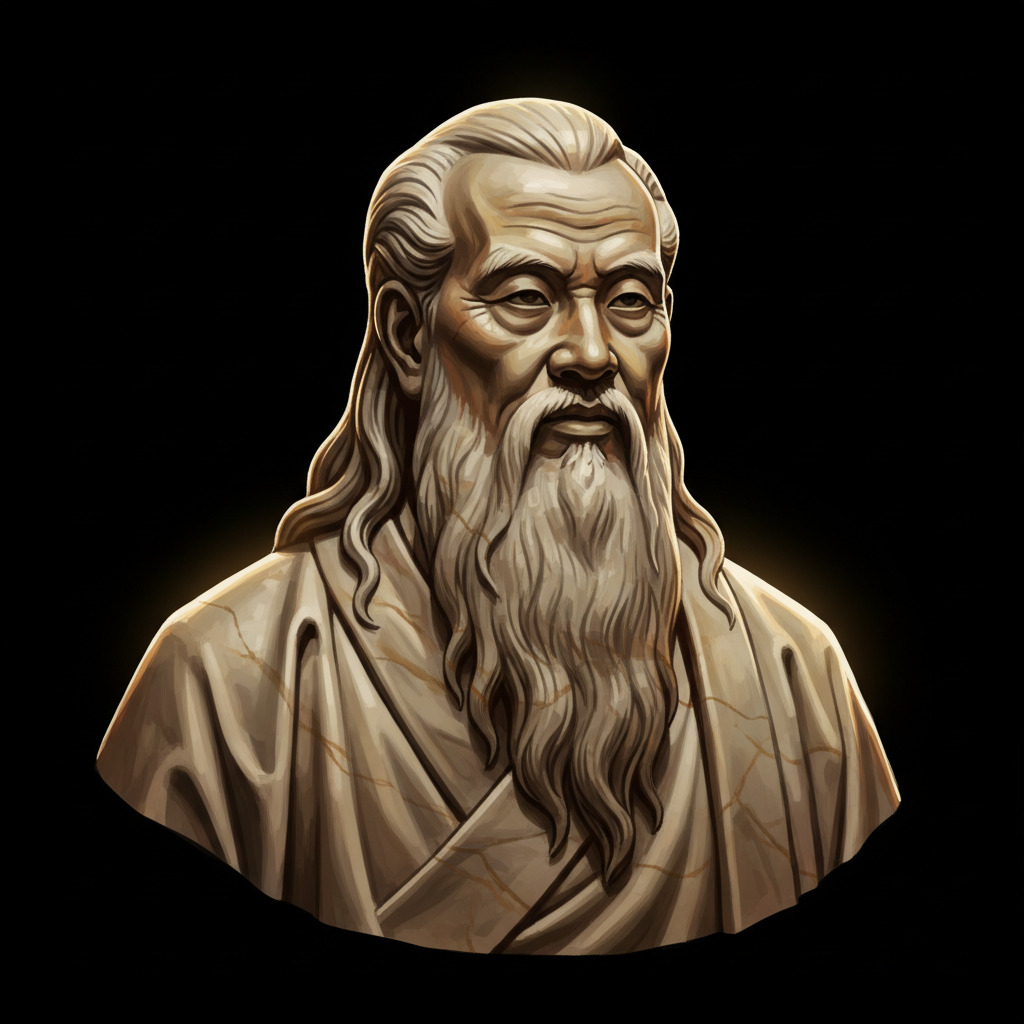
Laozi — "The sage has no mind of his own. He takes the mind of the people as his mind."
The sage has no mind of his own. He takes the mind of the people as his mind.
The sage has no mind of his own. He takes the mind of the people as his mind.
Click any product to generate a realistic preview. Up to 3 at a time.
* Initial load can take up to 90 seconds — revising the preview in another color is nearly instant.
"Simplicity has no name is free of desires. Being free of desires it is tranquil. And the world will be at peace of it's own accord."
"The Tao never does anything, yet through it all things are done."
"The great square has no corners. The great vessel is never full. The great sound is inaudible. The great image has no form."
"The more prohibitions there are, the poorer the people will be. The more sharp weapons the people have, the more trouble there will be in the country. The more clever and skillful man is, the more str…"
"Knowing others is intelligence; knowing yourself is true wisdom. Mastering others is strength; mastering yourself is true power."
Reputed founder of Taoism and author of the Tao Te Ching, whose wu wei (effortless action) shaped East Asian philosophy. Closely associated with Zhuangzi (later Taoist who extended Laozi's framework). For an intellectual contrast, see Confucius, near-contemporary Chinese sage of social ritual and duty — Confucius systematized social order through ritual and hierarchy; Laozi argued that all such systems were the disease, not the cure — the two founding poles of Chinese moral philosophy.
Found in 1 providers: grok
1 source checked
A true leader sets aside personal agendas and preferences, instead reflecting and serving the collective will and needs of those they govern. Rather than imposing their own views, the wise ruler listens to the people, absorbs their concerns, and lets the community's shared consciousness guide decisions. Leadership becomes an act of empathy and representation, not domination, where the leader functions as a vessel for the people's aspirations rather than a source of separate authority.
Laozi allegedly served as a royal archivist in the Zhou court, observing firsthand how rulers disconnected from common people caused dynastic decline. His philosophy of wu wei, effortless action aligned with nature, rejected rigid Confucian hierarchy. Legend says he grew disillusioned with corrupt governance and left civilization westward, writing the Tao Te Ching at a border guard's request. This saying captures his core belief that the best leaders efface themselves, governing through receptivity rather than ambition.
Laozi lived during the Spring and Autumn period (roughly 6th century BCE), when the Zhou dynasty was fragmenting into warring states competing through brutal realpolitik. Rulers imposed heavy taxes, conscripted peasants, and waged constant warfare, causing widespread suffering. Competing schools, Confucians, Legalists, Mohists, debated how to restore order. Laozi's radical counter-proposal, that rulers should empty themselves and mirror the people, challenged the era's power-hungry aristocracy and offered ordinary subjects a vision of governance rooted in humility rather than coercion.
AI-generated insights based on extensive research and information for context. Factual errors? Email [email protected].
Your cart is empty