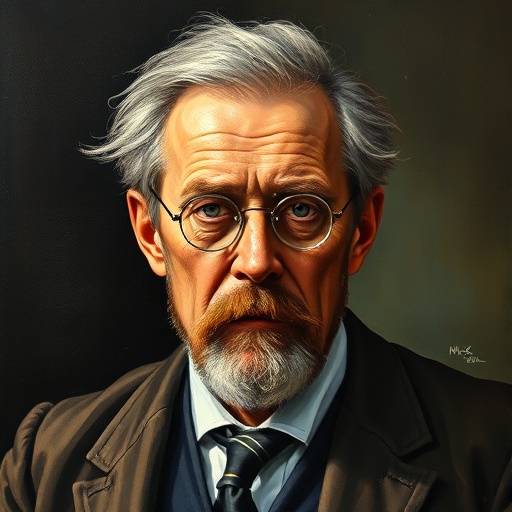
Max Planck — "The scientist's greatest reward is the joy of discovery."
The scientist's greatest reward is the joy of discovery.
The scientist's greatest reward is the joy of discovery.
Click any product to generate a realistic preview. Up to 3 at a time.
* Initial load can take up to 90 seconds — revising the preview in another color is nearly instant.
"The quantum theory is a theory of the greatest simplicity and beauty."
"When you change the way you look at things, the things you look at change."
"My original decision to devote myself to science was a direct result of the discovery, which has never ceased to fill me with enthusiasm, that the laws of nature are accessible to human thought."
"The scientist does not study nature because it is useful; he studies it because he delights in it, and he delights in it because it is beautiful. If nature were not beautiful, it would not be worth kn…"
"Anybody who has been seriously engaged in scientific work of any kind realizes that over the entrance to the gates of the temple of science are written the words: 'Ye shall have faith.' It is a qualit…"
Found in 1 providers: grok
1 source checked
Real satisfaction in scientific work comes from the moment you uncover something previously unknown, not from prizes, fame, or money. The thrill of cracking a puzzle and seeing the world more clearly outweighs external rewards. A researcher who chases recognition misses the point; the deepest payoff is internal, experienced in the instant understanding clicks into place during genuine investigation.
Planck embodied this through decades of painstaking work on blackbody radiation, eventually introducing the quantum of action in 1900 almost reluctantly. He won the 1918 Nobel Prize yet described his breakthrough as an act of desperation driven by curiosity. He endured personal tragedy, the loss of sons and his home, yet kept working, valuing the pursuit of truth over accolades or comfort throughout his long career.
Planck worked through the collapse of classical physics, two world wars, and the rise of Nazi Germany, which cost him his son Erwin, executed in 1945. Early 20th-century physics was upending Newtonian certainty with relativity and quantum mechanics, forcing scientists to find meaning beyond prestige as institutions crumbled. German science was politicized and purged of Jewish colleagues, making internal motivation, rather than state reward, essential for honest inquiry.
AI-generated insights based on extensive research and information for context. Factual errors? Email [email protected].
Your cart is empty