Laozi — "The soft and the weak overcome the hard and the strong."
The soft and the weak overcome the hard and the strong.
The soft and the weak overcome the hard and the strong.
Click any product to generate a realistic preview. Up to 3 at a time.
* Initial load can take up to 90 seconds — revising the preview in another color is nearly instant.
"The more you know, the less you understand."
"Under heaven all can see beauty as beauty only because there is ugliness. All can know good as good only because there is evil."
"To know yet to think that one does not know is the highest [attainment]. Not to know yet to think that one knows is a disease."
"Yield and overcome; Bend and be straight; Empty and be full; Wear out and be new; Have little and gain; Have much and be confused."
"The sage puts his own person last, and yet it is found in the foremost place; he treats his person as foreign to him, and yet it is preserved."
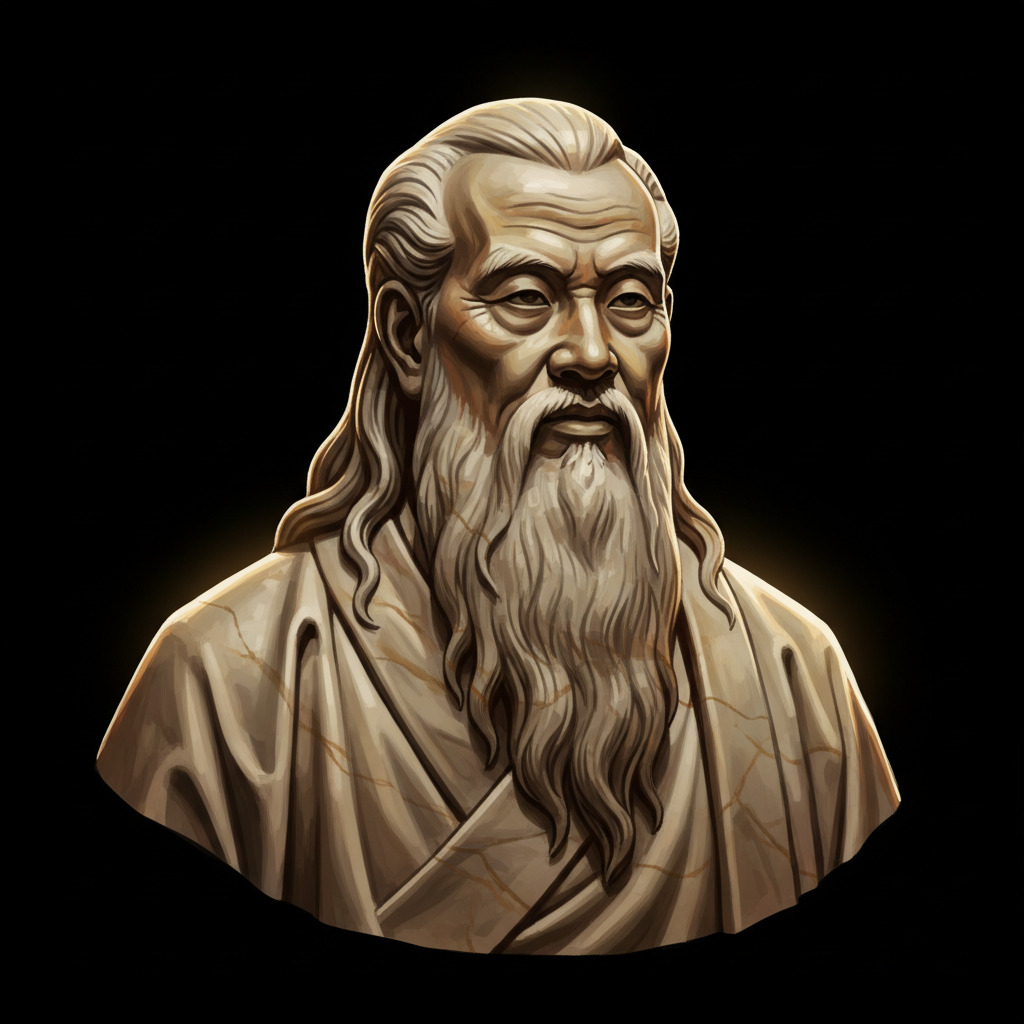
Reputed founder of Taoism and author of the Tao Te Ching, whose wu wei (effortless action) shaped East Asian philosophy. Closely associated with Zhuangzi (later Taoist who extended Laozi's framework). For an intellectual contrast, see Confucius, near-contemporary Chinese sage of social ritual and duty — Confucius systematized social order through ritual and hierarchy; Laozi argued that all such systems were the disease, not the cure — the two founding poles of Chinese moral philosophy.
Found in 2 providers: gemini,grok
2 sources checked
Yielding, flexible things often outlast rigid, forceful ones. Water wears down stone, saplings bend in storms that snap mighty trees, and gentle persistence frequently achieves what brute pressure cannot. Strength built on hardness becomes brittle; adaptability endures. The line urges people to stop equating power with force, recognize the hidden leverage in softness, patience, and humility, and trust that quiet resilience wins contests that aggression loses.
Laozi is credited as the founder of Taoism and traditional author of the Tao Te Ching, reportedly serving as an archivist in the Zhou royal court before withdrawing from public life. He repeatedly praised water, infants, and the uncarved block as models, and taught wu wei, effortless action. This saying distills his core conviction that yielding aligns with the Tao, while rigidity invites collapse, mirroring the quiet retreat he chose over courtly ambition.
Laozi lived during the late Zhou period, traditionally the 6th century BCE, amid the unraveling that produced the Spring and Autumn and Warring States eras. Feudal lords waged constant war, alliances shifted, and rival schools like Confucianism and Legalism prescribed stricter ritual or harsher law. Against this backdrop of armored chariots, walled cities, and ambitious rulers chasing hard power, praising softness was a radical counterclaim that outlasting force required abandoning it.
AI-generated insights based on extensive research and information for context. Factual errors? Email [email protected].
Your cart is empty