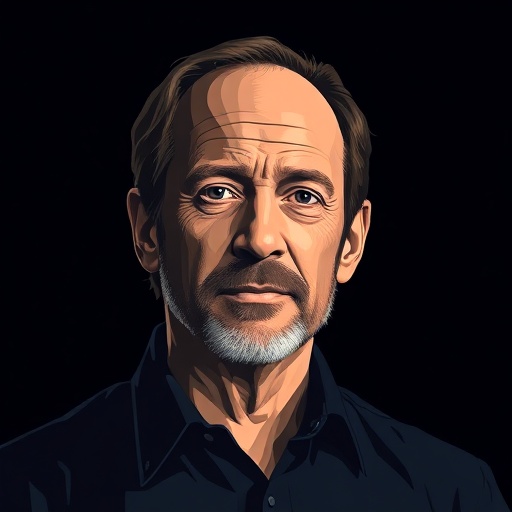
Tim Berners-Lee — "The web is a public good."
The web is a public good.
The web is a public good.
Click any product to generate a realistic preview. Up to 3 at a time.
* Initial load can take up to 90 seconds — revising the preview in another color is nearly instant.
"The web should be a place where people can be themselves, not just perform for others."
"I want to see a web where people are in control of their own data, and where they can choose who they share it with."
"The web is a shared space."
"I actually thought for a while that the internet would just be for physicists. Then I realized it could be for everybody."
"If you put everything on the web, then the world will be a better place. You will be a better person."
British computer scientist who invented the World Wide Web at CERN in 1989 and founded the W3C, championing open web standards. Closely associated with Vint Cerf (TCP/IP co-creator and 'father of the internet') and Marc Andreessen (Mosaic browser creator and Netscape co-founder). For an intellectual contrast, see Mark Zuckerberg, Facebook (Meta) founder — Zuckerberg's walled-garden Facebook is the canonical contemporary opposite of Berners-Lee's open-web vision; Berners-Lee's Solid project and 'recapture the web' essays are explicitly written as a rebuttal to the platform-monopoly model Facebook pioneered.
Found in 1 providers: deepseek
1 source checked
The internet and world wide web should be treated as shared infrastructure belonging to everyone, not controlled by corporations or governments for private gain. Like public roads or libraries, it should remain open, neutral, and equally accessible to all people regardless of wealth or status, serving humanity's collective interest rather than generating profit for a select few.
Berners-Lee invented the web in 1989 and deliberately chose not to patent it, giving it freely to humanity. He founded the World Wide Web Consortium to keep standards open and later launched the Web Foundation advocating for universal access. His entire career reflects this conviction that the web's value comes from its openness, not commercialization.
During Berners-Lee's active advocacy years, corporations like Facebook, Google, and Amazon increasingly dominated web infrastructure, raising concerns about surveillance capitalism, data monopolies, and platform censorship. Net neutrality battles, government surveillance revelations from Snowden in 2013, and rising paywalls made the original open-web vision feel increasingly threatened by privatization and centralization forces.
AI-generated insights based on extensive research and information for context. Factual errors? Email [email protected].
Your cart is empty