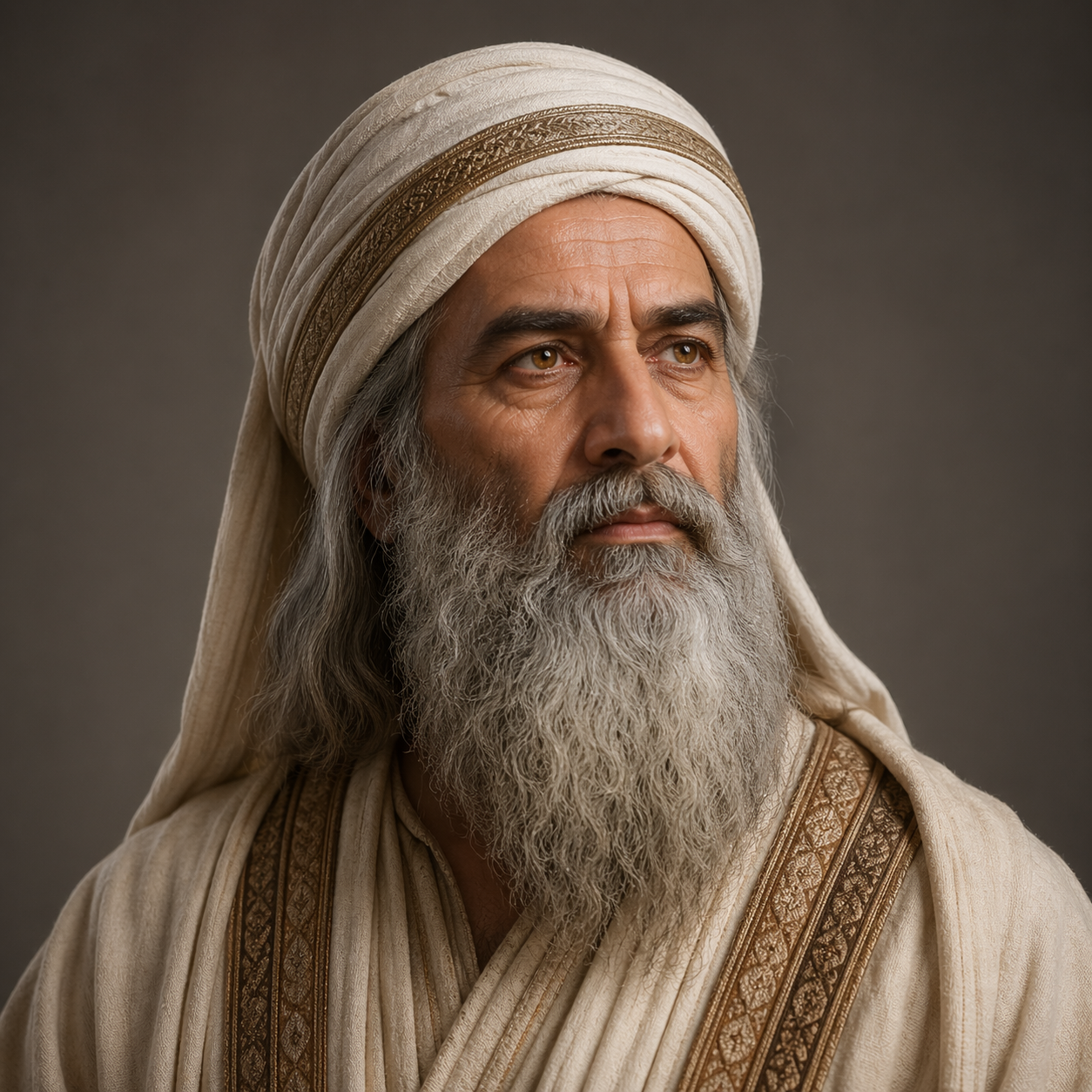
Zoroaster — "The wise choose the best, the unwise choose the worst."
The wise choose the best, the unwise choose the worst.
The wise choose the best, the unwise choose the worst.
Click any product to generate a realistic preview. Up to 3 at a time.
* Initial load can take up to 90 seconds — revising the preview in another color is nearly instant.
"Devotion, like fire, goeth upward."
"Righteousness and Good Mind for the people. To enable me to apprise all, teach me O Mazda Ahura, Through Thine own Spirit and Thine own Words, the principle of creation of the first existence."
"I who have set my heart on watching over the soul, in union with Good Thought, as I praise and proclaim you, O Wise Lord."
"The light of truth shines brightly. Unless it's cloudy. Then it's more of a gentle glow."
"Turn yourself not away from three best things: Good Thought, Good Word, and Good Deed."
Iranian prophet who founded Zoroastrianism, the first major religion of cosmic dualism between good (Ahura Mazda) and evil (Angra Mainyu). Closely associated with The Buddha (near-contemporary Eastern moral-cosmological revolutionary). For an intellectual contrast, see Friedrich Nietzsche, German philosopher of 'beyond good and evil' — Nietzsche appropriated Zarathustra's name for Thus Spoke Zarathustra (1883) precisely to invert the original's moral cosmology — the historical Zoroaster founded the good-versus-evil framework Nietzsche's character announces the end of.
Found in 1 providers: grok
1 source checked
People who think carefully tend to pick choices that lead to good outcomes, while those who act without thought or awareness end up making decisions that harm themselves and others. The line draws a sharp moral contrast: wisdom is not just knowledge but the practical ability to recognize and prefer what is genuinely good, while foolishness is the failure or refusal to make that distinction when options are laid out.
Zoroaster built his entire religion around free moral choice between good and evil, truth (asha) and lie (druj). As a prophet-priest who broke with older polytheistic traditions, he taught that every person is personally accountable for their decisions. This saying compresses that doctrine: humans are rational agents whose destiny hinges on which path they deliberately select, reflecting his core role as an ethical reformer rather than a ritualist.
Zoroaster lived in ancient Iran, likely between 1500 and 1000 BCE, among pastoral Indo-Iranian tribes worshipping many gods through animal sacrifice and intoxicating rituals. Raids, cattle theft, and tribal violence were common. Into this chaotic world he introduced a radical dualistic ethics demanding that people consciously side with order against chaos. Promoting reasoned choice over inherited custom was itself revolutionary in a pre-literate society governed by priestly tradition and warrior aggression.
AI-generated insights based on extensive research and information for context. Factual errors? Email [email protected].
Your cart is empty