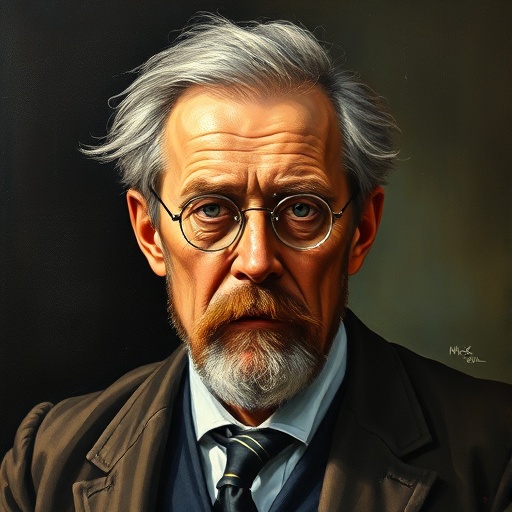
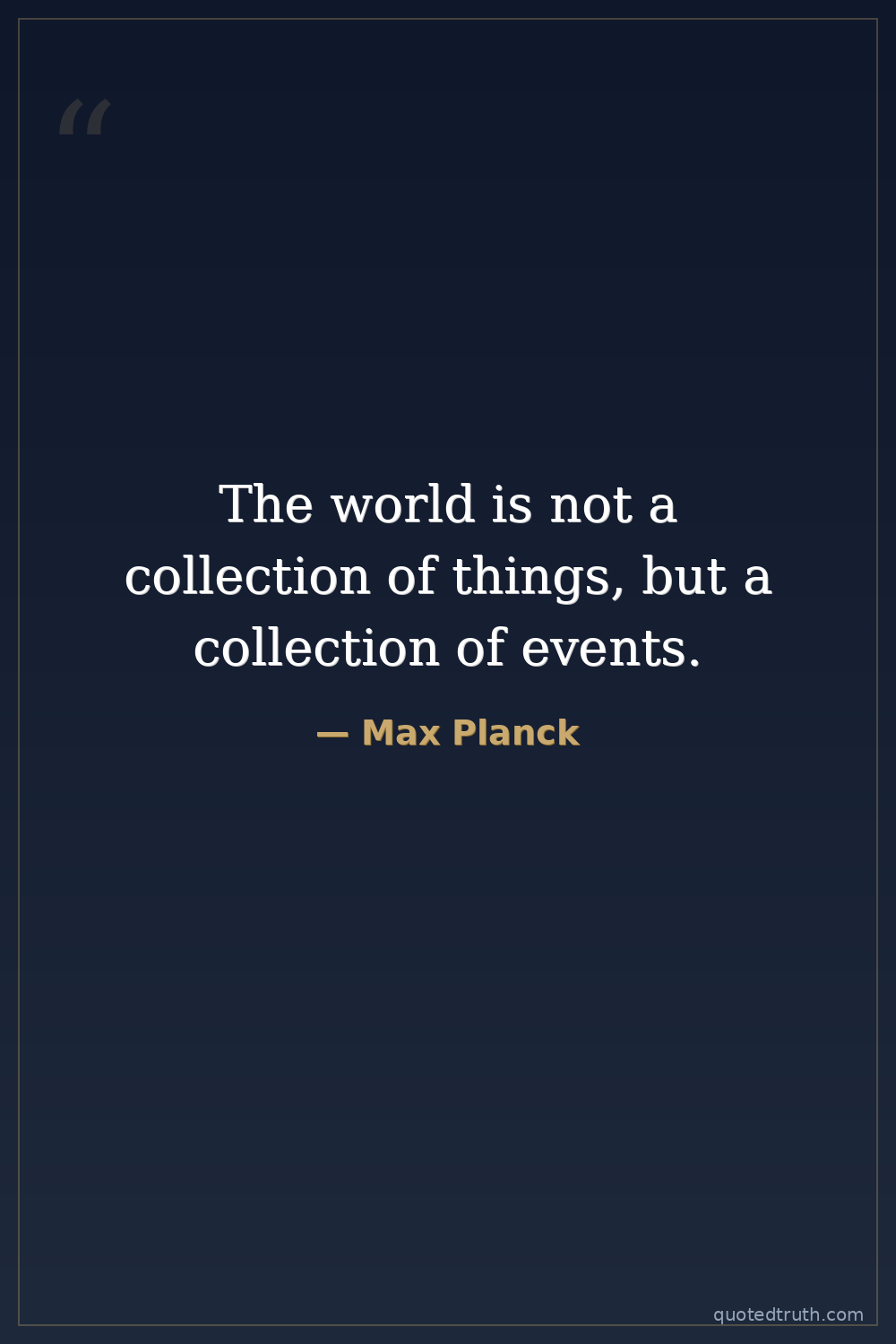
Max Planck — "The world is not a collection of things, but a collection of events."
The world is not a collection of things, but a collection of events.
The world is not a collection of things, but a collection of events.
Click any product to generate a realistic preview. Up to 3 at a time.
* Initial load can take up to 90 seconds — revising the preview in another color is nearly instant.
"The scientist must be a dreamer and a realist at the same time."
"It was a dark and stormy night..."
"The constant changes in the scientific worldview show how important it is to remain open to new ideas."
"The pioneer feels nature as an enemy, or as a force to be conquered."
"The human spirit is capable of reaching for the stars."
Found in 1 providers: grok
1 source checked
Reality is better understood as ongoing processes, interactions, and happenings rather than fixed, solid objects sitting in space. What looks like a stable thing is actually a continuous sequence of changes, vibrations, and relationships unfolding over time. Instead of asking what something is made of, we should ask what it is doing. Existence is dynamic, not static, and everything we perceive as matter is really activity in motion.
Planck founded quantum theory in 1900 by proposing that energy comes in discrete packets called quanta, overturning the classical view of smooth, continuous matter. His work revealed that atoms are not tiny billiard balls but probabilistic events of energy exchange. A deeply philosophical physicist who also wrote on religion and worldview, Planck naturally saw reality as dynamic processes rather than static objects, reflecting the revolutionary implications of his own discoveries about nature's fundamental structure.
Planck worked during the collapse of classical Newtonian physics in the early 1900s, when experiments on blackbody radiation and the atom forced scientists to abandon the mechanical clockwork universe. Einstein's relativity, Bohr's atomic model, and emerging quantum mechanics were dissolving the notion of solid matter into fields, probabilities, and energy states. Amid two World Wars and rapid industrial change, intellectuals were rethinking reality itself, and process-based metaphysics gained traction across physics and philosophy.
AI-generated insights based on extensive research and information for context. Factual errors? Email [email protected].
Your cart is empty