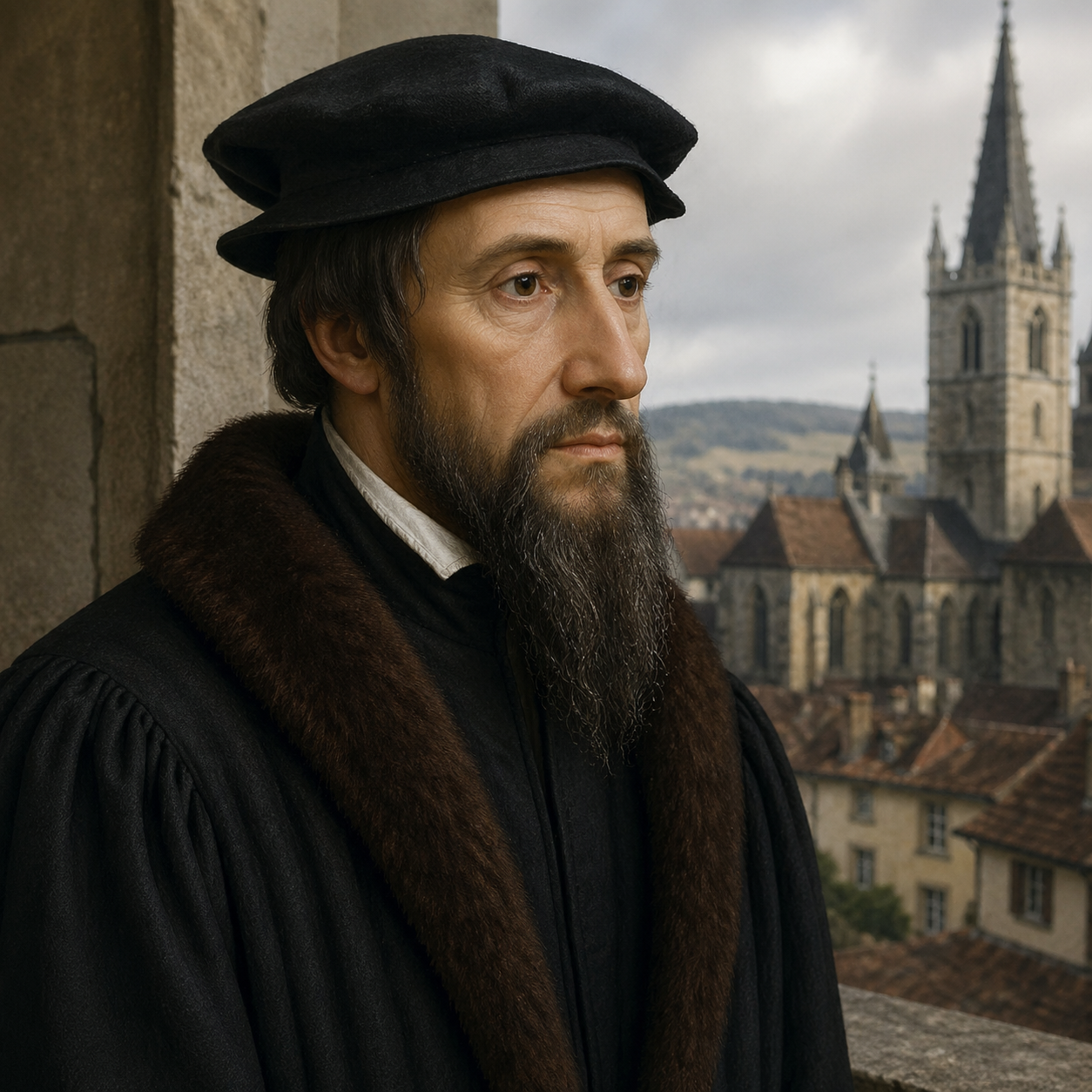
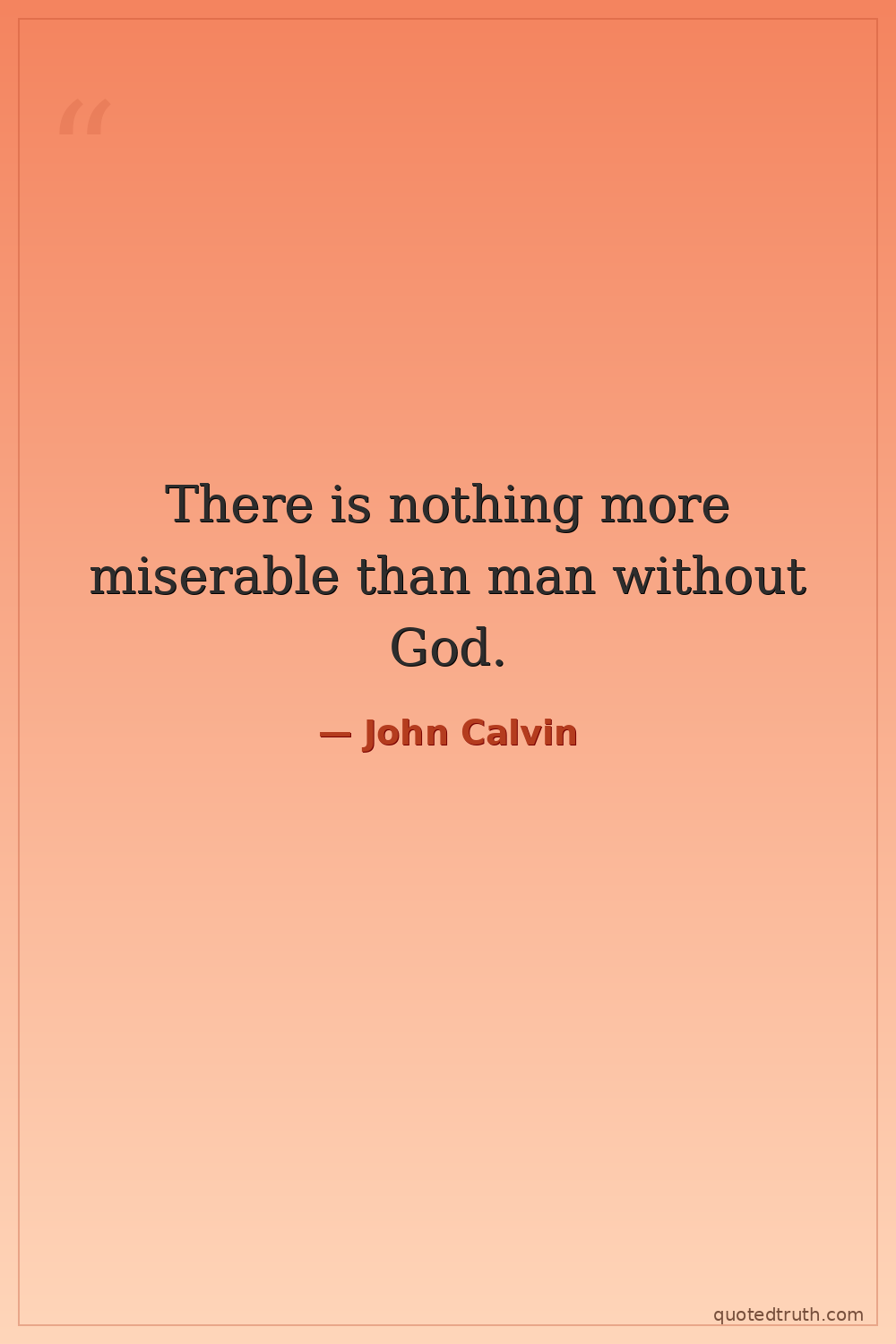
John Calvin — "There is nothing more miserable than man without God."
There is nothing more miserable than man without God.
There is nothing more miserable than man without God.
Click any product to generate a realistic preview. Up to 3 at a time.
* Initial load can take up to 90 seconds — revising the preview in another color is nearly instant.
"For the will is so overwhelmed by wickedness and so pervaded by vice and corruption that it cannot in any way escape to honorable exertion or devote itself to righteousness."
"We are not our own; we are God's."
"God never abandons his own."
"We are debtors to God, and can never pay the debt."
"God blinds the minds of the reprobate, and hardens their hearts, that they may not believe."
French theologian whose Institutes of the Christian Religion (1536) systematized Protestant Reformed doctrine, including predestination. Closely associated with Martin Luther (Reformation founder, Calvin's predecessor). For an intellectual contrast, see Jacobus Arminius, Dutch Reformed theologian (1560-1609) — Arminius's rejection of strict double-predestination founded Arminianism — the theological tradition modern Methodism, most evangelicalism, and Pentecostalism descend from. The Calvinist-Arminian debate has divided Protestantism for 400 years.
Found in 1 providers: grok
1 source checked
Human existence without God is the ultimate wretchedness. Calvin argues that humanity's purpose, dignity, and genuine happiness are rooted entirely in a relationship with God. Without that divine connection, people are spiritually lost, morally adrift, and existentially empty — regardless of wealth, power, or worldly success. No human achievement can fill the void left by God's absence. True flourishing is impossible outside that relationship.
Calvin built his entire theology on God's absolute sovereignty and humanity's total depravity without divine grace — central pillars of his Institutes of the Christian Religion (1536). He governed Geneva as a model God-centered society, believing civic and personal life must submit to divine order. This conviction drove his break from Catholicism, his relentless writing, and his vision that human dignity exists only within God's framework.
The Protestant Reformation fractured Europe's single religious authority in the 16th century, sparking wars, social upheaval, and deep spiritual anxiety. Meanwhile, Renaissance humanism elevated human reason and self-sufficiency as paths to fulfillment, challenging the church's centrality. Calvin's declaration that godlessness equals misery was a direct theological counter — insisting human reason alone is insufficient and that divine relationship, not secular achievement, defines meaningful human existence.
AI-generated insights based on extensive research and information for context. Factual errors? Email [email protected].
Your cart is empty