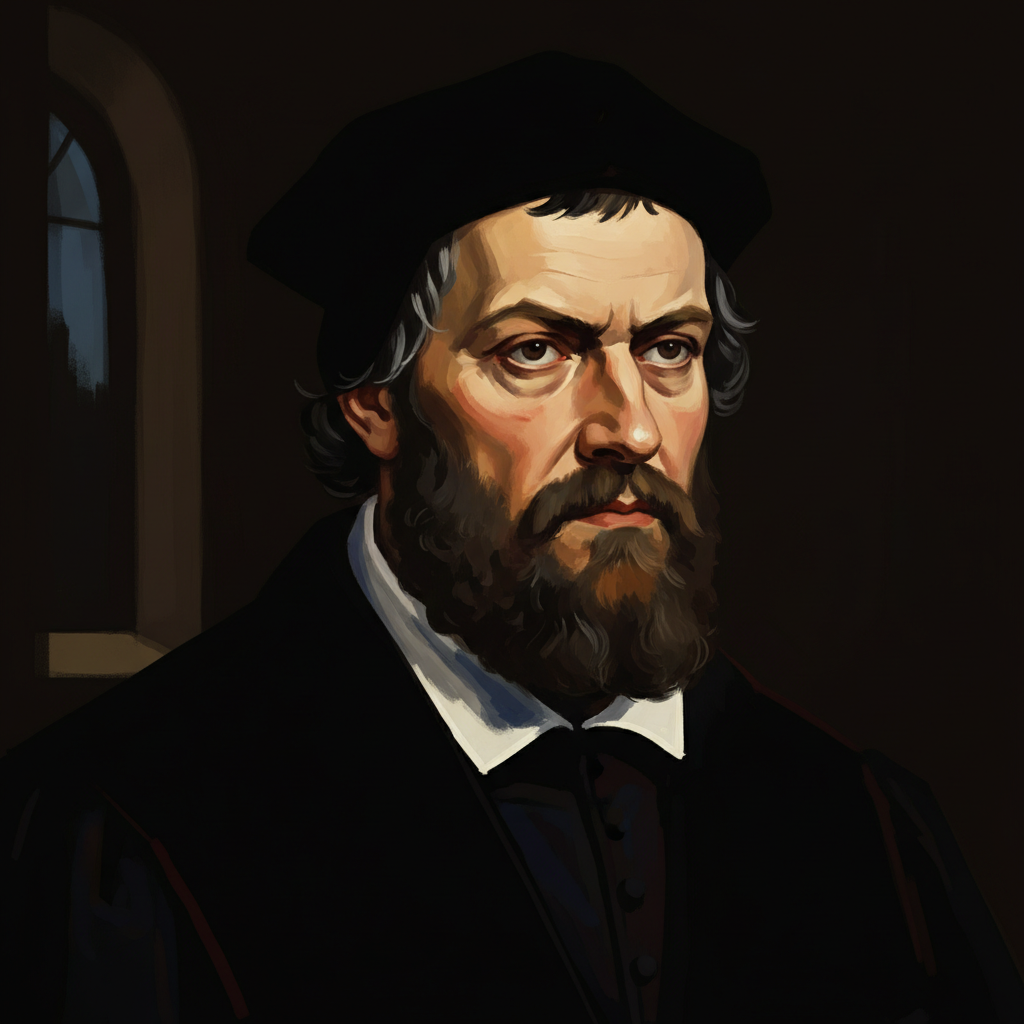
Martin Luther — "To be a Christian without prayer is no more possible than to be alive without br…"
To be a Christian without prayer is no more possible than to be alive without breathing.
To be a Christian without prayer is no more possible than to be alive without breathing.
Click any product to generate a realistic preview. Up to 3 at a time.
* Initial load can take up to 90 seconds — revising the preview in another color is nearly instant.
"A woman is a human being with a womb."
"A man must have a good digestion to be a good preacher."
"The commandments are not given inappropriately or pointlessly; but in order that through them the proud, blind man may learn the plague of his impotence, should he try to do as he is commanded."
"Faith is permitting ourselves to be seized by the things we do not see."
"I would not smell the foul odor of your name."
German theologian whose 95 Theses (1517) launched the Protestant Reformation and broke the Catholic Church's monopoly on Western Christianity. Closely associated with Philipp Melanchthon (Lutheran systematizer) and John Calvin (later Reformer who built on Luther's break). For an intellectual contrast, see Pope Leo X, Renaissance pope (1513-1521) — Leo X's indulgence sales triggered Luther's break and Leo excommunicated him in 1521 — Luther's entire Reformation is structured as a direct answer to the indulgence-funded Vatican Leo represented.
Found in 3 providers: grok,deepseek,gemini
3 sources checked
Prayer is not an optional religious practice but a defining mark of genuine Christian life. Just as breathing sustains physical existence moment by moment, ongoing conversation with God sustains spiritual existence. Someone claiming faith while never praying is contradicting their own identity, because the relationship itself requires communication. Prayer is framed here as natural, continuous, and essential, not as a ritual performance or duty reserved for special occasions.
Luther built his entire reformation on direct access to God, rejecting priestly mediation and indulgences. Prayer mattered intensely to him personally; he reportedly prayed for hours daily and wrote extensively on it, including his Small Catechism explanations of the Lord's Prayer. This quote reflects his core belief in the priesthood of all believers, where every Christian communes directly with God, making prayer the lifeblood of faith rather than a clerical function.
In early sixteenth century Europe, the Catholic Church dominated spiritual life, and laypeople typically relied on priests, Latin liturgy, and purchased indulgences for salvation. Luther's 1517 Ninety-Five Theses ignited the Reformation, challenging this mediated religion. Amid printing-press driven theological upheaval, peasant revolts, and fracturing Christendom, Luther urgently taught ordinary believers that authentic faith meant personal Scripture reading and direct prayer, radically democratizing a spirituality previously controlled by ecclesiastical hierarchy.
AI-generated insights based on extensive research and information for context. Factual errors? Email [email protected].
Your cart is empty