Martin Luther — "You are the worst rascal of all the rascals on earth!"
You are the worst rascal of all the rascals on earth!
You are the worst rascal of all the rascals on earth!
Click any product to generate a realistic preview. Up to 3 at a time.
* Initial load can take up to 90 seconds — revising the preview in another color is nearly instant.
"Faith is permitting ourselves to be seized by the things we do not see."
"God hides in order not to be found where humans want to find God. But God also hides in order to be found where God wills to be found."
"The mad mob does not ask how it could be better, only that it be different. And when it then becomes worse, it must change again."
"I am a peasant's son; my father, grandfather, and great-grandfather were genuine peasants. So I am a peasant and shall remain one."
"The more one reads the Bible, the more one loves it."
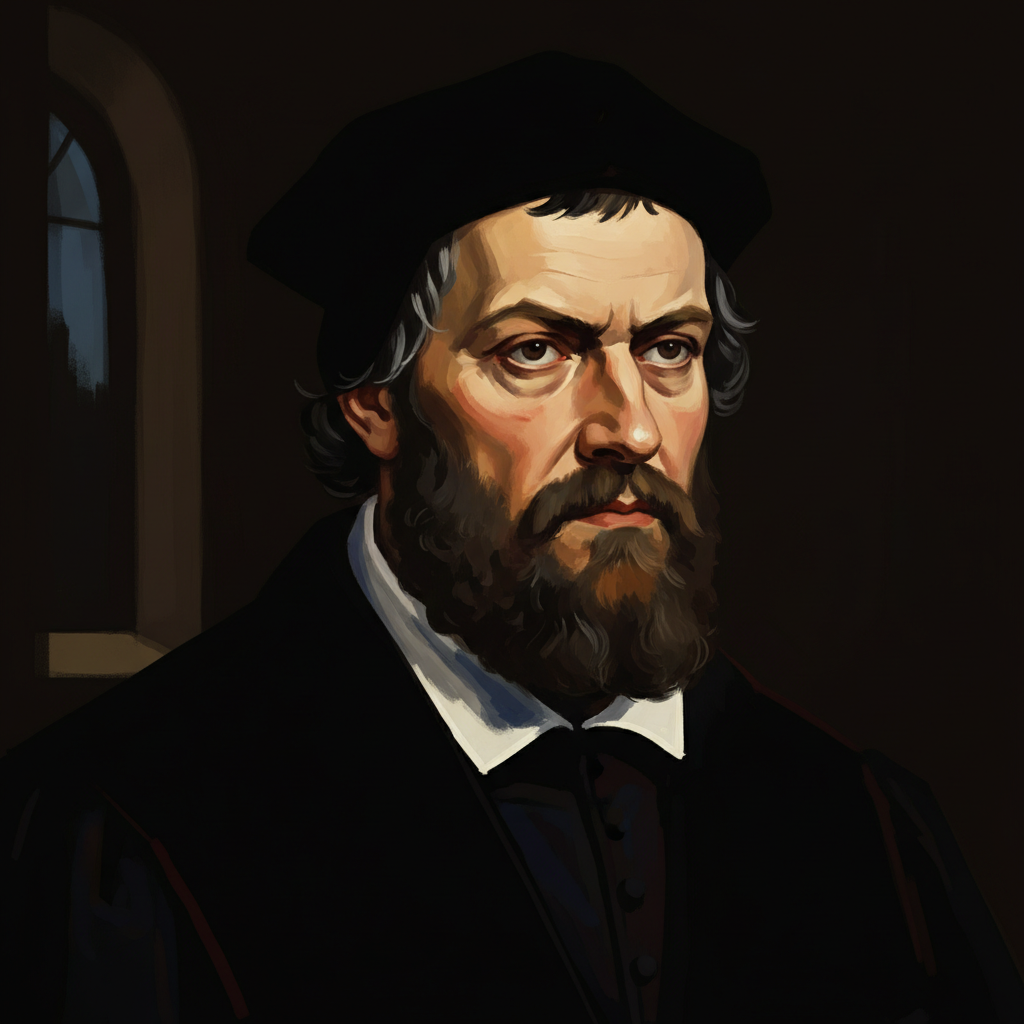
German theologian whose 95 Theses (1517) launched the Protestant Reformation and broke the Catholic Church's monopoly on Western Christianity. Closely associated with Philipp Melanchthon (Lutheran systematizer) and John Calvin (later Reformer who built on Luther's break). For an intellectual contrast, see Pope Leo X, Renaissance pope (1513-1521) — Leo X's indulgence sales triggered Luther's break and Leo excommunicated him in 1521 — Luther's entire Reformation is structured as a direct answer to the indulgence-funded Vatican Leo represented.
Found in 1 providers: gemini
1 source checked
This is a blunt, personal insult calling someone the most despicable person alive. It expresses total moral contempt, dismissing the target as beneath every other dishonest or worthless person. In modern terms, it is the equivalent of shouting that an opponent is the absolute lowest form of human being, with no redeeming qualities and no room for negotiation or civility in the exchange.
Luther was famous for scorching polemics against popes, princes, peasants, Jews, and fellow reformers like Zwingli and Erasmus. His writings routinely deployed scatological abuse, name-calling, and apocalyptic labels against enemies. As a monk-turned-professor who believed he was fighting Satan himself through corrupt human agents, he saw rhetorical violence as spiritual warfare, not rudeness, making insults like this entirely consistent with his documented style.
In early-modern Europe (1500s), theological disputes were life-or-death public brawls conducted through pamphlets, sermons, and disputations. The printing press had just industrialized insult culture, letting Luther, Catholic polemicists, and humanists trade graphic abuse across Germany. Excommunication, burnings, and peasant revolts framed every argument. Civility norms we recognize today did not exist; vehement personal denunciation was standard rhetorical currency between reformers and their enemies.
AI-generated insights based on extensive research and information for context. Factual errors? Email [email protected].
Your cart is empty