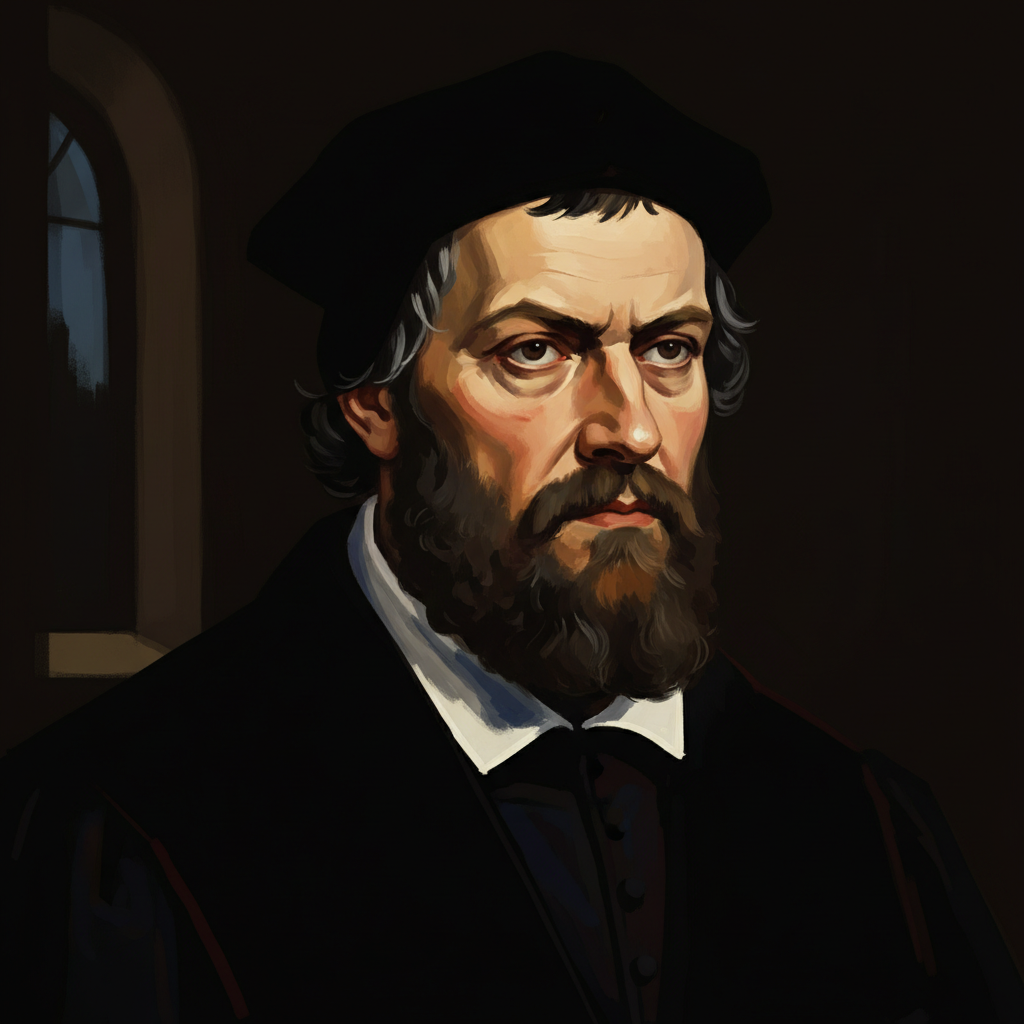
Martin Luther — "You Mr pope. are a brothel keeper. and the devil's daughter in hell."
You Mr pope. are a brothel keeper. and the devil's daughter in hell.
You Mr pope. are a brothel keeper. and the devil's daughter in hell.
Click any product to generate a realistic preview. Up to 3 at a time.
* Initial load can take up to 90 seconds — revising the preview in another color is nearly instant.
"The assembly of his greased and religious crew in praying was altogether like the croaking of frogs, which edified nothing at all."
"God does many things that he does not disclose to us in his word; he also wills many things which he does not disclose himself as willing in his word. Thus he does not will the death of a sinner, acco…"
"If I am to be executed, I would rather be executed by the Pope than by my own people."
"The dog is the most faithful of animals and would be much esteemed were it not so common. Our Lord God has made His greatest gifts the commonest."
"If the earth is fit for laughter, then surely heaven is filled with it. Heaven is the birthplace of laughter."
German theologian whose 95 Theses (1517) launched the Protestant Reformation and broke the Catholic Church's monopoly on Western Christianity. Closely associated with Philipp Melanchthon (Lutheran systematizer) and John Calvin (later Reformer who built on Luther's break). For an intellectual contrast, see Pope Leo X, Renaissance pope (1513-1521) — Leo X's indulgence sales triggered Luther's break and Leo excommunicated him in 1521 — Luther's entire Reformation is structured as a direct answer to the indulgence-funded Vatican Leo represented.
Found in 1 providers: gemini
1 source checked
Luther is hurling a brutal insult at the Pope, calling him a pimp who runs a spiritual brothel and labeling him the offspring of Satan. In modern terms, he's accusing the papacy of selling sacred things for profit, prostituting the church for money and power, and being so corrupt that its origins must be demonic rather than divine. It's character assassination dressed as theological condemnation.
Luther was famously vulgar and combative, especially in his later anti-papal writings like 'Against the Roman Papacy, an Institution of the Devil' (1545). After his 1521 excommunication, he abandoned diplomatic restraint and weaponized crude German invective against Rome. As a former Augustinian monk who concluded the institution he served was satanic, this vitriol reflects both his theological certainty about justification by faith and his peasant-rooted rhetorical style.
In early modern Europe, the papacy under Leo X and successors was selling indulgences to fund St. Peter's Basilica, sparking Luther's 1517 Ninety-Five Theses. The printing press let pamphlets spread rapidly, making scatological insults effective propaganda weapons. Religious discourse was violently polarized, Christendom was fracturing, and accusing opponents of being literal devils was standard rhetoric on both Catholic and Protestant sides during the Reformation's most heated decades.
AI-generated insights based on extensive research and information for context. Factual errors? Email [email protected].
Your cart is empty